Ministry of Agriculture, Food and Rural Affairs: "Domestic Broiler Chicken Population Higher Than Average... No Impact on Supply and Demand"
However, Price Increase Pressure Possible if Spread Nationwide
"We Will Respond to Prevent Supply and Demand Instability"
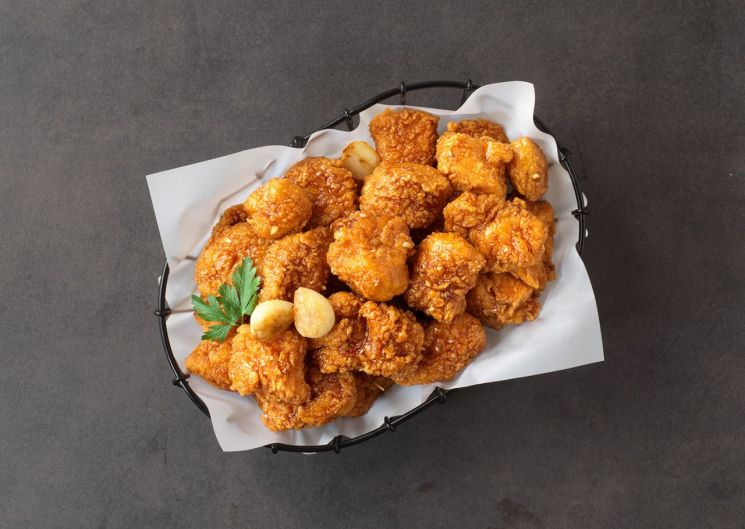
[Sejong=Asia Economy Reporter Kim Hyunjung] Avian influenza (AI) has occurred in domestic poultry farms for the first time in 2 years and 8 months, heightening consumers' concerns over 'chicken price instability.' Preventive culling and other measures are being implemented as the virus spreads nationwide, raising fears of a chain reaction due to a sharp decline in supply. However, the government plans to respond to supply and demand instability by maintaining a higher-than-average number of broilers and significantly strengthening quarantine measures.
According to the Central Disease Control Headquarters (CDCH) on the 30th, highly pathogenic AI (H5N8 type) was confirmed at a meat duck farm located in Jeongeup-si, Jeollabuk-do, the previous day. On the 27th, an H5 antigen was detected during a pre-shipment inspection of ducks, and a detailed examination confirmed highly pathogenic AI H5N8 on November 28. This is 36 days after the highly pathogenic antigen was first detected in wild birds at the Cheonan Bonggangcheon migratory bird habitat on October 21, and it is the first occurrence in domestic poultry farms since the last outbreak in March 2018, 2 years and 8 months ago.
The CDCH is conducting preventive culling of chickens and ducks (392,000 birds in 6 farms) within a 3 km radius of the affected farm and has established a quarantine zone with a 10 km radius around the outbreak site. Within this quarantine zone, movement restrictions (for 30 days), surveillance, and detailed inspections are being carried out on 68 poultry farms housing 2,905,000 birds. All poultry farms and workers in Jeongeup-si, Jeollabuk-do, the affected area, have been subject to movement and access restrictions for 7 days starting from the 28th.
The market is expressing concerns over rising prices of broilers and ducks due to the spread of AI. The government currently assesses that the domestic supply capacity of poultry products is sufficient.
As of September, the number of broilers raised domestically is 88.2 million, 8.0% higher than the average year. The number of laying hens is also above average at 74.92 million, exceeding by 4.3%. Although the number of ducks is 9.29 million, a 2.4% decrease from the average, frozen stock as of October stands at 5.85 million, 11.4% higher than last year. For broilers, frozen stock is 15.25 million, 13.7% above the average.
An official from the Ministry of Agriculture, Food and Rural Affairs stated, "We will closely monitor the market situation and respond to prevent any supply and demand instability."
Earlier, upon detection of the H5 antigen during pre-shipment inspection at the duck farm, the CDCH immediately dispatched an initial response team to the site to control farm access and conduct epidemiological investigations. Preventive culling was carried out on 19,000 ducks at the suspected farm. Additionally, a nationwide 48-hour standstill order was issued from 00:00 on the 28th, and all poultry farms and livestock-related facilities nationwide were disinfected. After confirmation, the AI crisis alert level was raised to 'Severe,' and quarantine measures were significantly strengthened. Consequently, free-range poultry farming is banned nationwide, and the distribution of live chicks (under 70 days old) and ducks is prohibited in all traditional markets across the country.
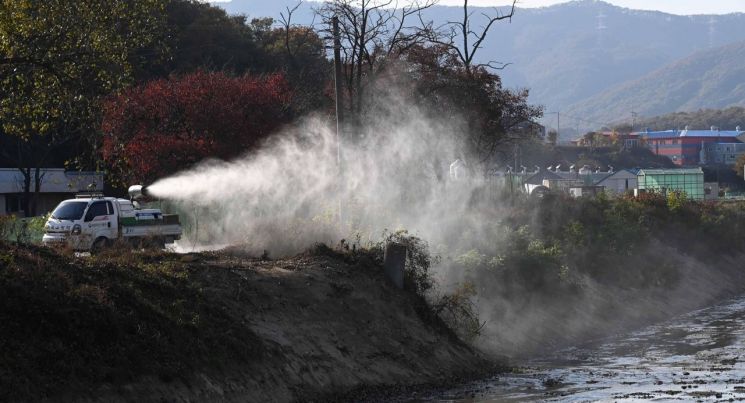
The CDCH considers the situation extremely dangerous nationwide, as highly pathogenic AI has been confirmed in poultry farms and highly pathogenic AI antigens continue to be detected in wild birds (8 cases in Gyeonggi, Gangwon, Chungnam, and Jeju). Additional quarantine responses will be implemented. Disinfection efforts in Jeollabuk-do, where the outbreak farm is located, will be greatly expanded. Starting from the 29th, in addition to existing migratory bird habitats, 757 disinfection vehicles will be deployed to thoroughly disinfect small reservoirs, streams near about 5,700 poultry farms nationwide, and farm access roads four times a week. Furthermore, environmental inspections will be strengthened, farm and facility checks will be conducted, and on-site situation management teams will be dispatched to support field inspections.
© The Asia Business Daily(www.asiae.co.kr). All rights reserved.


















