UNIQLO '+J' Sold Out... Lexus and Other Japanese Car Sales Recover
Some Say "Is This the End of NonoJapan?"... Counterarguments for Continued Boycott Movement
[Asia Economy Reporter Han Seung-gon] Recently, a clothing item from Uniqlo experienced a sell-out during a promotion, leading some to speculate that the boycott movement against Japanese products may be fading. Not only Uniqlo, but Japanese cars and beer are also showing signs of sales recovery. On the other hand, there are still voices strongly criticizing those who purchase Japanese products, insisting that the boycott continues. Meanwhile, conflicts persist over the view that the boycott cannot be forced upon others.
On the 13th, Uniqlo sold '+J' products at its official online store and Myeongdong Central Branch, among other locations. The '+J' collection is a collaboration line that Uniqlo has released annually since 2009 with the famous German designer Jil Sander.
At the time of sale, some Uniqlo stores saw lines forming from early morning due to customers wanting to purchase these items. Popular products such as the 'Oversized Rib Blouson' and 'Hybrid Down Oversized Parka' sold out in all sizes.
This situation has led to interpretations that the boycott of Uniqlo clothing, a representative company in the boycott of Japanese products, may be losing momentum. Uniqlo was included in the list of Japanese products to boycott due to remarks made by a responsible executive at the time.
On July 11, 2019, Takeshi Okazaki, Chief Financial Officer (CFO), mentioned the boycott in Korea during Fast Retailing’s earnings briefing held in Tokyo, Japan, stating, "It is already having a certain impact on sales," but also claimed, "(The impact of the boycott) will not last long and will not significantly affect overall performance."
He added, "We will quietly maintain our roots in Korea without being swayed by political situations." When these remarks became known domestically, Uniqlo was hit hard by the boycott movement.
Despite the unfavorable domestic public opinion, the recent sell-out of clothing has led some to believe that the boycott against Japanese products has ended. Kim, a company employee in his 40s, said, "No No Japan seems to be over," adding, "The popularity of Uniqlo, to the point of sell-outs, proves that." He continued, "People who do not buy Japanese goods and those who do have different thoughts, so I hope there is no criticism of either side."
On the other hand, there are strong criticisms labeling such buyers as 'pro-Japanese.' Lee, a 40-something office worker, said, "The boycott of Japanese products is not just a consumer movement but a protest against other countries, especially Japan, that distort our country's history," expressing frustration, "(Seeing people buy Japanese goods without any awareness) makes me think they are pro-Japanese." He added, "I do not intend to force the boycott, but such behavior is clearly undesirable."
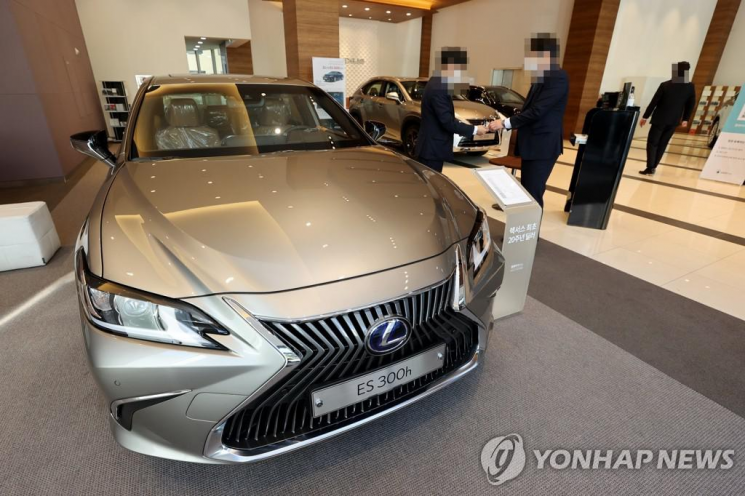
Meanwhile, sales of Japanese cars, including Lexus, are also recovering. According to Japan’s Ministry of Finance’s October trade statistics released on the 18th, Japan’s total exports to Korea amounted to 416.117 billion yen (approximately 44.235 trillion KRW), a 9.0% increase compared to the same period last year.
By item, automobile exports surged 90.1% to 5.547 billion yen (approximately 589.5 million KRW). According to the Korea Imported Automobile Association, Toyota sold 553 units, a 35.5% increase. In October last year, Japan’s automobile exports to Korea had sharply declined by 70.7% compared to the same period.
Additionally, exports of food products including beer rose 52.7% to 3.244 billion yen (approximately 344.8 million KRW).
These trends have led some to view that the boycott against Japanese products is fading. Park, a 30-something office worker, said, "Sales of Japanese cars and beer have definitely improved compared to when the boycott was at its peak," adding, "Recently, I haven’t even seen 'No No Japan' stickers much." He continued, "There were conflicts around me due to forced boycott situations, but those seem to have disappeared."
There have been ongoing conflicts due to people practically forcing or mocking others not to buy Japanese goods.
In April, at Techno Mart in Sindorim, Guro-gu, Seoul, a long line formed from early morning on a weekday as people waited to purchase the game 'Animal Crossing.' 'Animal Crossing' is a game playable on the Japanese-made console 'Nintendo Switch.' It is popularly abbreviated as 'Dongsup' and even sparked a craze known as the 'Dongsup fever.'
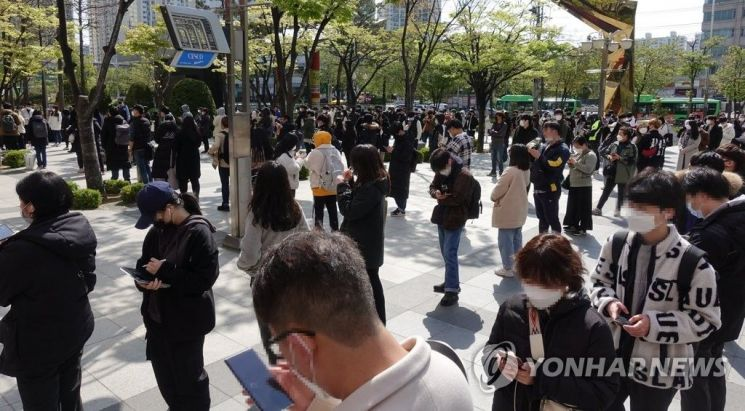 On the morning of April 23rd, citizens lined up in front of Sindorim Technomart in Guro-dong, Guro-gu, Seoul, to enter a lottery for purchasing the Nintendo Switch Animal Crossing edition.
 [Image source=Yonhap News]
The store had planned to hold a lottery event for the release of 'Dongsup' at 10:30 a.m., but about 300 people gathered from 9 a.m. Some online shopping malls even sold 'Dongsup' at more than twice the retail price.
Another Japanese-made console game, the 'PS5,' also experienced sell-out situations due to high demand. In October, Sony Interactive Entertainment supplied additional units of the PS5, which had faced shortages during pre-orders.
While opinions differ on whether the 'No No Japan' movement is waning, experts urge consumers to think carefully when purchasing Japanese products.
Last November, when Uniqlo held an event distributing 'Heattech' (thermal innerwear) for free, Professor Seo Kyung-deok of Sungshin Women’s University wrote on his Facebook, "The boycott can never be forced. I also respect individual choices," but added, "However, I hope we all think once more. Photos of people lining up in front of Uniqlo stores were shared in Japan, where Japanese netizens harshly criticized and mocked them."
Professor Seo also emphasized, "How much more will Japanese right-wing groups and media ridicule this situation? I sincerely hope we all at least maintain our minimum pride."
© The Asia Business Daily(www.asiae.co.kr). All rights reserved.



















