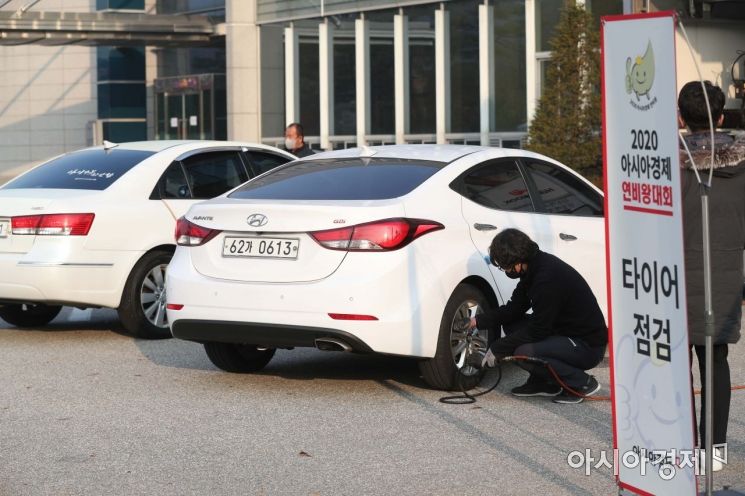
[Asia Economy Reporter Kiho Sung] As the weather gradually gets colder, the time for car maintenance has come again. Im Gisang, the representative of the Automobile Citizens' Union, pointed out, "The secret to car health lies especially in preventing seasonal breakdowns caused by cold and hot weather, so winter preparation should be done timely for preventive measures." Let's find out how to prepare for the unwelcome cold wave in winter.
▲Don't forget antifreeze for electric vehicles as well.
Electric vehicles also use antifreeze to cool the battery and motor from cold waves and heat. What is especially important is that electric vehicles must use insulated, dedicated antifreeze that does not conduct electricity. Using regular automotive antifreeze can pose risks of fire due to overheating and cause malfunctions. If a malfunction occurs due to using the wrong antifreeze, warranty repairs may be denied, and for domestic electric vehicle batteries, replacement costs including labor can reach about 20 million KRW, and for imported cars, the cost may be even higher.
▲Diesel vehicles face the toughest time in winter
Diesel vehicles emit ultrafine dust, so they are equipped with DPF (Diesel Particulate Filter), an environmental component that reduces soot by up to 90%. Cleaning the filter and engine maintenance about once a year is essential.
In winter, it is recommended to check for engine oil leaks and use DPF-specific engine oil that blocks substances that interfere with combustion. Seasonal inspections for winter weather are essential for drivers not only for safety but also from an environmental perspective to reduce fine dust.
▲Do not mix antifreeze.
Cars can also get frostbite. To prevent frostbite, during the kimchi-making season, the specific gravity of antifreeze should be checked to be 5 degrees lower than the regional minimum temperature.
Antifreeze formulations vary by manufacturer, and quality differences are significant, so it is recommended to use the same product recommended by the car manufacturer. Mixing with other products can cause chemical reactions that degrade performance, so manufacturers advise caution. When replacing antifreeze, it is best to completely drain the existing coolant, then fill with tap water, run the engine idle, and drain it again at least twice to prevent mixing.
▲Winter's number one cause of breakdowns: battery?check the 'birth date (manufacture date)'.
Even new batteries maintain optimal condition for up to six months depending on storage methods, but battery performance varies as time passes due to their characteristics.
Even new batteries can self-discharge and reduce lifespan, so it is essential to check the manufacture date. Also, if you have experienced emergency roadside assistance due to starting failure or if the battery is about five years old, it should be inspected.
▲Fuel filter, winter washer fluid, and brake squeaking are essential.
Fuel systems in gasoline, diesel, and LPG vehicles have a 'fuel filter' that filters substances in the fuel. Various foreign substances and especially moisture can enter the fuel filter, and when temperatures drop below freezing in winter, the moisture inside the fuel filter can freeze, clogging the filter and causing starting difficulties. It is recommended to inspect it regularly about once a year, with early winter being the most appropriate time.
Winter washer fluid does not freeze on the windshield even when sprayed during driving at about -20 degrees Celsius. However, if summer washer fluid is used, the tank or nozzles storing the fluid can freeze and burst, so it should be replaced with winter fluid.
Tires with tread wear within 1.6mm should be replaced if severely worn, and proper air pressure should be checked. If there is a metallic squeaking noise from the brakes during braking, it should be inspected.
In cold regions during winter, the mixing ratio of propane and butane is adjusted, so when visiting cold areas such as Gangwon Province or ski resorts, refueling gas immediately upon arrival can prevent starting failures the next day. LPG vehicles are especially sensitive to temperature changes due to the nature of the fuel (gaseous state), and when temperatures drop below -15 degrees Celsius, vapor pressure decreases, which can cause starting failures.
© The Asia Business Daily(www.asiae.co.kr). All rights reserved.

















