[Asia Economy Reporter Cho Hyun-ui] The government has decided to transition the 'Dedicated Attending Physician for Inpatients' system, which has been piloted since September 2016, into a full-scale program. Although discussions within and outside the medical community delayed the original plan, it will commence from next year.
On the 27th, the Ministry of Health and Welfare held the 22nd Health Insurance Policy Deliberation Committee (Geonjeongsim) meeting, where they received reports on the promotion of non-reimbursable services to reimbursable, the establishment of management fees for dedicated attending physicians for inpatients, the listing of new drugs, and the expansion of reimbursement criteria.
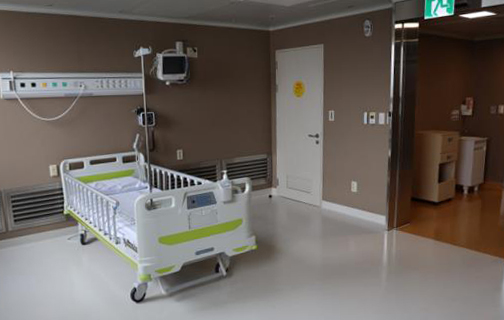
The dedicated attending physician for inpatients system involves specialists, not residents, who are stationed in inpatient wards to provide 24-hour care and treatment for hospitalized patients. As of May, 249 dedicated attending physicians manage patients in approximately 4,000 hospital beds.
Patients positively evaluated this pilot program for ▲ increased opportunities to meet doctors ▲ improved thoroughness of explanations ▲ enhanced treatment expertise. Medical personnel also expressed high satisfaction with ▲ reduced workload ▲ strengthened collaboration.
Additionally, the average waiting time in emergency rooms decreased, and hospital stays shortened. It was also assessed that hospital-related risks such as complications, pneumonia, pressure ulcers, falls, fractures, and hospital-acquired infections among patients in wards with dedicated attending physicians significantly improved.
Reflecting these points comprehensively, the Ministry of Health and Welfare decided to convert the dedicated attending physician system into a full-scale program and establish management fees.
The system will be categorized based on physician deployment levels into a 5-day week (daytime), 7-day week (daytime), and 7-day week (24-hour) types. Medical institutions will be paid fees ranging from 15,750 KRW to 44,990 KRW per patient, with the number of patients per specialist not exceeding 25.
From April 1 next year, health insurance will also cover artificial dermis, an expensive treatment material used in skin reconstruction surgeries for patients with severe burns or trauma. Previously, using two pieces of artificial dermis (40?80 cm²) in severe burn surgeries cost 1.68 million KRW for treatment materials, but this cost will be reduced to 35,000 KRW going forward.
From July 1 next year, health insurance will apply at 80% of preliminary coverage for general treatment materials such as wound dressings, synthetic gauze dressings, and hemostatic pads, which are used for various treatments including hemostasis and dressing.
From January 1 next year, permanent implantation of low-dose radioactive isotopes (Iodine-125) into the prostate tissue of prostate cancer patients will also be converted to essential coverage. Previously, patients bore procedure costs ranging from 3.72 million to 7.5 million KRW, but with essential coverage, this will be significantly reduced to 370,000 to 750,000 KRW.
The Ministry of Health and Welfare also set the upper price limits for new health insurance-covered drugs, including 'Evenity Ju Prefilled Syringe' for osteoporosis treatment in postmenopausal women and 'Vizimpro Tablets' for advanced and metastatic non-small cell lung cancer.
The Evenity Ju Prefilled Syringe is priced at 123,700 KRW per injection. Previously, patients had to pay about 2.97 million KRW annually for medication costs, but after health insurance coverage, this will be reduced to approximately 890,000 KRW.
Vizimpro Tablets are priced at 16,052 KRW per 15 mg tablet, 24,684 KRW per 30 mg tablet, and 32,105 KRW per 45 mg tablet. Based on the 45 mg dosage, annual medication costs, which previously reached 11.7 million KRW without coverage, will decrease to about 580,000 KRW.
Additionally, the upper price limit for 'Sertuler Tablets,' a treatment for multidrug-resistant tuberculosis caused by tuberculosis bacteria resistant to two or more anti-tuberculosis drugs, was set at 145,676 KRW per 100 mg tablet. The Ministry plans to enable insurance coverage for these treatments starting December.
To reduce the medical expenses burden for patients with rare and severe incurable diseases, the scope of the 'Health Insurance Copayment Reduction Special Case System,' which lowers the costs patients must bear, has been expanded.
Patients with rare diseases currently pay 20% of inpatient costs and 30?60% of outpatient treatment costs directly, but with the special case application, their copayment rate is reduced to about 0?10%.
Sixty-eight rare diseases, including keratoconus, which causes vision loss due to corneal deformation, and anencephaly, where cerebrospinal fluid fills the space where the brain should be, have been designated as national management targets and will be eligible for the special case application.
Regarding atopic dermatitis, which previously had no distinction between mild and severe cases, a new disease code for 'Severe Atopic Dermatitis' was established in July, and it will be included in the special case coverage starting next year. Consequently, the annual medication cost for dermatitis treatment (Dupixent Prefilled Syringe), which ranged from about 5 million to 12 million KRW, will be reduced to around 2 million KRW.
There were cases where severe burn patients could not receive special case coverage during the period 1 to 1.5 years after the special case application period expired, when surgery due to burns was necessary. Accordingly, the Ministry plans to improve the system so that patients with severe conditions or high medical expenses can receive special case coverage when surgery due to burns is needed after the special case period expires.
© The Asia Business Daily(www.asiae.co.kr). All rights reserved.
![From Bar Hostess to Organ Seller to High Society... The Grotesque Con of a "Human Counterfeit" [Slate]](https://cwcontent.asiae.co.kr/asiaresize/183/2026021902243444107_1771435474.jpg)
















