Justice Barrett, Nominated by Trump, Plays Decisive Role
Rulings Change Due to Supreme Court Composition Shift
[Asia Economy Reporter Naju-seok] A ruling has been made that the number of people in religious facilities cannot be restricted for the purpose of preventing the spread of the novel coronavirus infection (COVID-19).
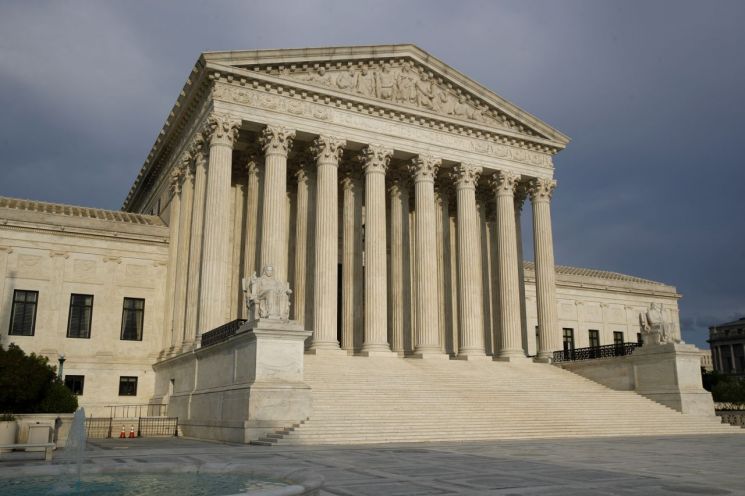
On the 25th (local time), the U.S. Supreme Court overturned by a 5-4 vote the measure by New York Governor Andrew Cuomo that limited the number of attendees at religious services.
Governor Cuomo issued the measure this spring as new COVID-19 cases surged mainly in religious facilities, restricting attendance to 10 people in the high-risk Red Zone and 25 people in the relatively less risky Orange Zone. This measure was applied even to churches that could accommodate more than 1,000 worshippers.
The Supreme Court explained regarding this decision that "Governor Cuomo's restrictions violate the amendment clause that guarantees religious freedom." Justice Neil Gorsuch commented on Cuomo's measure, saying it was "closer to secular activities than religious ones."
This ruling is regarded as a clear demonstration of the conservative shift in the Supreme Court, as it is the first decision made after Justice Amy Coney Barrett was appointed. Justice Barrett was appointed by President Donald Trump following the passing of progressive Justice Ruth Bader Ginsburg and is reported to have played a decisive role in the ruling. With Justice Barrett's participation, the Supreme Court shifted to a conservative majority.
The New York Times (NYT) noted that this ruling contrasts with the Supreme Court's May decision that upheld restrictions on religious services imposed by the governors of California and Nevada, evaluating that the Supreme Court has clearly shown a conservative stance.
© The Asia Business Daily(www.asiae.co.kr). All rights reserved.

















