City Research Forecasts Economic Impact of Vaccine Distribution... Assuming Launch by December This Year
"Developing Countries Will Barely See Effects Next Year Due to Advanced Countries' Vaccine Preemption"
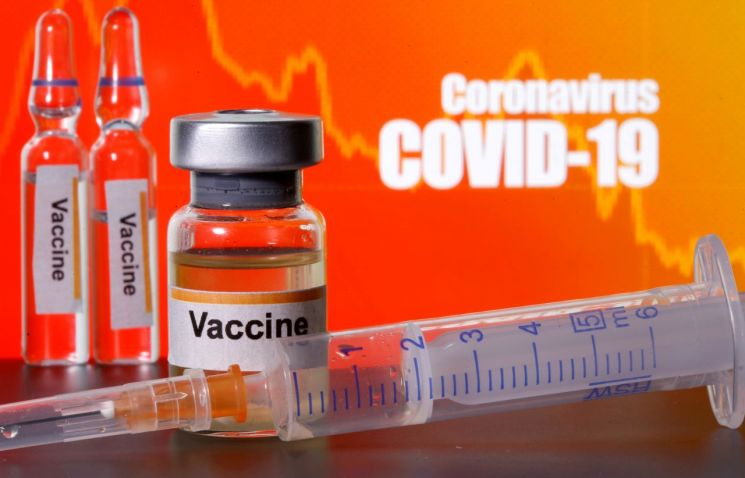
[Asia Economy Reporter Jeong Hyunjin] As expectations for the development of a novel coronavirus (COVID-19) vaccine grow, it is projected that economic effects from the vaccine will not be realized until at least the end of next year. Even if vaccine supply begins as early as next month, the impact on boosting the actual Gross Domestic Product (GDP) is expected to become noticeable only in the year after next.
According to CNBC on the 24th (local time), Citi Research, a subsidiary of Citigroup, recently released a report analyzing the economic effects of vaccine distribution amid positive clinical trial results from three companies developing vaccines: Pfizer, Moderna, and AstraZeneca. The report assumes that these three vaccines will receive emergency use authorization and begin distribution between December this year and January next year, leading to herd immunity and normalization of economic activities, and forecasts changes in global GDP growth rates accordingly.
Citi Research estimated that the GDP growth rate increase due to vaccines this year will be limited to 0.7 percentage points. Next year, the effect of vaccine distribution on global economic growth is expected to rise to around 3.0 percentage points. This takes into account that even if vaccine supply starts soon, some time will be needed for production and distribution stages.
In particular, it is expected that this year vaccines will mainly be supplied to developed countries, with limited distribution to developing countries. Citi Research explained that developed countries such as the United States, European Union (EU), United Kingdom, Japan, Canada, and Australia have secured about 85% of pre-orders through individual contracts. Major developed countries are expected to begin mass vaccine distribution in the second to third quarters of next year, with herd immunity forming in the fourth quarter, leading to an annual growth rate increase effect of 1.2 percentage points, which is projected to grow further to 3.9 percentage points in 2022.
However, for developing countries, the growth rate increase effect from vaccine supply next year is expected to be only 0.1 percentage points, rising to about 2.0 percentage points in 2022. Citi Research explained that the relatively smaller economic effect compared to developed countries is because countries like China already have a stable COVID-19 situation, reducing the economic shock.
Citi Research added that there remain various uncertainties such as the actual effectiveness of vaccines to be supplied and the speed of vaccine distribution, so the timing of achieving herd immunity may vary depending on these factors.
© The Asia Business Daily(www.asiae.co.kr). All rights reserved.
![Clutching a Stolen Dior Bag, Saying "I Hate Being Poor but Real"... The Grotesque Con of a "Human Knockoff" [Slate]](https://cwcontent.asiae.co.kr/asiaresize/183/2026021902243444107_1771435474.jpg)
















