Metropolitan Area Social Distancing Raised to Level 2
Concerns Over 'Silent Spread' Among Asymptomatic Young Adults
Calls to Avoid Hunting Pochas, Clubs, and More
Jung Eun-kyung: "Strengthened Quarantine Measures Needed for Early 20s"
 On the afternoon of October 31, Halloween Day, the Bupyeong Theme Street area in Bupyeong-gu, Incheon City, was bustling with citizens going out.
 [Image source=Yonhap News]
[Asia Economy Reporter Seunggon Han] As the novel coronavirus infection (COVID-19) is rapidly resurging, concerns are rising that so-called 'COVID-19 insensitivity' among young people in their 20s and 30s is exacerbating the situation. The number of new confirmed cases continues to increase. According to health authorities, as of the 24th, the daily number of COVID-19 confirmed cases was recorded in the 300s.
In the phase of COVID-19 spread close to a third wave, most confirmed cases have emerged in areas densely populated by young people. Confirmed cases have been occurring one after another mainly around university areas such as Seoul National University, Yonsei University, Korea University, and Sogang University. COVID-19 is spreading in spaces crowded with young people, including nearby pubs and cafes, as well as the academy district in Noryangjin, Seoul, where many civil service exam candidates gather.
As a result, criticism is emerging that people in their 20s and 30s are not properly following quarantine rules. Especially on weekends, there is even outcry that the young crowd gathering at hunting bars, clubs, and entertainment establishments is excessive.
Another issue is that young people who test positive for COVID-19 often have asymptomatic or mild cases, so they may not realize they are infected and can become a kind of 'human infection source' spreading the virus to family or acquaintances.
COVID-19 is contagious from two days before symptom onset during the incubation period without symptoms, up to three days after onset. However, if individuals do not recognize symptoms at all during this period and remain active for 4 to 5 days, the possibility of cluster infections or community spread inevitably increases.
 The scene of Itaewon Street in Yongsan-gu, Seoul, on Halloween Day, October 31. [Image source=Yonhap News]
Given this situation, sharp criticism from citizens continues. Mr. Kim, a company employee in his 40s, said, "I understand that young people want to have fun, but isn't this a COVID-19 situation now? They may think they are fine, but other people’s lives are at risk," he pointed out.
Mr. Lee, a worker in his 30s, expressed frustration, saying, "People may go to crowded places to drink, but please follow the quarantine rules well. What if one person causes harm to many others?" He added, "The recent sudden spread of COVID-19 seems to be caused by young people going to hunting bars and similar places."
According to health authorities, these 'hidden infected' individuals are three times more common among people in their 20s than the general population. 'Hidden infected' refers to those who test positive for COVID-19 but have no particular symptoms and are unaware of their infection.
The condition for being a 'hidden infected' is the antibody formation rate. A high antibody level means many cases pass without knowing they were infected with COVID-19, which implies they can spread the virus to family or acquaintances during this process.
According to health authorities, among 6,859 military recruits tested, 15 who had never been confirmed positive for COVID-19 were found to be antibody positive, showing an antibody positivity rate of 0.22%, which is much higher than the general population's positivity rate of 0.07%.
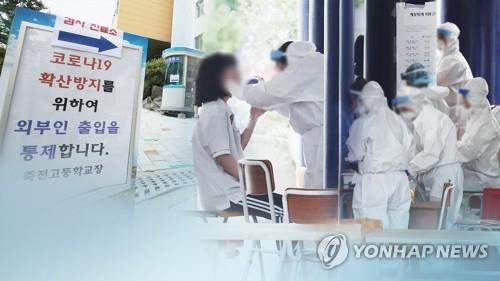
Ultimately, analyses suggest that the careless response of 'hidden infected' people in their 20s combined with 'silent transmission' is driving the rapid spread of COVID-19. However, health authorities caution against generalizing these survey results and urge strengthening quarantine measures to find 'hidden infected' individuals.
Jung Eun-kyung, head of the Central Disease Control Headquarters, announced the antibody positivity results on the 23rd, emphasizing, "Young age groups often have asymptomatic or mild infections and remain socially active without seeking medical care or testing, which significantly increases the risk of spreading infection within the community. Therefore, it is necessary to strengthen quarantine management for people in their early 20s."
She also stated that when there are many asymptomatic or mild young patients, epidemiological investigations become considerably difficult. Jung said, "A large number of exposures occur from two days before symptom onset to three days after, which is a highly infectious period. One confirmed patient visits at least more than 10 places," adding, "The more places a confirmed patient has been, the more difficult it becomes for public health centers."
She continued, "Although epidemiological investigation support teams are operating for contact tracing, if a public health center has 4 to 5 new patients per day, it must trace 40 to 50 places daily," and added, "We are expanding the capacity to continue epidemiological investigations."
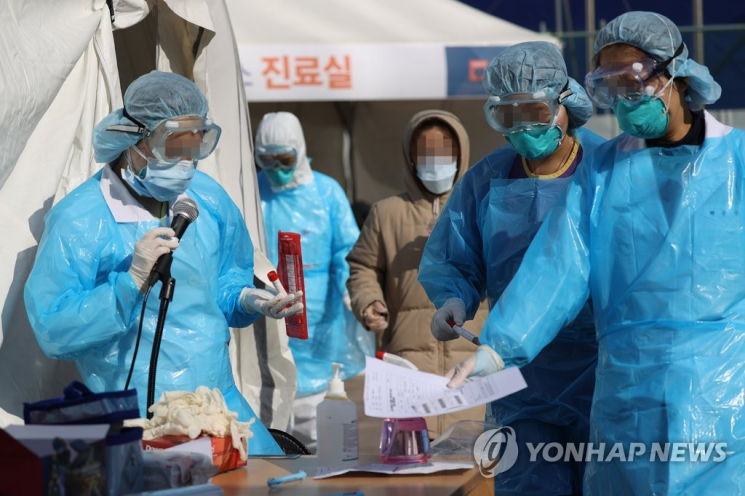 On the morning of March 2nd, medical staff were busy moving around at the screening clinic installed at Seoul Medical Center in Jungnang-gu, Seoul.
 [Image source=Yonhap News]
Meanwhile, the government urged minimizing all contacts and meetings, warning that the risk of infection is higher than ever due to the third wave of COVID-19.
Kang Do-tae, the first chief coordinator of the Central Disaster and Safety Countermeasure Headquarters, said at a Central Disaster and Safety Countermeasure Headquarters meeting held at the Government Sejong Complex on the morning of the 24th, "Yesterday (the 23rd), more than 300 confirmed cases occurred. The new pattern of the third wave, which we have never experienced before, predicts a more difficult and challenging winter."
Kang explained, "Infections from gatherings among family, relatives, and acquaintances account for 60% of total infections, and chain infections in daily life are rapidly increasing. Infections among young people under 40, who have no special symptoms and are highly active, are increasing, and the cold weather, which enhances virus transmissibility, is adding to the triple burden on quarantine."
He emphasized, "In the current situation where community infections are widespread and the risk of infection is higher than ever, the only way to break the chain of infection and prevent large-scale spread is to minimize all contacts and meetings in daily life."
© The Asia Business Daily(www.asiae.co.kr). All rights reserved.



















