Devastating Damage to the Fisheries Industry Is Inevitable
Will Stand in Solidarity with ICA Member Countries
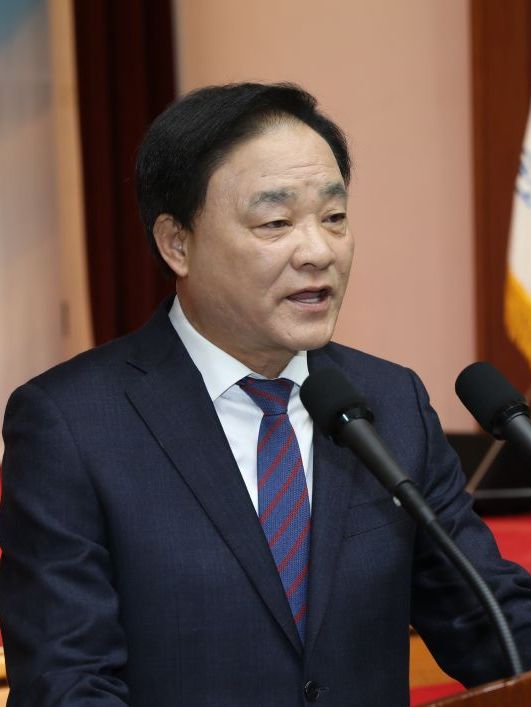
[Sejong=Asia Economy Reporter Joo Sang-don] Lim Joon-taek, Chairman of the National Federation of Fisheries Cooperatives (Suhyup), warned that "if Japan forcibly proceeds with the discharge of contaminated water from the Fukushima nuclear power plant into the ocean, we will strongly respond in solidarity with the member countries of the International Cooperative Alliance (ICA) Fisheries Committee." He expressed that the direct and indirect damage to fishermen would be significant and absolutely unacceptable.
According to Suhyup on the 24th, Chairman Lim recently met with Masato Nagai, Counselor of the Japanese Embassy, and stated, "We demand that the Japanese government withdraw its plan to discharge contaminated water from the Fukushima nuclear power plant into the ocean and actively cooperate to prevent any damage to fishermen." This meeting was arranged at the request of the Japanese Embassy to seek understanding regarding the contaminated water treatment plan.
At the meeting, Counselor Nagai explained that Japan's method of treating the contaminated water is scientifically safe and positively evaluated by international organizations such as the International Atomic Energy Agency (IAEA), and intended to seek understanding from Korean fishermen including Suhyup. However, Chairman Lim strongly protested and demanded the withdrawal of the plan. He clearly stated, "The method of treating contaminated water should not be decided unilaterally by Japan but must undergo sufficient scientific verification by the international community. As the representative institution of Korean fisheries, we absolutely cannot accept the ocean discharge of nuclear power plant contaminated water."
Chairman Lim continued, "According to a survey by the Ministry of Oceans and Fisheries, domestic seafood consumption dropped sharply by about 40% in traditional markets and about 20% in large supermarkets following media reports related to radioactive contaminated water discharge in 2013, so the fisheries industry is highly sensitive to the discharge of contaminated water." He emphasized, "The ocean discharge of radioactive contaminated water will affect not only the Japanese coast but also Korea, and even if there is no direct damage from radioactive substances, the fisheries industry will inevitably suffer devastating damage due to a sharp decline in seafood consumption."
The Japanese government is discussing treatment methods as the storage capacity limit (1.37 million tons) of contaminated water generated from the 2011 Fukushima nuclear power plant radioactive leak accident approaches. It had planned to decide on the treatment method on the 27th of last month but postponed the decision due to domestic opposition in Japan.
A Suhyup official said, "During the Counselor-Chairman meeting, the Japanese side said 'the ocean discharge has not been decided,' but it seemed as if they spoke on the premise of ocean discharge," expressing concern that it might be a 'pretext to claim they heard the opinions of Korean fishermen who will be affected by the contaminated water treatment decision."
In fact, the Japanese Embassy stated to the Korean media the day after the meeting with Chairman Lim that "the Japanese government is considering two options for contaminated water treatment: ocean discharge and vapor release, and a decision will be made soon or within this year." This indicated that the contaminated water treatment plan would be finalized soon. Until now, the Japanese government has claimed that contaminated water stored in tanks installed at the Fukushima nuclear power plant site, when treated with the Advanced Liquid Processing System (ALPS), removes most radioactive substances such as Cesium-137 and Strontium-90, leaving only tritium, which is difficult to remove with current technology.
The Korean government has taken the stance that "ocean discharge is unacceptable" and is strengthening solidarity with the international community. In October last year, the government expressed concerns to Japan regarding the Fukushima nuclear power plant contaminated water treatment issue at the International Maritime Organization (IMO) London Convention and Protocol Conference of the Parties and requested attention at the conference level. In September this year, at the IAEA General Conference, Jeong Byung-sun, 1st Vice Minister of the Ministry of Science and ICT, emphasized in a keynote speech that "the ocean discharge of nuclear power plant contaminated water is an issue that could affect the global marine environment, so sufficient review of the appropriateness of the method and the medium- to long-term environmental risks is necessary, and cooperation with stakeholders as well as coordination with the international community including the IAEA is essential." At the 9th Korea-IAEA High-Level Policy Dialogue held on the 3rd, the Ministry of Foreign Affairs requested the IAEA to ensure transparency and play an active role in safety verification regarding the Fukushima contaminated water treatment.
© The Asia Business Daily(www.asiae.co.kr). All rights reserved.
![User Who Sold Erroneously Deposited Bitcoins to Repay Debt and Fund Entertainment... What Did the Supreme Court Decide in 2021? [Legal Issue Check]](https://cwcontent.asiae.co.kr/asiaresize/183/2026020910431234020_1770601391.png)















