Ministry of Oceans and Fisheries Hosts '2019 National Seafood Wholesale Market Evaluation' - Garak Market Selected Best in Market Operator Category...Urgent Need to Normalize Dual Listing Auction System Between Production and Consumption Areas to Reflect Seafood Trade Realities and Enhance Competitive Distribution
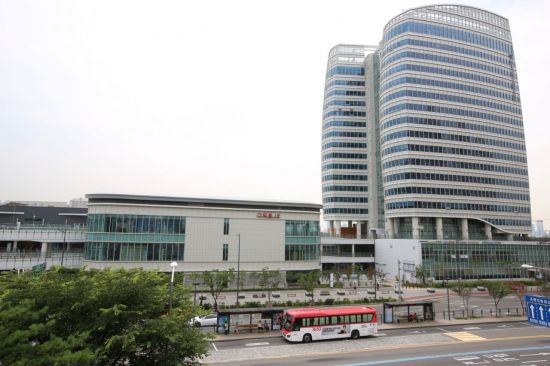
[Asia Economy Reporter Jong-il Park] Garak Market, managed by the Seoul Agro-Fisheries & Food Corporation (President Kim Kyung-ho), was selected as the best wholesale market nationwide in the market operator category in the 2019 evaluation of seafood wholesale markets conducted by the Ministry of Oceans and Fisheries.
Additionally, in the wholesale market corporation category, Garak Market's Gangdong Fisheries and Seoul Dried Seafood were evaluated as excellent corporations.
The evaluation covered 50 locations including central and local wholesale market operators and wholesale market corporations, based on performance reports submitted in 2019.
However, the volume of seafood traded at Garak Market has fallen to less than half compared to its peak in 1992 (195,000 tons), showing continued sluggishness.
According to the 'State of World Fisheries and Aquaculture (SOFIA)' published this year by the Food and Agriculture Organization (FAO), "Korea's per capita annual seafood consumption (based on 2013?2015 data) is 58.4 kg, ranking first among major countries worldwide," exceeding Norway (53.3 kg) and Japan (50.2 kg), both known as strong seafood nations.
Despite this increase in consumption, the decline in trade volume is a common phenomenon among the five metropolitan public wholesale markets (Garak, Guri, Ansan, Anyang, Suwon).
Domestic seafood distribution undergoes two distinct listing processes. At the production site auction markets where fishermen ship their catch, 87% of coastal seafood is traded through listing auctions under the 'Act on the Management and Support of Seafood Distribution.' The seafood listed first at the production site auction markets must then undergo a second listing auction at consumer public wholesale markets under the 'Agricultural and Fishery Products Distribution and Price Stabilization Act' (hereinafter referred to as the Agricultural Distribution Act).
When seafood listed first is brought into consumer public wholesale markets, costs such as consignment fees, unloading charges, and transportation fees increase, reducing distribution competitiveness.
Ultimately, public wholesale markets, which are funded by substantial public taxes, fail to respond to changing distribution environments due to rigid auction systems, losing competitiveness and drifting away from their original purpose of protecting the interests of producers and consumers.
Nevertheless, some public wholesale markets have seen increased trade volumes during the same period (2008?2018). Daegu Bukbu Market and Andong Market (opened in July 2016) have experienced visible growth rates and concurrent development. In particular, Daegu Bukbu Market's growth rate reached 117%, increasing by 8.7% annually, with the 2018 trade volume hitting a record high of 20,723 tons.
Although located in inland consumer cities like Garak Market and other metropolitan markets, which all operate primarily under auction systems run by wholesale market corporations, Daegu Bukbu and Andong Markets have maintained growth by adopting the market wholesaler system.
As a central wholesale market, Garak Market could introduce market wholesalers under the Agricultural Distribution Act revised by the National Assembly in 2000; however, it has not done so due to restrictions in the enforcement regulations of the Agricultural Distribution Act.
Despite the introduction of the market wholesaler system leading to reduced profits for wholesale market corporations, the central government has made agreement with these corporations a condition for introducing the market wholesaler system.
Furthermore, after Garak Market opened, Seoul City and the Corporation jointly conducted a distribution status survey (July 2019?February 2020) targeting three seafood wholesale market corporations, approximately 450 intermediate wholesalers, and about 1,800 shippers, directly confirming from affiliated auctioneers and intermediate wholesalers that record listing and formal auctions ignoring legal regulations are widespread.
Seoul City and the Corporation held a seafood subcommittee under the Market Management Operation Committee, a legal deliberative body, to improve structural problems; however, the three wholesale market corporations have continuously refused to participate, shifting responsibility to the Corporation as the market manager.
Accordingly, the Corporation has inevitably reported the three wholesale market corporations to judicial authorities for violating the Agricultural Distribution Act to protect the rights and interests of agricultural and fishery product shippers and consumers as a public wholesale market.
The operational system issues of wholesale market corporations are not limited to Garak Market. In Daegu Bukbu Wholesale Market, a prosecution investigation in 2007 confirmed that 90% of seafood trade over three years was illegal, which led to the transition from an auction system to a market wholesaler system in 2008.
Recently, a distribution status survey was conducted in November 2020 on seafood wholesale market corporation auctions at Guri Wholesale Market, resulting in the conclusion that redefining the functions and roles of seafood wholesale markets is necessary.
The Ministry of Oceans and Fisheries is also conducting a research project until December this year to develop measures for 'Efficiency Improvement of Seafood Wholesale Market Operation Organizations and Trading Systems.' In response, seafood intermediate wholesalers at Garak Market expressed, "We hope that this opportunity will lead to the expansion of non-listed items reflecting reality and the introduction of the market wholesaler system, allowing many intermediate wholesalers to operate more freely."
Son Bong-hee, head of the seafood team, said, "We have been making multifaceted efforts through various channels such as the Garak Market Management Operation Committee, Seafood Subcommittee, and Seafood Market Development Council to normalize seafood trade. We hope that wholesale market corporations will participate in the upcoming Seafood Subcommittee to exchange diverse opinions and derive reasonable solutions to the fundamental problems of seafood trade systems."
President Kim Kyung-ho emphasized, "We will improve the dual listing auction system in seafood distribution, expand shippers' choice of shipment, reduce distribution costs, and protect the rights and interests of producers and consumers."
© The Asia Business Daily(www.asiae.co.kr). All rights reserved.
















