Embassy of Japan in Korea Holds Unprecedented Briefing Ahead of Fukushima Contaminated Water Release
"Considering Both Ocean and Vapor Discharge Options," Reaffirms Proceeding
"Cannot Remove Tritium but Claims No Reported Damage"
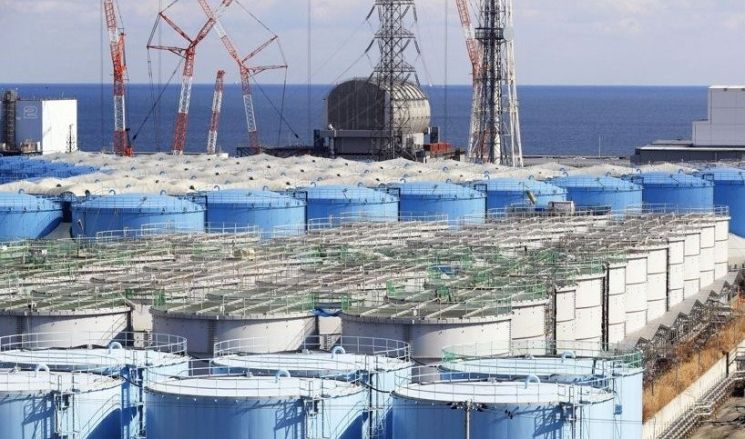
[Asia Economy Reporter Lim Cheol-young] "The Japanese government is considering two options for contaminated water treatment: ocean discharge and vapor release, and a decision is expected soon. It is possible that a decision will be made within this year."
As the Japanese government reviews the plan to discharge contaminated water from the Fukushima Daiichi Nuclear Power Plant into the ocean, on the 20th, the Embassy of Japan in Korea directly conveyed this position of the Japanese government to Korean media. This is the first time the Japanese government has directly explained its contaminated water discharge policy to Korean media, which appears to be part of a process to build justification for pushing forward with the discharge policy.
An official from the Embassy of Japan in Korea said, “The decision on (contaminated water discharge) cannot be postponed indefinitely, and we have heard that the Japanese government plans to decide soon,” adding, “We have been providing information transparently to the international community. We have made efforts to alleviate the concerns of the Korean people and will continue to do so.”
The Japanese government has been promoting a plan to discharge contaminated water stored in tanks installed at the Fukushima nuclear power plant site into the sea after purification through the Advanced Liquid Processing System (ALPS). The Japanese government claims that ALPS treatment removes almost all radioactive substances such as Cesium-137 and Strontium-90, leaving only tritium, which is difficult to remove with current technology, and tried to decide on the contaminated water discharge on the 27th of last month. However, the decision was postponed due to domestic opposition in Japan.
An official from the Embassy of Japan in Korea stated, “Regarding the handling of ALPS-treated water, reviews are ongoing within the Japanese government, and the method has not been decided,” and claimed, “There have been no reports of health damage caused by tritium in any nuclear power plant surrounding areas worldwide.”
They also emphasized that other countries and international organizations, except Korea, have not criticized the Japanese government’s policy. The Embassy of Japan in Korea specified in the distributed materials that at the International Atomic Energy Agency (IAEA) regular meeting held in September, the Korean government delegation made critical remarks about Tokyo Electric Power Company's measures, but no such remarks were made by countries other than Korea.
The Japanese government has requested the dispatch of IAEA experts this month to gain international consent regarding the contaminated water discharge. On the 4th, the IAEA sent three local Japanese experts to observe and record seawater, marine sediments, and fish samples along the coast of Fukushima Prefecture until the 20th. This is the 10th dispatch of the IAEA expert team.
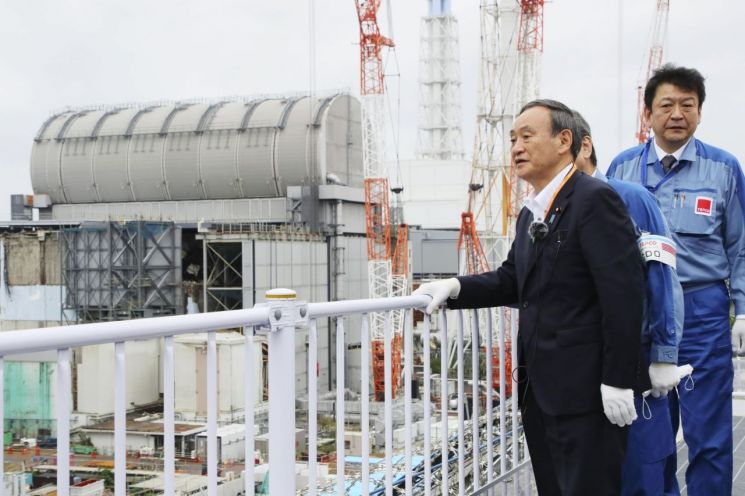
An official from the Embassy of Japan in Korea emphasized, “The IAEA Secretary-General, who visited Japan in February, inspected the Fukushima nuclear power plant and said the response is systematic, ALPS discharge is technically feasible, and follows international practices,” adding, “The IAEA has announced its support.”
However, voices opposing the Japanese government’s discharge policy are growing louder. Jeju Governor Won Hee-ryong warned on the 26th of last month, “The discharge decision should be canceled and everything should be discussed from the beginning,” and said, “If the Japanese government unilaterally decides to discharge despite urgent and legitimate requests, we will have no choice but to take legal action as a last resort.” Subsequently, five cities and provinces adjacent to the Korea-Japan Strait, including Busan, Ulsan, Gyeongnam, Jeonnam, and Jeju, expressed strong regret over the ocean discharge on the 12th and decided to form a joint working group for a coordinated response.
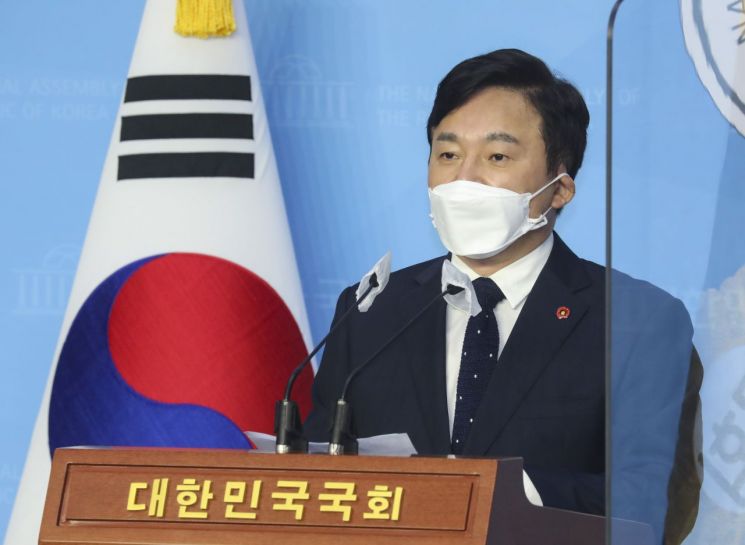
The government conveyed “a grave recognition and serious concern” over the Japanese government’s contaminated water discharge decision during the Korea-Japan diplomatic director-general level talks and plans to actively respond to the Japanese government’s decision process in solidarity with the international community. On the 3rd, the Ministry of Foreign Affairs also requested the IAEA to ensure transparency and play an active role in safety verification related to Fukushima contaminated water treatment at the 9th Korea-IAEA High-Level Policy Dialogue.
A Foreign Ministry official said, “Since the Japanese side has not yet decided on the timing and method of contaminated water treatment, the government is demanding transparent information disclosure and treatment in accordance with international standards, and is cooperating with the international community,” adding, “We will prioritize the health of our people and the protection of the surrounding environment, closely monitor the Japanese side’s contaminated water disposal activities, and plan to take measures based on cooperation with the international community.”
© The Asia Business Daily(www.asiae.co.kr). All rights reserved.
![Clutching a Stolen Dior Bag, Saying "I Hate Being Poor but Real"... The Grotesque Con of a "Human Knockoff" [Slate]](https://cwcontent.asiae.co.kr/asiaresize/183/2026021902243444107_1771435474.jpg)


















