Yoon Sung-won, Deputy Minister of Land, Infrastructure and Transport, MBC Radio Interview
Supply Target Housing Evenly Distributed in Seoul, 'Good Location'
Criticism That the Three Lease Laws Are the Cause
"Not True" "A Growing Pain That Must Be Experienced Once"
Hotel Measures "Not a Core Policy... Feeling Unfair"
Hints at Possible Designation of Ulsan and Cheonan as Regulated Areas if Overheating Continues
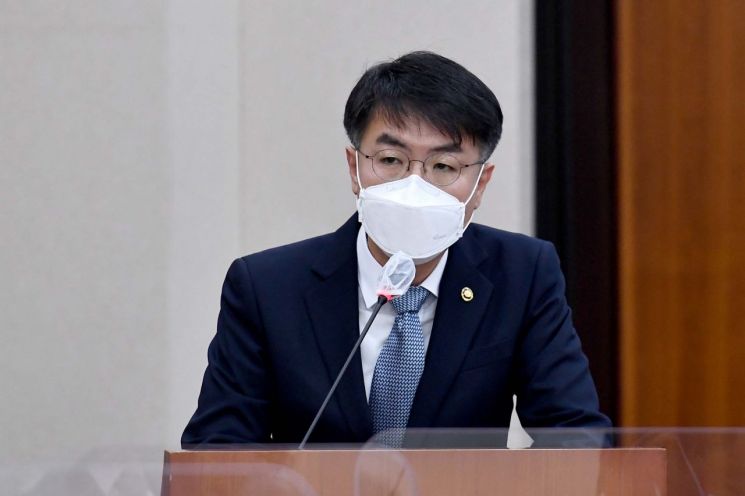 Yoon Sung-won, 1st Vice Minister of the Ministry of Land, Infrastructure and Transport [Photo by Yonhap News]
[Asia Economy Reporter Lee Chun-hee] "National income per capita exceeds $30,000. The growing pains the economy must go through once are the Lease 3 Acts." (Yoon Sung-won, 1st Vice Minister of the Ministry of Land, Infrastructure and Transport)
Yoon Sung-won, 1st Vice Minister of the Ministry of Land, Infrastructure and Transport, appeared on MBC Radio's 'Kim Jong-bae's Focus' on the 20th and said regarding the 11.19 Jeonse measures announced the day before, "Although the number of move-ins in 2022 and next year will be slightly less than this year, if we execute the 114,000 households supplied this time, the move-in volume will be as much as this year," adding, "The measures were made to resolve supply and demand instability." He rebutted criticism that the Lease 3 Acts are the 'culprit' of the recent Jeonse market instability, saying, "That is not the case."
Regarding market concerns that the location of the rental housing supplied through this measure is not good, Vice Minister Yoon dismissed the worries, saying, "Looking at the new purchase agreements this year, locations such as Gwangjin, Dongdaemun, and Seocho districts in Seoul are all good." He added that public rental vacancies are also "evenly spread across the 25 districts of Seoul, including Seocho, Gangnam, and Songpa," and "plans to allocate mainly in convenient areas and near subway stations."
Regarding the plan to supply 44,000 households through new purchase agreements, he explained, "More than 20,000 households requested purchase from private developers this year as well, but because the standards are strict and only good locations and good floor plans are selected, only 3,000 households were purchased this year," emphasizing that supply is sufficiently possible even if relying on the private sector.
In response to criticism that the inclusion of a large number of public Jeonse and medium-sized rental housing targeting the middle class reduces the quantity for low-income groups, he stressed, "Among the 63,000 medium-sized rental households planned for project approval by 2025, 60% will be supplied first to existing eligible tenants, and the rest will also be allocated starting with lower-income groups if competition arises," assuring that there will be no reduction in supply for low-income groups.
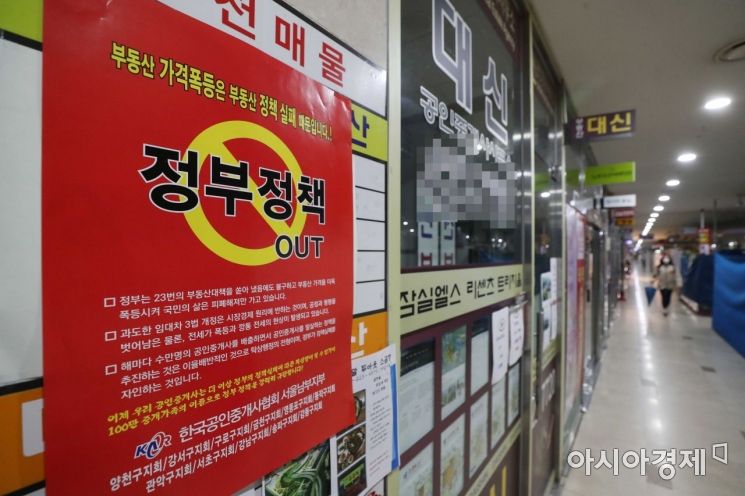 On the 19th, when the government announced its 24th real estate policy, a poster criticizing the government's real estate policy was posted at a real estate agency in Songpa-gu, Seoul. Photo by Mun Ho-nam munonam@
Regarding the market's assertion that the Lease 3 Acts are a major cause of the current Jeonse crisis, he rebutted, "We hear a lot of criticism that the Lease 3 Acts are the culprit, but our opinion is otherwise." He said that after examining 100 apartment complexes in Seoul following the implementation of the Lease 3 Acts, the contract renewal request rate increased, stating, "Seven out of ten tenants are benefiting."
However, he noted, "For newlyweds or those who inevitably have to move, there are no listings," adding, "Supply and demand instability is the underlying issue, and if resolved through measures, Jeonse prices will stabilize," expressing his intention to maintain the current policy direction.
He also expressed a negative stance on the suggestion that increasing private sector supply as well as public supply is necessary to stabilize the rental market. Vice Minister Yoon said, "Gap investment is a double-edged sword," explaining, "Requesting recognition of gap investment means accepting rising sale prices to open the supply channel for Jeonse. Relying on private gap investment to increase Jeonse supply raises the question of whether this is truly stable supply," indicating his intention to continue the current policy. He also said, "National income per capita exceeds $30,000. The growing pains the economy must go through once are the Lease 3 Acts."
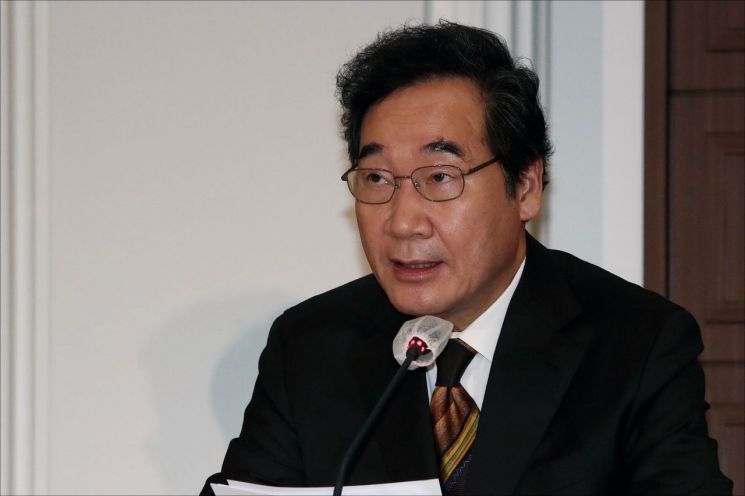 Democratic Party leader Lee Nak-yeon attended the Kwanhun Forum held at the Seoul Press Center on the morning of the 17th and delivered a keynote speech. On that day, Lee said, "(The upcoming jeonse measures) will include plans to convert officetels, commercial buildings, and hotels into residential use and offer them as jeonse or monthly rent." Photo by National Assembly Press Photographers [Image source=Yonhap News]
Regarding the prior emphasis on converting hotels and other lodging facilities to supply before the announcement of the Jeonse measures, he clarified, "The main point of this measure is not hotels but 18,000 public Jeonse housing units and 44,000 new purchase agreement units," adding, "We created several policy programs that can replace hotels, but hotels were overly highlighted. Honestly, the quantity is not much, so it is quite unfair."
Regarding the mention of the failure case of 'station-area youth housing' supplied through the renovation of the Benikea Hotel in Sungin-dong, Jongno-gu, Seoul, he said, "It seems there was a lack of consideration for residents' convenience during operation," and added, "LH will purchase hotels and renovate them to suit residential purposes. Since LH has experience operating public rental housing, cases like those in Seoul will not occur."
Vice Minister Yoon also continued to explain the additional designation of regulated areas made the day before. Regarding the suggestion that Ulsan and Cheonan, Chungnam, in addition to Gimpo City in Gyeonggi, Busan, and Suseong-gu in Daegu, should also be designated as regulated areas, he explained, "House prices in Ulsan and Cheonan have been continuously falling for several years," adding, "Recently, prices have been rising slightly due to redevelopment and reconstruction prospects, so we cannot designate immediately without considering past price trends." However, he said, "We plan to conduct a comprehensive review in December," and "If we judge overheating then, we will designate (regulated areas)."
© The Asia Business Daily(www.asiae.co.kr). All rights reserved.



















