Yoon Han-hong "5.18 Distortion Punishment Law Seems to Punish Different Opinions"
So Byung-chul "It's Not Something That Happened Just the Other Day" Rebuttal
[Asia Economy Reporter Lim Ju-hyung] Controversy has erupted between the ruling and opposition parties over the so-called '5.18 Distortion Punishment Act,' which penalizes distorted and defamatory remarks related to the May 18 Gwangju Democratization Movement. The ruling party defends the bill on the grounds that "the freedom of expression cannot protect even the defamation of victims' dignity," while the opposition counters that it is "an act that harms democracy."
On the 18th, the National Assembly's Legislation and Judiciary Committee held a plenary session to discuss the 'Partial Amendment to the Special Act on the May 18 Democratization Movement, etc.' and submitted the bill to the bill review subcommittee. The core of the bill is the addition of provisions that punish those who slander, distort, fabricate, or spread false information about the May 18 Movement.
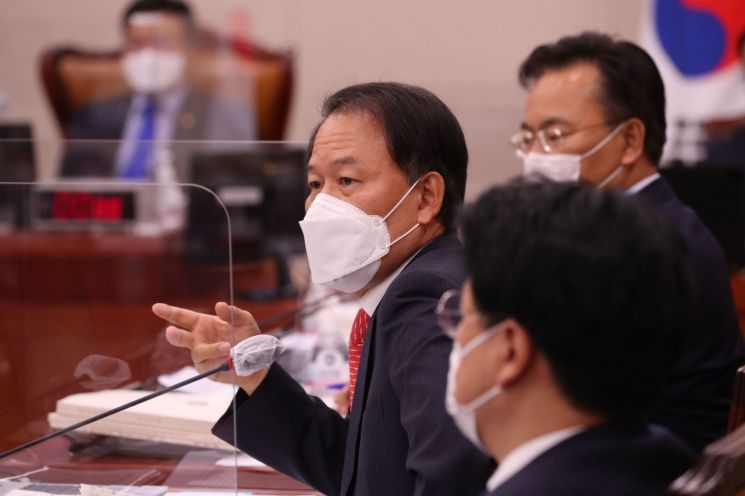
However, on the same day, Yoon Han-hong, a member of the People Power Party, criticized the bill, asking, "Is it appropriate for a democratic country to punish those who express different opinions about May 18?" He pointed out, "The main point of the bill seems to be punishing those who express different opinions about May 18. It makes me feel ashamed to the extent that I question whether our country is truly a democracy."
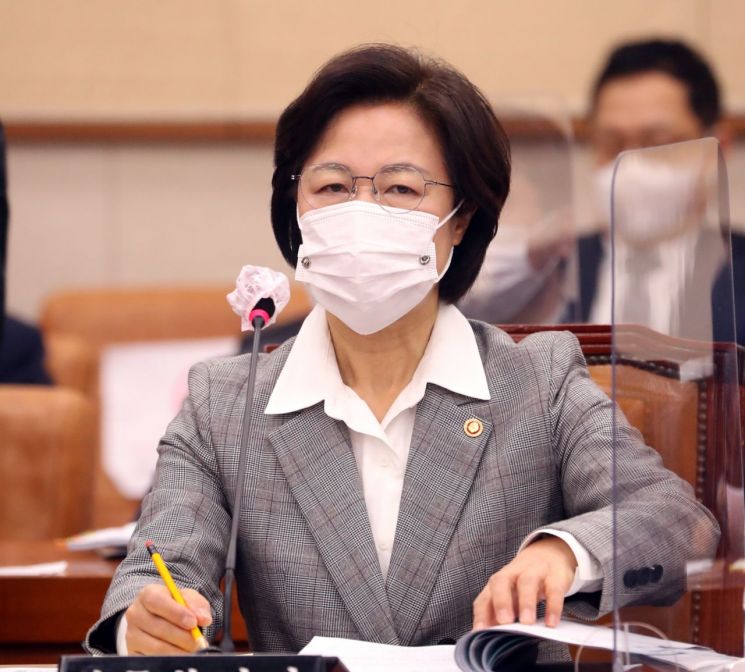 Minister of Justice Choo Mi-ae is attending the plenary meeting of the Legislation and Judiciary Committee held at the National Assembly in Yeouido, Seoul, on the morning of the 18th. / Photo by Yonhap News
He continued, "Historical facts can change depending on the subjective perspective of the evaluator or the spirit of the times, and I am suspicious that a law has been proposed to punish people just because the evaluation content is displeasing," adding, "In the Republic of Korea, shouldn't freedom of expression and freedom of the press be guaranteed?"
Choo Mi-ae, Minister of Justice, explained, "Simply having a different opinion about May 18 cannot be punished, but there is a legislative precedent in Germany where punishment is possible when an official investigation committee with public authority, like the Jeju 4.3 Committee, collects evidence and reveals an official view that poses a danger."
However, Representative Yoon criticized, "This kind of law harms democracy, and the minister should strongly say it is unacceptable."
In response, So Byung-chul of the Democratic Party of Korea said, "Kim Jong-in, the emergency committee chairman of the People Power Party, visited the May 18 cemetery in Gwangju last September and apologized for not wielding a strict whip against the party's distortion remarks on May 18, denying the clear historical facts," adding, "There will be deep discussions in the bill review subcommittee, but such discussions themselves cause wounds to the victims."
He further argued, "Even after 40 years, the bill was proposed because distortion and spreading of false information about May 18 continued until recently," and countered, "It is not that no one should evaluate the May 18 incident that happened just the other day."
Song Ki-heon, also from the same party, pointed out, "Democracy includes freedom of expression, but it cannot protect even human rights violations by state power or distortions that defend such violations."
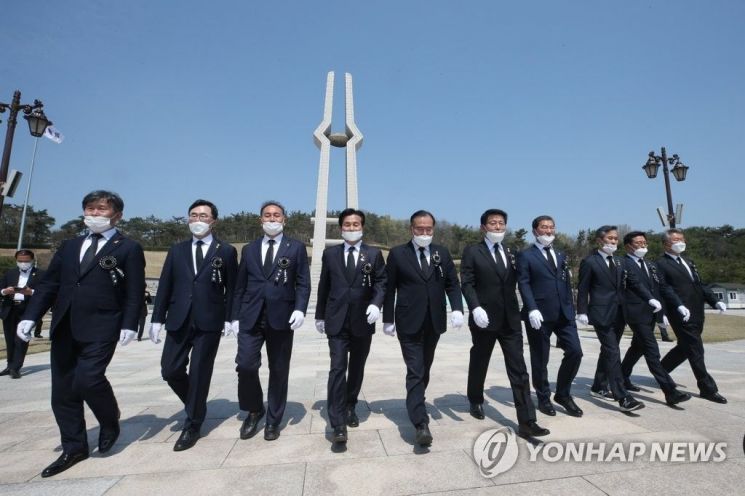 On the morning of May 16, all 10 elected members from the Jeonnam region for the 21st National Assembly election finished paying their respects and were leaving the National 5·18 Democratic Cemetery in Buk-gu, Gwangju. / Photo by Yonhap News
Meanwhile, the 5.18 Distortion Punishment Act was first proposed in the 20th National Assembly but ultimately failed to pass. At that time, the Democratic Party, along with three opposition parties?the Bareunmirae Party, the Party for Democracy and Peace, and the Justice Party?jointly proposed the bill.
Currently, there is no criminal law provision that punishes distorted remarks about May 18. Because of this, organizations related to May 18 have been filing defamation lawsuits against individuals who make distorted remarks one by one.
The problem lies in the difficulty of punishing defamation when the target of the harm is not specifically identified. A representative case is Ji Man-won, who was sued for defamation in 2008 for claiming the 'North Korean military intervention theory' in the May 18 incident but was acquitted in both the first and second trials, and the Supreme Court upheld the acquittal in 2012.
At that time, the Supreme Court acknowledged that Ji distorted May 18 but explained that the reason for upholding the lower court's decision was that "a specific victim was not identified." Because of this, civic groups have been appealing for the necessity of regulations that punish distorted remarks about May 18.
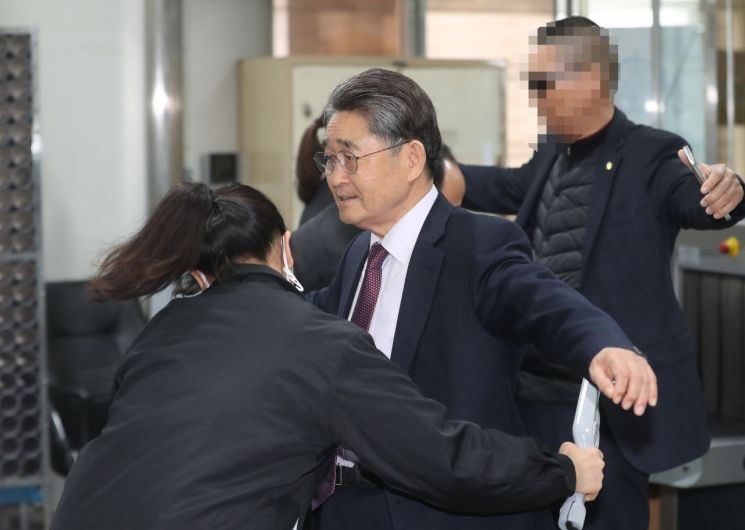 Ji Man-won, who was accused of defamation for claiming that Gwangju citizens who participated in the May 18 Democratic Uprising were North Korean special forces, attended the first trial sentencing hearing held at the Seoul Central District Court in Seocho-dong on February 13 last year and was being searched before entering the courtroom. / Photo by Yonhap News
However, some have raised concerns that the 5.18 Distortion Punishment Act could suppress freedom of expression.
Jin Joong-kwon, former professor at Dongyang University, wrote on his Facebook last month that the 5.18 Punishment Act is "anti-liberal legislation," pointing out, "Various revisionist theories about the Korean War, such as the North Korean invasion theory, induced invasion theory, and the theory that a local war escalated into a full-scale war, are not punished, so it is unacceptable to punish different views on May 18 by law."
He added, "It is a pro-Japanese tomb excavation law that tries to solve the issue of national merit by law, which should be left to civil society consensus," and argued, "The legislation by the Democratic Party generally tends to be anti-liberal."
Legal circles have also pointed out that the introduction of such a bill should be approached cautiously.
Son Ji-won, a lawyer at the nonprofit organization 'Open Net,' said at a meeting held last April at the Open Net office in Seocho-gu, Seoul, "The significance of May 18 is a noble value. Everyone would agree that acts that damage it should be countered," but added, "Legislation should be approached from the perspective of freedom of expression. The precedent of the state defining historical facts and criminally punishing those who deny them could hinder the development of democracy."
© The Asia Business Daily(www.asiae.co.kr). All rights reserved.



















