Panic Buying Continues Amid Jeonse and Monthly Rent Crisis... Some Citizens Max Out Credit Loans
Citizens Frustrated Over Credit Loan Regulations
Experts Say "Vicious Cycle of Jeonse and Monthly Rent Crisis... Urgent Need for Fundamental Measures"
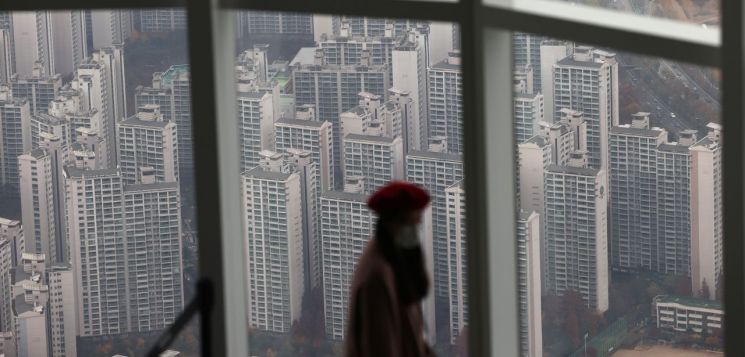 On the afternoon of the 18th, ahead of the government's real estate jeonse measures announcement to resolve the jeonse housing shortage, a view of an apartment complex from Lotte World Tower Seoul Sky in Songpa-gu, Seoul / Photo by Yonhap News
[Asia Economy Reporter Kim Gayeon] "I feel like I won't be able to buy my own home later."
Since the government introduced real estate measures such as the Three Lease Laws, the rental and jeonse (key money deposit) crisis has spread, deepening citizens' sighs. Some citizens have resorted to 'Yeongkkeul' (meaning gathering money by pulling together every bit of their soul) by taking out unsecured loans to buy multi-family and multi-unit houses amid soaring jeonse prices, while others have turned to purchasing small and medium-sized apartments in the outskirts of Seoul metropolitan area or in provincial large cities. Experts suggest that the issue of supply suppression in the real estate market needs to be addressed.
The rental and jeonse crisis is spreading mainly in the metropolitan area. With jeonse prices soaring and listings scarce, panic buying seems to be intensifying. Citizens who have not been able to secure their own homes are growing anxious, especially since the spike in jeonse prices sometimes leaves little difference from sale prices.
Seoul apartment jeonse prices have been rising for 72 consecutive weeks. According to the weekly apartment price trends from the Korea Real Estate Board, as of the 9th, Seoul apartment jeonse prices rose by 0.14%. This increase is larger than the previous week's 0.12%.
Following the rise in jeonse prices, apartment prices in the metropolitan area also increased by 0.15%. Incheon saw a 0.16% rise, up 0.01% from the previous week, while Gyeonggi Province maintained a 0.23% increase. Apartment prices in provincial metropolitan cities also rose by 0.27%. This marks the highest increase rate in 8 years and 6 months since statistics have been compiled.
In particular, on the 13th, the Financial Services Commission and the Financial Supervisory Service announced the 'Household Loan Management Plan,' which has sparked criticism among citizens calling it a "Yeongkkeul ban." As a result, many citizens are trying to secure their homes by taking unsecured loans before the regulation takes effect on the 30th.
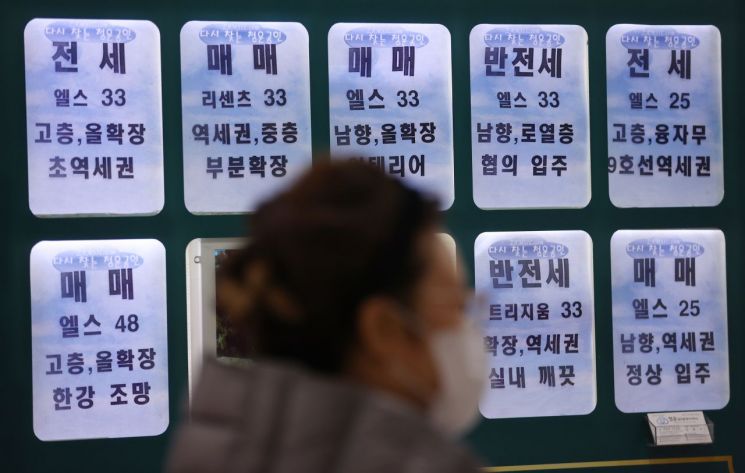 Amid the government's announcement of real estate jeonse measures to resolve the jeonse housing shortage, the scene of a real estate brokerage office in Songpa-gu, Seoul, on the morning of the 18th / Photo by Yonhap News
Office worker A (30) recently said, "I bought a small apartment on the outskirts of Seoul," adding, "Personally, I felt burdened by the idea of buying a house, so I had been living on jeonse, but with the continuous real estate measures this year, I felt I couldn't delay any longer."
A said, "There are quite a few people around me who buy homes with their parents' help. I also took out all possible loans to buy a small apartment," adding, "Although commuting takes some time, I thought it was better than living anxiously watching the continuously rising jeonse and sale prices."
According to banks on the 17th, online non-face-to-face unsecured loans surged over the weekend (14th-15th) following the announcement of the 'Household Loan Management Plan' on the 13th.
Bank A processed 719 online unsecured loan cases totaling 30.4 billion KRW. This amount is more than four times the previous week's 348 cases and 7 billion KRW. Bank B also saw 234 unsecured loan cases worth 6.7 billion KRW, about three times the previous weekend's 155 cases and 2.7 billion KRW.
The number of new personal unsecured loans at the five major domestic banks also surged. As of the 16th, the outstanding balance of unsecured loans at the five major commercial banks?KB Kookmin, Shinhan, Hana, Woori, and NH Nonghyup?was 130.5064 trillion KRW. This is an increase of 1.011 trillion KRW from the 129.5053 trillion KRW recorded on the 12th.
Meanwhile, according to the ruling party and government on the 18th, the Ministry of Economy and Finance and the Ministry of Land, Infrastructure and Transport plan to announce a jeonse measure on the 19th, which includes supplying up to 100,000 public rental housing units such as purchase and jeonse rentals.
Experts emphasize that supply issues must be addressed first to stabilize the real estate market.
Professor Kim Taegi of Dankook University's Department of Economics said, "The rapid rise in housing prices is leading to a jeonse and monthly rent crisis," adding, "The government is preparing policies to stabilize the real estate market and ease prices, but it cannot overcome the actual market supply and demand situation."
Professor Kim added, "While forced measures (to ease real estate prices) may have short-term effects, the fundamental cause of supply suppression must be resolved," warning, "Otherwise, additional measures are unlikely to be very effective."
© The Asia Business Daily(www.asiae.co.kr). All rights reserved.


















