[Asia Economy Reporter Park So-yeon] The global electric vehicle (EV) and battery markets, which had been stagnant due to the novel coronavirus disease (COVID-19), began to recover from the third quarter and are expected to maintain their explosive growth rates seen in previous years. The anticipated global leaders are Volkswagen (electric vehicles) and LG Chem (batteries).
On the 17th, SNE Research presented this outlook at the secondary battery seminar 'KABC 2020' held at COEX in Samseong-dong, Seoul.
First, the global electric vehicle market, which is at about 4.8 million units this year, is expected to grow at an average annual rate of 21%, reaching 40 million units by 2030.
In particular, the pure electric vehicle (BEV) market is expected to expand significantly. As of 2020, BEVs account for 37% of the global electric vehicle market, hybrids (HEV) 45%, and plug-in hybrids (PHEV) 18%.
However, BEVs are projected to grow rapidly at an average annual rate of 30%, reaching 34 million units by 2030 and accounting for 84% of the total electric vehicle market share. In contrast, HEVs are expected to decrease to 5%, and PHEVs to 10%.
Global electric vehicle sales shrank by 10% in the first quarter and 20% in the second quarter compared to the same period last year, but rebounded with a 68% increase in the third quarter. Accordingly, global battery installations also decreased by 13% in the first quarter and 26% in the second quarter compared to the previous year but increased by 45% in the third quarter.
This recovery was driven by explosive growth in the European market. While the electric vehicle markets in China and the United States experienced negative growth until the second quarter due to COVID-19, Europe grew by 78% in the first quarter, 35% in the second quarter, and 168% in the third quarter compared to the same periods last year.
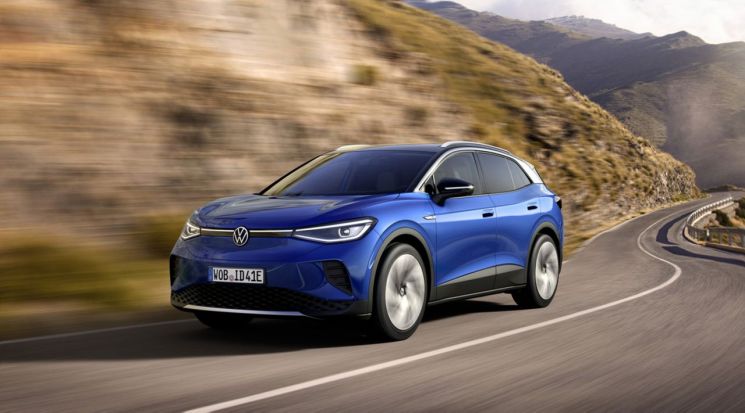
Notably, Volkswagen, a European automaker, is expected to become the world's largest electric vehicle seller starting in 2022. In 2020, Volkswagen's electric vehicle sales were 370,000 units, trailing Tesla's 440,000 units.
However, Volkswagen is projected to sell 1.12 million units in 2022, surpassing Tesla's 820,000 units. By 2030, Volkswagen's electric vehicle sales are expected to reach 6.27 million units, widening the gap with Tesla's 3.41 million units.
Battery demand is also expected to surge in line with the rapidly growing electric vehicle market. Global battery demand, which was 134 gigawatt-hours (GWh) in 2020, is forecasted to grow at an average annual rate of 33%, reaching 2,956 GWh by 2030.
In particular, the global battery market size is expected to grow to $167 billion (approximately 185 trillion KRW) by 2025, surpassing the memory semiconductor market valued at $150 billion (approximately 166 trillion KRW).
The battery market is gradually recovering from the impact of COVID-19 experienced earlier this year.
Among battery companies, the top six players?LG Chem, CATL, Panasonic, BYD, Samsung SDI, and SK Innovation?are expected to strengthen their positions further.
The combined global battery market share of these six companies is expected to rise from 55% in 2020 to 60% in 2030. In particular, LG Chem with an 18% share and CATL with 15% are expected to lead the market in 2030.
Additionally, solid-state batteries, considered 'next-generation batteries,' are expected to take some time before commercialization.
Kim Kwang-joo, CEO of SNE Research, said, "Regarding solid-state battery production, Toyota plans mass production from 2023, CATL from 2024, LG Chem from 2025, and Samsung SDI from 2027. By 2030, solid-state batteries are expected to account for about 4% of the total battery market."
© The Asia Business Daily(www.asiae.co.kr). All rights reserved.

















