Beyond Corona Blue, Red & Black "Feeling Anger and Frustration"
More Vulnerable Groups: Low-Income and Elderly Poverty
Experts "Need to Find Personal Coping Methods"
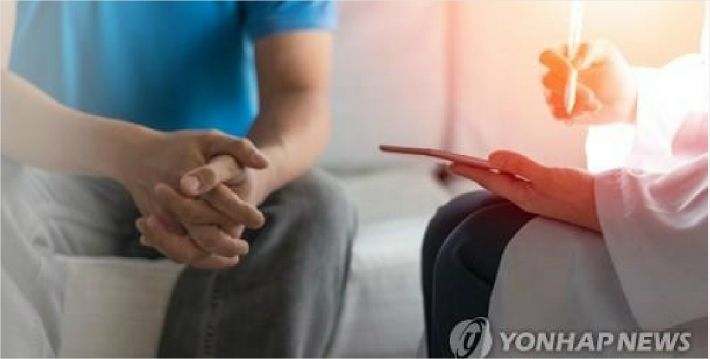 Due to the novel coronavirus disease outbreak, the number of citizens complaining of mental health issues is increasing. Photo by Yonhap News
[Asia Economy Reporter Kim Suwan] #Kim Mo (25), an office worker in his second month of employment, started working from home immediately after joining the company due to the COVID-19 pandemic. Kim said, "Right after I joined, COVID-19 resurged, so I couldn't properly greet my team members and had to work from home. It’s very depressing and stressful to work from home during a time when I should be bonding and learning. I end up taking out my stress on my family by being irritable and angry, which makes things worse," he lamented.
#Choi Mo (26), who has been preparing for employment for two years, expressed frustration with the frozen job market due to COVID-19. Choi said, "These days, companies only hire experienced workers and don’t post openings for new hires. People like me have nowhere to go. Considering reality, I should join even a small company, but because of my greed, I’m stuck and can’t do anything. I just feel that the future is bleak," he appealed.
Recently, as the COVID-19 situation has prolonged, many people have been complaining of feelings of depression and irritability, referred to as "Corona Blue" and "Corona Red." Due to social distancing and reduced human interaction, people feel lonely and show symptoms such as irritability over trivial matters.
Experts advise that to reduce negative emotions, it is necessary to avoid viewing the COVID-19 situation pessimistically.
According to a survey, three out of four adults have experienced Corona Red. A survey conducted by the part-time job portal "Alba Heaven" on June 10 with 2,865 adults found that 76.9% of respondents experienced "Corona Red." By gender, women (80.9%) were about 13 percentage points higher than men (67.9%).
In particular, the main cause of these feelings differed by age: for those in their 20s, "having no place to release energy" was the most common at 50.7%, while from the 30s onward, "ongoing losses due to COVID-19 such as business closures and unemployment" ranked first.
Typical symptoms included △increased irritability over trivial matters △insomnia △habitual complaining △sudden bursts of anger △tightness in the neck and chest △increased appetite △and intensified feelings of disgust.
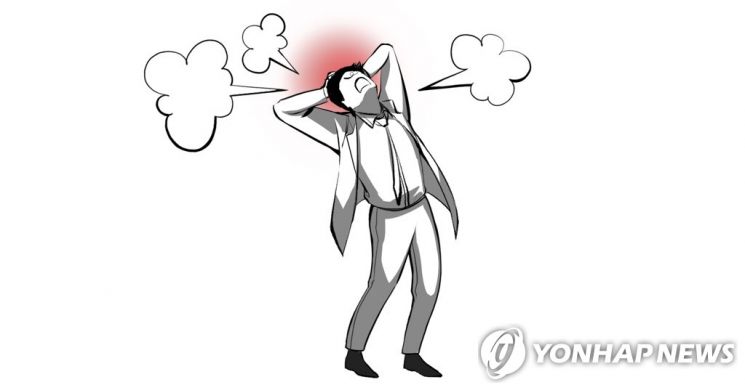 'Corona Red' refers to symptoms of anger, irritation, and frustration that accumulate from prolonged depression (Corona Blue) due to the extended COVID-19 pandemic. Photo by Yonhap News
The moments when people experienced Corona Red were also varied. Notably, △witnessing scenes where quarantine rules were not followed (52.6%) △being restricted from visiting facilities they used to enjoy before COVID-19 (47.2%) △receiving disaster alerts related to COVID-19 too frequently (46.2%) △being unable to attend annual festivals or outdoor activities (46.2%) were cited.
Given this situation, some people are even experiencing Corona Black, symptoms that go beyond depression to feelings of frustration, despair, and gloom. In a desperate reality like the COVID-19 situation, which individuals cannot overcome on their own, people feel powerless and undergo more extreme and distorted changes in perception.
Especially, self-employed individuals, marginalized groups, low-income social classes, and elderly poor are more vulnerable to Corona Black due to the heavy damage they have suffered from COVID-19.
According to the "Measurement and Evaluation of Employment Vulnerability due to COVID-19" report released by the Bank of Korea in August, employment shocks caused by the spread of COVID-19 are concentrated among vulnerable groups such as low-income, low-education, youth, women, temporary/daily workers, self-employed, and those not enrolled in employment insurance. The Bank of Korea noted that the likelihood of low-education workers (high school or below) working in non-essential, non-remote, high-contact jobs is 7 to 24 percentage points higher than that of highly educated workers (college or above).
Experts advise that to overcome COVID-19-related depression and frustration, it is necessary to find one’s own coping methods.
Professor Kwak Geumju of Seoul National University’s Department of Psychology said, "With the spread of COVID-19 and physical controls such as social distancing, people’s depression and stress are becoming severe. Since the infection situation is likely to be prolonged, feelings of loneliness, disappointment, and despair will accumulate further. On the other hand, since people have more personal time, they should overcome these emotions through hobbies, exercise, and self-development. It is also necessary to find personal coping methods such as communicating with others online," she advised.
© The Asia Business Daily(www.asiae.co.kr). All rights reserved.


















