Government Announces "Measures to Prevent Overwork Among Parcel Delivery Workers"
Five-Day Workweek to Expand; Mandatory Health Checkups Introduced
Industrial Accident Insurance Exemptions to Be Limited to Unavoidable Cases
Parcel Delivery Pricing Structure to Be Improved Through Social Dialogue
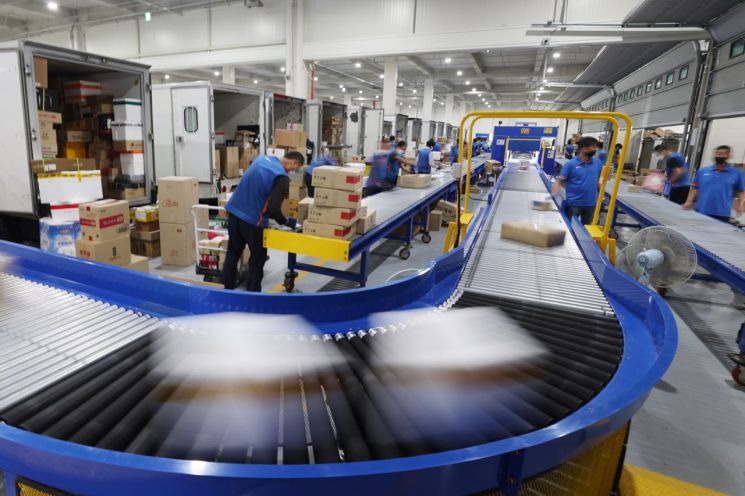
[Asia Economy, reporter Kim Bokyung] The government is strengthening employer obligations and cracking down on unfair practices to prevent overwork among parcel delivery workers. In addition, the government plans to expand the application of mandatory industrial accident insurance for delivery workers and promote a five-day workweek, including a Saturday off system, through labor-management negotiations. It is also seen as inevitable that parcel delivery prices will have to rise in order to improve the treatment of delivery workers.
On November 12, Lee Jaegab, Minister of Employment and Labor, and Kim Hyunmi, Minister of Land, Infrastructure and Transport, announced a joint government plan titled "Measures to Prevent Overwork Among Parcel Delivery Workers" at the Government Complex Seoul. Due to the surge in parcel deliveries caused by the COVID-19 pandemic, overwork has emerged as a serious issue, with more than 10 delivery workers dying this year alone.
Most parcel delivery workers are classified as special-type workers, which means they are not covered by the Labor Standards Act. Due to applications for exemption from industrial accident insurance, their subscription rate is low, leaving them in a blind spot in the social safety net. Furthermore, since parcel delivery companies contract with agencies, and agencies contract with delivery workers, it has been unclear who is responsible for addressing overwork issues.
In response, the government will specify employer obligations to prevent long hours and high-intensity work.
Each parcel delivery company will be required to set a maximum daily working time based on its circumstances. If an unmanageable volume of parcels continues to occur, companies must establish systems to reduce volume or adjust delivery zones.
If delivery delays occur due to volume adjustments, companies will be prohibited from imposing any disadvantages on delivery workers.
For daytime delivery workers, the government will recommend restricting late-night deliveries after 10 p.m. to maintain reasonable working hours. The government will also encourage the spread of a five-day workweek, including a Saturday off system, through labor-management negotiations.
Minister Lee Jaegab stated, "If parcel delivery companies fail to establish systems to adjust work schedules, such as restricting late-night deliveries, we will strengthen management by regulating the increase of dedicated delivery vehicles."
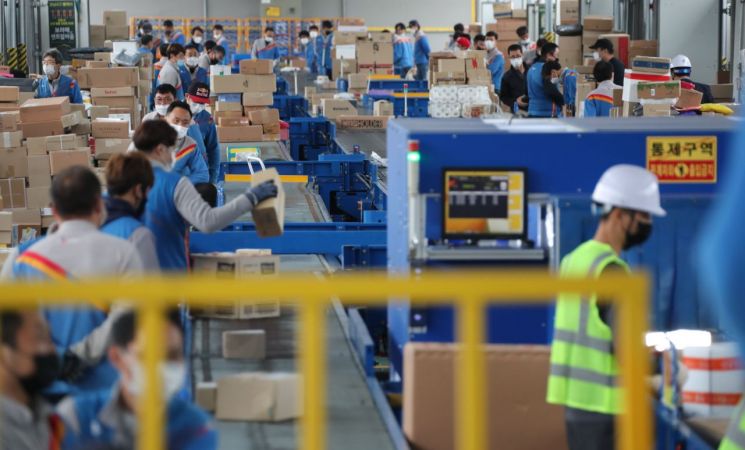
Additionally, new safety and health obligations will be imposed on parcel delivery companies. These include providing rest breaks and spaces for delivery workers, securing safe driving routes, and preparing safety measures in case of adverse weather. The obligation to manage facilities and equipment, such as conveyor belts at sub-terminals where delivery workers operate, will also be strengthened.
Agencies will be required to conduct health checkups for delivery workers under the Occupational Safety and Health Act. Currently, employers must provide annual health checkups for non-office workers. Next year's budget includes 700 million won to support health checkups for 10,000 workers covered by industrial accident insurance.
If health checkup results indicate concerns such as cerebrovascular or cardiovascular disease, the government will seek to amend relevant laws to allow agency owners to discuss measures such as adjusting working hours.
For about 1,000 high-risk delivery workers with elevated blood pressure, blood sugar, or obesity, the government will allocate 300 million won next year to support in-depth diagnostic costs.
The government will reduce applications for exemption from industrial accident insurance, which has been cited as a reason for the low subscription rate. The principle will be to make industrial accident insurance mandatory for delivery workers, but the government will seek to amend the law to allow exemptions only in unavoidable cases.
The proposed amendment to the Industrial Accident Insurance Act, submitted by lawmaker Noh Woongrae of the Democratic Party, would allow special-type workers to apply for exemptions only in cases such as illness or injury, maternity, childbirth, or childcare requiring leave of one month or more; leave of one month or more due to reasons attributable to the employer; or other comparable reasons.
The government will also block various unfair practices and abuses that have shifted costs and burdens onto delivery workers. It plans to improve the "back margin" practices of large shippers (such as online shopping malls) and prohibit unfair transactions and contract terms, such as imposing penalties on delivery workers.
By the first half of next year, the government will work with parcel delivery companies, agencies, and delivery workers to develop standard contracts that include measures such as appropriate working hours.
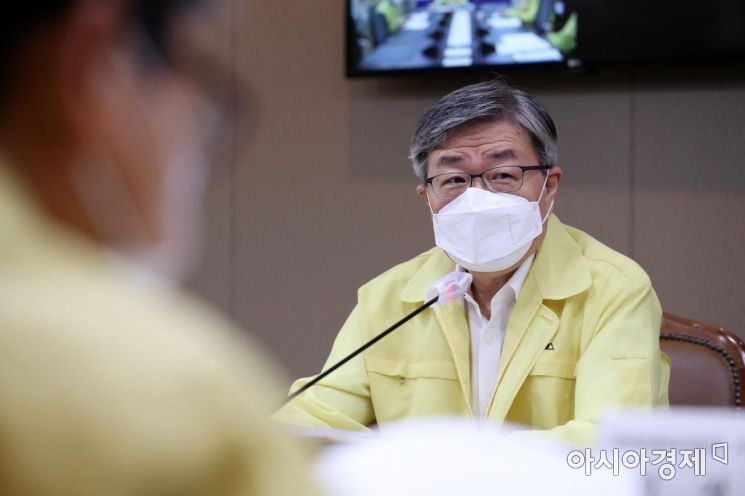 Lee Jaegab, Minister of Employment and Labor, is speaking at the 10th Employment Crisis Response Team meeting held on the 4th at the Seoul Employment and Labor Office in Jung-gu, Seoul. Photo by Moon Honam munonam@
The government will also review the structure of parcel delivery pricing. Improving the treatment of delivery workers will require hiring more staff, investing in facilities, and providing appropriate delivery fees, making it inevitable to revise the current pricing structure. However, since an increase in parcel delivery prices could lead to higher consumer costs, the government plans to develop improvement measures through social discussions by the first half of next year.
The government will establish a "Parcel Delivery Worker Overwork Prevention Measures Council" to facilitate social discussions involving business operators, workers, and experts.
In addition, to shorten delivery times, the government will expand shared parcel sorting centers to more than 30 locations by 2023 and provide policy funds to support the introduction of automated facilities.
The implementation of these measures for delivery workers will require the enactment of the Living Logistics Services Act and amendments to the Industrial Accident Insurance Act. The government plans to promote legislation within this year so that the measures can be implemented next year.
© The Asia Business Daily(www.asiae.co.kr). All rights reserved.



















