The Significant Role of the Small and Medium Business Technology Information Promotion Agency in Supporting SME Success
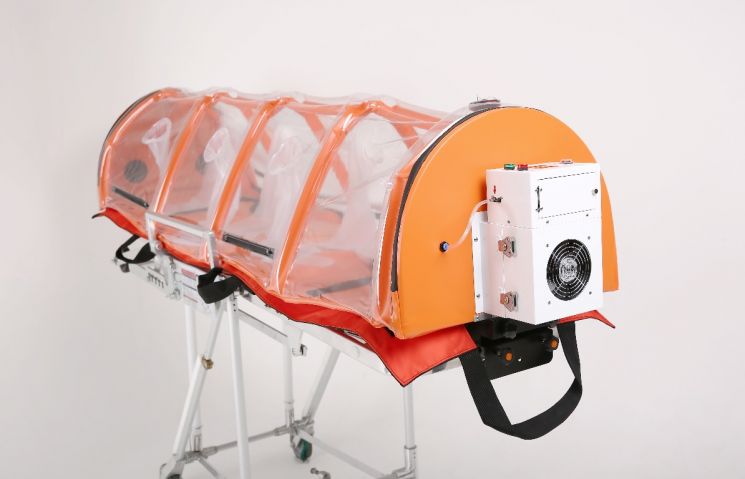 Wootsaem Co., Ltd.'s 'Negative Pressure Carrier.' It is a representative device that highlighted K-Quarantine. The development of the Negative Pressure Carrier by Wootsaem Co., Ltd. was made possible with the support of the Small and Medium Business Technology Information Promotion Agency.
 [Photo by Small and Medium Business Technology Information Promotion Agency]
[Asia Economy Reporter Kim Jong-hwa] Wootsem Co., Ltd. is an engineering specialist company in the fields of biosafety sealed laboratories and clean animal rooms. As the novel coronavirus disease (COVID-19) spread, it became widely known as the company that developed the domestically produced 'negative pressure carrier,' elevating the reputation of 'K-Quarantine.'
The public institution that made Wootsem Co., Ltd.'s success possible is the 'Small and Medium Business Technology Information Promotion Agency (SMBA).' In 2015, in response to Middle East Respiratory Syndrome (MERS), Wootsem developed a 'mobile negative pressure device,' but due to insufficient technology and capital, it could not produce a perfect negative pressure carrier.
A negative pressure carrier is emergency medical equipment used to transport infected or suspected infected patients. It is equipment that integrates isolation and transportation functions to prevent secondary infection spread of viruses. Through the epidemics of Severe Acute Respiratory Syndrome (SARS) in 2002 and MERS in 2013, South Korea also recognized the necessity of negative pressure carriers; however, at that time, all negative pressure carriers were imported. They were expensive and had poor compatibility with domestic 119 ambulances, making them inconvenient to use.
Wootsem Co., Ltd. took off in 2018 when it was selected as a recipient of SMBA's 'Industry-Academia-Research Cooperation Technology Development Project.' With a support fund of 79 million KRW from SMBA and industry-academia research and development support from Induk University, Wootsem solved its capital and technical issues and became the first in Korea to receive KGMP (Good Manufacturing Practice for Pharmaceuticals) certification for a negative pressure carrier.
The following year, with patent registration and official registration as a venture startup innovation procurement product by the Public Procurement Service, it established a stable sales channel and achieved sales of 4.7 billion KRW. This year, due to the spread of COVID-19, it supplied over 500 negative pressure carriers to local governments nationwide, the National Fire Agency, and frontline public health centers, and has become a global company by exporting to major countries such as Ethiopia and Cambodia.
The only domestic artificial respirator manufacturer, MacICS Co., Ltd., also received 130 million KRW in funding and technological innovation support from SMBA's Industry-Academia-Research Cooperation Technology Development Project in 2018. The artificial respirator made by MacICS received emergency use authorization from the U.S. Food and Drug Administration (FDA) in April and signed export contracts worth 7.7 billion KRW in the U.S. and a total of 21.5 billion KRW with over 30 countries worldwide.
Optorain Co., Ltd. developed a COVID-19 real-time gene amplification diagnostic kit in April and obtained European certification (CE-IVD). Optorain was also selected last year as a recipient of SMBA's 'Customized Technology Partner Support Project,' receiving support of 30 million KRW and contributing to showcasing the power of K-Quarantine to the world.
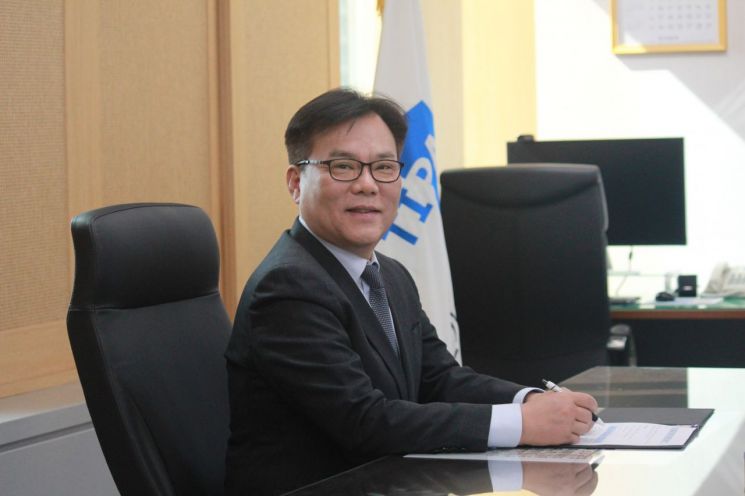 Lee Jae-hong, President of the Small and Medium Business Technology Information Promotion Agency.
 [Photo by Small and Medium Business Technology Information Promotion Agency]
In this way, SMBA is carrying out various projects to support the innovative growth of domestic small and medium venture companies. SMBA focuses on supporting research and development (R&D) for technological innovation and the dissemination and advancement of smart factories. This year, it is supporting 11,000 companies (6,700 new supports, 4,300 continuing supports) with 1.2 trillion KRW for R&D, and providing informatization support for the dissemination of smart factories to 6,400 companies with 460 billion KRW.
Among KOSDAQ-listed companies, 51.4% (675 companies) have received R&D support from SMBA, indicating that SMBA's R&D support is a shortcut to growing into strong small and medium enterprises.
Among 66 companies (82 products) manufacturing and exporting in vitro diagnostic devices related to COVID-19 announced by the Ministry of Health and Welfare last July, about 80% (52 companies, 65 products) are companies that have developed their technological capabilities through SMBA's R&D support funds. The reason K-Quarantine has recently attracted global attention is due to SMBA's foresight in proactively discovering and supporting small and medium venture companies that had not received attention.
Lee Jae-hong, Director of SMBA, said, "Since its establishment in 2002, we have played a role in supporting domestic small and medium venture companies to acquire technological competitiveness and grow," adding, "We will faithfully perform our role as a specialized institution that focuses on supporting the creation of new industries by small and medium venture companies in the era of the Fourth Industrial Revolution."
© The Asia Business Daily(www.asiae.co.kr). All rights reserved.


















