"Our society must ensure effectiveness for the elderly and vulnerable"
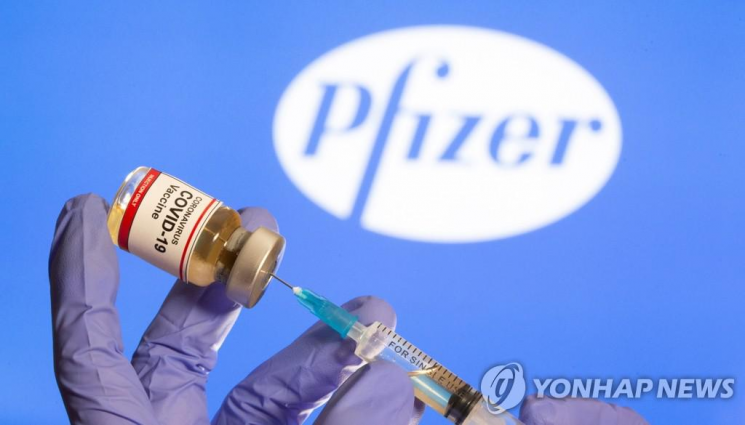
[Asia Economy Reporter Seunggon Han] As news emerges that the COVID-19 vaccine developed by the American pharmaceutical company Pfizer has an efficacy rate of 90%, experts are taking a cautious stance. They point out that the vaccine’s effectiveness has not yet been clearly demonstrated, including how and in what form the vaccine’s effects may manifest.
Michael Ostrom, an infectious disease expert at Minnesota State University, expressed concerns in a radio interview, saying, "It is still really too early to define what the Pfizer vaccine study has proven."
Additionally, Bloomberg News reported that while the claim of a 90% reduction in symptoms sounds impressive, it is still unclear what role the vaccine can play against COVID-19. The news agency pointed out that further research is needed to determine which symptoms are prevented and the extent of effectiveness in the elderly.
The weekly news magazine The Economist suggested that the Pfizer vaccine might not be effective for older adults and predicted that vaccines from other pharmaceutical companies, such as AstraZeneca, which have shown effectiveness in the elderly, could complement this.
Furthermore, Professor Eleanor Riley of the Immunology and Infectious Diseases Department at the University of Edinburgh stated, "For the vaccine to reduce COVID-19 infections and deaths and allow the general public to return to daily life, it must be effective for the vulnerable and elderly in our society."
Professor Lawrence Young, a molecular oncology expert at the University of Warwick in the UK, pointed out, "It is still unclear whether the Pfizer vaccine can completely block transmission after infection."
There are also critical views regarding the clinical trials. Pfizer conducted clinical trials involving about 44,000 participants across the United States and five other countries. The '90%' vaccine efficacy was derived from the results of 94 participants involved in the phase 3 trial.
Pfizer divided the clinical trial participants into two groups, administering the COVID-19 vaccine to one group and a placebo (fake drug) to the other. Pfizer stated that participants who received two doses of the vaccine showed an infection rate of less than 10%.
In response, the American daily newspaper The New York Times (NYT) reported that the data has not been fully disclosed. In particular, it pointed out that no one except the clinical trial participants, doctors, and company executives knows how many of the 94 participants received the vaccine and how many received the placebo.
The NYT reported that if the Pfizer vaccine receives emergency approval from the U.S. Food and Drug Administration (FDA) and is distributed to millions of people, the Centers for Disease Control and Prevention and the FDA will conduct tests to check for side effects, and clinical trial participants will be monitored for side effects for two years.
© The Asia Business Daily(www.asiae.co.kr). All rights reserved.


















