Free-spirited '90s Generation'... Some Arrogant 'Kkondae' Too
7 out of 10 Office Workers Respond 'There Are Young Kkondae in Our Company'
'Type That Gives Advice Acting Like Their Experience Is Everything' Most Common
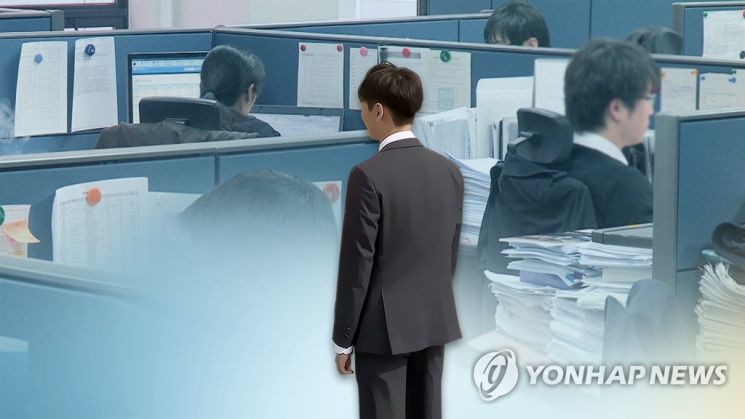 Some individuals born in the 1990s have become so-called "young kkondae," who replicate the behavior of their 50s superiors known as "kkondae." According to one survey, the most common type among them is those who "advise and try to teach as if their own experience is everything."
 [Image source=Yonhap News]
[Asia Economy Reporter Han Seung-gon] "Honestly, young kkondae cause more stress."
Kim, a late 20s office worker, was recently severely reprimanded by a senior who joined the company a year earlier. Although Kim usually was not late, being 5 minutes late was the reason for the scolding. The reprimand lasted over 30 minutes. The senior did not even ask why Kim was late.
Kim said, "I was never scolded like this by the department head," and added, "I understand the senior's position, but I want to ask if it is really necessary to stand someone up and give such harsh mental education." He continued, "They said things like '20s kkondae' or 'young kkondae,' but they didn't ask why I was late and only said insulting words. Isn't it just a 'pre-decided answer'?" he vented his frustration.
According to a recent survey, 7 out of 10 office workers answered that "there are young kkondae in our company." The employment portal site Saramin surveyed 1,945 office workers, and 75.4% responded this way.
Here, 'young kkondae' refers to those born in the 1990s. The 90s generation, also known as the 'MZ generation (Millennials + Generation Z),' is characterized in the workplace as a generation that talks to superiors without formality.
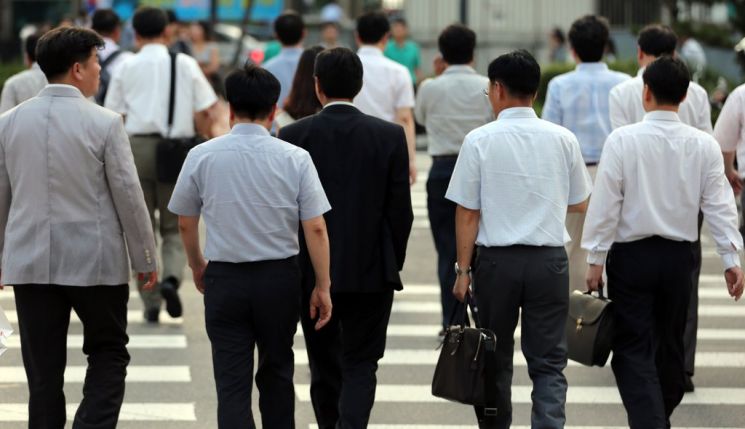 Office workers are hurrying home after work at the Euljiro 1(il)-ga Station intersection in Jung-gu, Seoul.
 [Image source=Yonhap News]
The cause of conflict is the 'young kkondae' tendencies of some 90s-born employees. While they sometimes bring vitality to the organization by honestly expressing their thoughts about superiors' orders or unreasonable work requests, some 90s-born employees imitate their superiors' behavior and effectively display the same 'kkondae' traits.
Lee, a 20-something employee working at a company in Seoul, said, "A senior who joined a year earlier recently called me aside and harshly criticized my work," adding, "I was following the department head's instructions, but the senior said, 'In my opinion, this is not right' and criticized me." He complained, "Honestly, how much can you learn from a senior who joined the company just one year earlier? Still, they shook the department head's instructions and criticized me, which was very frustrating."
In fact, the same survey found that this situation was the most common example of 'young kkondae' behavior. According to the survey, the most frequent kkondae-like behavior by 'young kkondae' was giving advice and trying to teach as if their own experience was everything (57.8%, multiple responses allowed).
Next were types such as 'telling others to freely express opinions but ultimately forcing their own answers' (41.3%), 'enforcing strict hierarchy like "if a senior says so, you must do it"' (40.7%), 'starting with "Back in my day~" and telling their past experiences' (35.1%), 'checking age first when meeting and ignoring those younger than themselves' (28.7%), and 'forcing prioritization of company work over personal matters, sacrificing private life' (26.4%).
 Recently, some employees in their 20s have been imitating the 'Kkondae culture' of their supervisors in their 50s, showing the same behavior to their colleagues or juniors who joined a few months ago, leading to increasing complaints from young workers that it is 'distressing.'
 [Image source=Yonhap News]
Regarding why 'young kkondae curse their superiors but behave like kkondae themselves,' the most common answer was 'because they naturally learned it under the kkondae culture' (45.6%, multiple responses allowed).
Also, 'people tend to think egocentrically' (42.4%) was a close second. Other opinions included 'being intoxicated by the authority of superiors' (31.3%) and 'disliking the behavior of subordinates' (14.2%).
Superiors viewing 'young kkondae' agreed that the kkondae tendency has no age limit.
Kim, a 40-something office worker, said, "Usually, older people are called kkondae, but among my peers who joined at the same time, there are colleagues who originally have a bit of a 'kkondae mindset,'" adding, "When such people get promoted and become department heads, they seem to become perfect kkondae."
Another 50-something office worker, Park, said, "Not all people in their 50s are kkondae," emphasizing, "Rather, many department heads make decisions through rational decision-making structures." He added, "Kkondae seem to be people who insist on unreasonable things without any basis. In this sense, kkondae can sometimes play a negative role in the department."
Experts suggested that conflicts caused by 'kkondae' in organizations should first be resolved through sufficient communication.
An HR team official at a company explained, "There are various types of conflicts in organizations, but most situations arise from misunderstandings," emphasizing, "Therefore, misunderstandings can be resolved through dialogue to ease conflicts."
However, the official added, "Communication for the sake of communication or formal conversations can rather worsen relationships," and added, "To resolve misunderstandings, it is necessary to also make efforts such as trying to see things from the other's perspective and finding each other's strengths."
© The Asia Business Daily(www.asiae.co.kr). All rights reserved.
![Clutching a Stolen Dior Bag, Saying "I Hate Being Poor but Real"... The Grotesque Con of a "Human Knockoff" [Slate]](https://cwcontent.asiae.co.kr/asiaresize/183/2026021902243444107_1771435474.jpg)


















