Positive Outlook for Exports to the U.S. if Biden Wins... Non-Tariff Barriers Like Environment and Human Rights Increase
Stronger Export Regulations Expected if Trump is Re-elected... Impact on Exports to China as Well
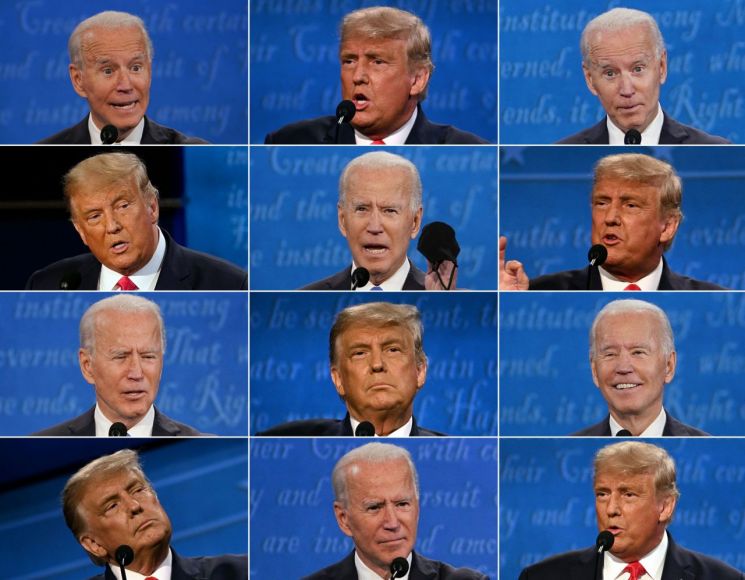
[Asia Economy Reporter Hwang Yoon-joo] As the chaos surrounding the U.S. presidential election continues, the likelihood of Democratic candidate Joe Biden winning is increasing, prompting the domestic steel industry to hold its breath and busily prepare response measures. If President Donald Trump is re-elected, regulations on steel products exported to the U.S. are expected to tighten. A report has emerged stating that if Biden wins, export regulations will ease, but non-tariff barriers such as environmental and human rights issues will increase.
According to the steel industry on the 5th, POSCO internally prepared a report titled "Impact on the Steel Industry According to the U.S. Presidential Election Results." The report is broadly divided into three sections: ▲Import Regulations ▲Economic Bloc Formation and Multilateralism ▲Investment Environment.
With Biden's victory likely, the report stated, "If Biden is elected, he will prioritize alliances and expand U.S. exports to the world, leading to an improvement in the export environment to the U.S. by refraining from indiscriminate use of 'Trade Expansion Act Section 232' and 'Trade Act Section 301'."
The U.S. has pursued protectionist policies since the Trump administration. As a result, domestic steel products have suffered disadvantages such as the imposition of anti-dumping duties (AD) and countervailing duties (CVD). In particular, President Trump revived the long-dormant "Trade Expansion Act Section 232" in 2017 and pushed plans to impose a high 25% tariff on foreign automobiles and auto parts from countries like Japan and the European Union (EU), causing tension in the domestic automobile industry. Section 232 of the Trade Expansion Act allows for urgent import restrictions or high tariffs if imported products are deemed a threat to U.S. national security. The Biden administration is likely to ease strong import regulations, which is favorable for the domestic steel industry.
However, non-tariff barriers such as environmental and human rights issues are expected to strengthen. The report advised, "There is a possibility of linking the carbon border adjustment mechanism when introducing carbon pricing policies," urging the steel industry to prepare response measures related to environmental regulations such as carbon neutrality.
Additionally, communication channels for conflict resolution in the event of trade disputes are expected to improve compared to the current situation. The report predicted that if Biden is elected, "WTO reform and normalization could reduce the risks of conflict coordination."
However, it emphasized, "If Biden is elected and the U.S. rejoins the Comprehensive and Progressive Agreement for Trans-Pacific Partnership (CPTPP), and if Korea joins as well, both opportunities and risks will coexist," adding, "Since there are effects from free trade agreements (FTA) with countries like Japan and Mexico, a practical analysis is necessary."
Previously, the Trump administration declared withdrawal from the World Trade Organization (WTO) and sought to establish the "Economic Prosperity Network (EPN)," an economic bloc consisting only of countries cooperating with the U.S. The report pointed out, "If Trump is re-elected and the U.S. withdraws from the WTO, it will become difficult to coordinate trade conflicts with the U.S. through the WTO," and "Furthermore, if Korea joins the EPN, retaliatory regulations on Chinese imports of Korean steel could be strengthened."
Regarding the investment environment, the report analyzed that companies strengthening production chains within the U.S. will have an advantage regardless of who wins. It emphasized, "There is merit in expanding production facilities within the U.S.," and "Especially with the enforcement of the United States-Mexico-Canada Agreement (USMCA) in July, which strengthened rules of origin for automobiles, there is a need to reinforce local production and procurement systems."
© The Asia Business Daily(www.asiae.co.kr). All rights reserved.

















