Industrial Research Institute Report on "Industrial Policy Outlook and Response Measures Following the U.S. Presidential Election"
"Tax Cuts and Deregulation if Trump is Re-elected... Large-scale Fiscal Spending if Biden Wins"
"Strengthened Regulation on New and Renewable Energy and Platforms if Biden Wins... Close Monitoring"
"Decoupling from China Regardless of Election Outcome... Rapid Changes Expected Depending on China Response"
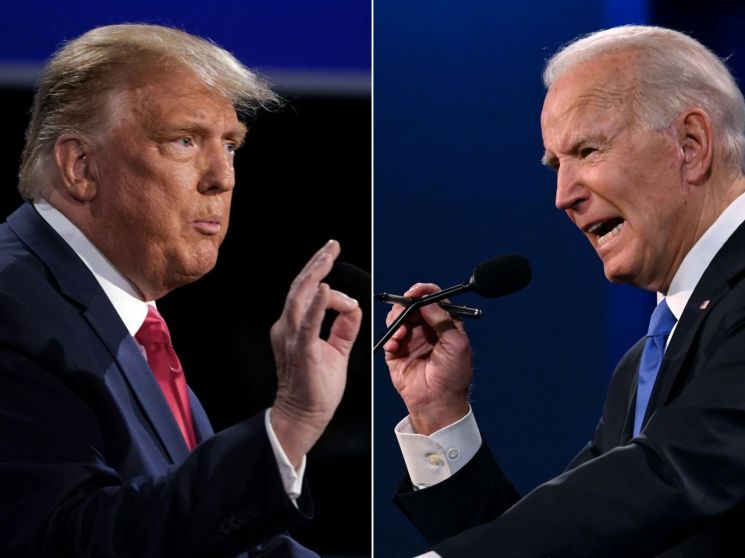 Donald Trump (left), President of the United States, and Joe Biden, Democratic presidential candidate, engage in a debate during the final presidential candidate TV debate held on the 22nd of last month (local time) at Belmont University in Nashville, Tennessee. (Image source=Yonhap News)
[Asia Economy Reporter Moon Chaeseok] The Korea Institute for Industrial Economics and Trade (KIET), a government-funded research institute, announced on the 1st that in the upcoming U.S. presidential election on the 3rd (local time), attention should be paid to U.S.-China conflicts if President Donald Trump is re-elected, and to fiscal uncertainties if Democratic candidate Joe Biden wins.
KIET advised this through its report titled "Industrial Policy Outlook and Response Measures Following the U.S. Presidential Election." The report was created after a two-day virtual discussion held on the 19th and 20th of last month with the Information Technology and Innovation Foundation, a think tank based in Washington D.C., USA.
Increased U.S.-China Conflict Risk if Trump is Re-elected
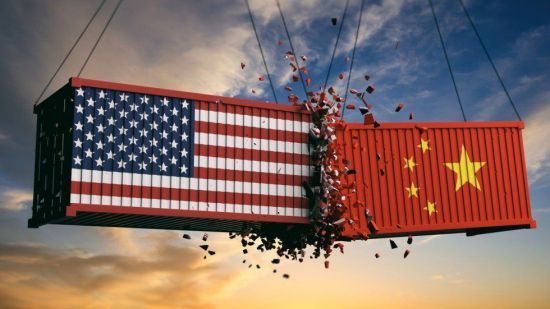
The report expects that if Trump is re-elected, the policy stance under the existing banner of "America First" will be strengthened, considering industry, trade, and security.
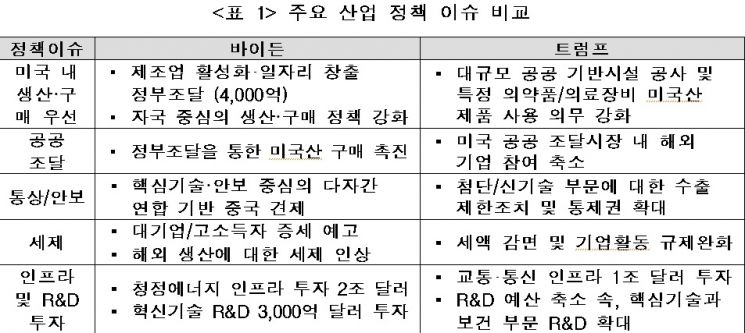
It will promote industrial revitalization through tax cuts and deregulation, government investment in infrastructure industries and core advanced technologies, and prioritizing domestic products in public projects.
Overall, the research and development (R&D) budget is expected to be reduced by about 9%, but government R&D support for new technologies such as artificial intelligence (AI) and quantum computing will increase by about 30%.
Large-scale Fiscal Spending Including Public Procurement if Biden Wins
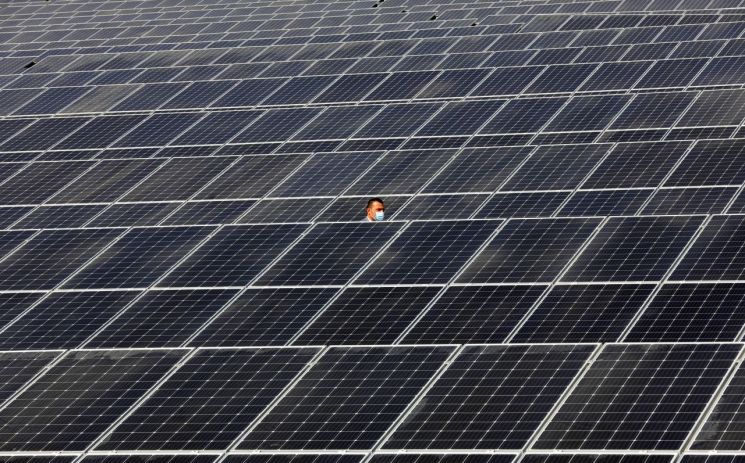
If Biden wins, he plans to pursue industrial policies encompassing corporate, trade, and technology policies under the slogans of "Build Back Better" and "Made in America by Americans."
He will promote industrial development through large-scale government public procurement, new R&D investments, economic recovery via green infrastructure investments, and attracting domestic companies.
Biden is also expected to focus on domestic industrial reconstruction and revitalization like Trump. However, he places more emphasis on fiscal spending, which differs from Trump's focus on tax cuts and deregulation.
The report advised, "It is necessary to strategically and carefully respond to the priorities of initial industrial policies to be announced after the election."
Biden to Increase Infrastructure and Platform Regulations Including New and Renewable Energy
Both candidates plan to increase infrastructure investments and strengthen antitrust regulations. However, Biden is expected to pursue policies with greater intensity.
Biden has pledged an investment of $2 trillion (approximately 2,269 trillion KRW) in clean energy expansion and infrastructure.
Trump has proposed about $1 trillion (approximately 1,134.5 trillion KRW) in transportation and communication infrastructure support.
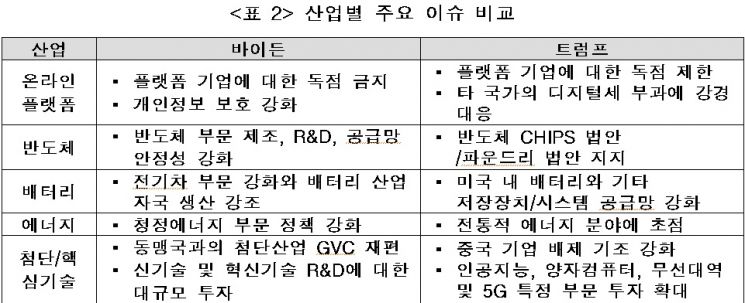
Both candidates are expected to strengthen antitrust regulations on platform companies such as Google, but Biden’s approach is anticipated to be more stringent.
In addition to antitrust regulations, Biden plans to regulate illegal online activities such as digital IP theft and strengthen personal data protection standards.
On the other hand, the Trump administration has indicated a tough stance against the imposition of digital taxes by other countries on U.S. digital companies.
Both Candidates Indicate 'Decoupling from China'
The report predicts that both candidates will pursue global value chain (GVC) policies centered on "decoupling from China."
Along with investments in new technologies such as AI, quantum computing, and 5G, they will build U.S.-based value chains in industries like semiconductors and batteries. They will promote the return of U.S. semiconductor companies that have moved overseas and work to reduce dependence on foreign batteries.
In particular, Biden has proposed a more comprehensive government R&D plan covering AI, quantum and high-performance computing, 5G and 6G, new materials, clean energy, semiconductor, and bio technologies, investing about $300 billion (approximately 340 trillion KRW).
The report stated, "Regardless of which candidate wins, it is necessary to establish comprehensive industrial policy responses covering domestic companies, trade, commerce, technology, and security, as well as proactive local market entry strategies to respond to the U.S.-centered changes in GVCs."
"Restoration of Multilateral Trade System if Biden Wins"
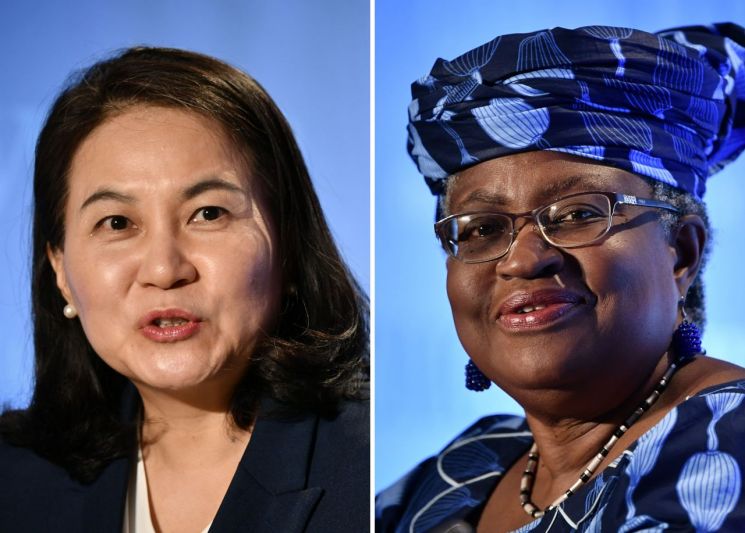 Korea's Yoo Myung-hee, Minister for Trade at the Ministry of Trade, Industry and Energy (left), and Nigeria's Ngozi Okonjo-Iweala (right), candidates in the World Trade Organization (WTO) Director-General election. (Image source=AFP Yonhap News)
Both candidates are expected to maintain a stance of containment and decoupling from China.
However, Biden plans to contain China through restoring the multilateral trade system and cooperating with allies. This differs from the Trump administration’s approach, which leaned toward a bilateral "endgame" confrontation.
The report diagnosed, "China’s countermeasures to the common industrial policies of both candidates, such as restoring U.S.-centered value chains and decoupling from China, and the resulting additional uncertainties are inevitable."
It added, "After the election, it is crucial to closely track and analyze the specific U.S. industrial policy strategies and China’s responses to prepare appropriate industrial policy countermeasures."
© The Asia Business Daily(www.asiae.co.kr). All rights reserved.



















