KB Nationwide Jeonse Supply-Demand Index Hits Highest Since 2001
Seoul, Capital Area, and Provincial Metropolitan Cities All Face Supply Shortage
President Moon Vows 'Absolute Stability' but No Response
Discussion on Expanding Equity Accumulation and Mid-Sized Public Rental Housing
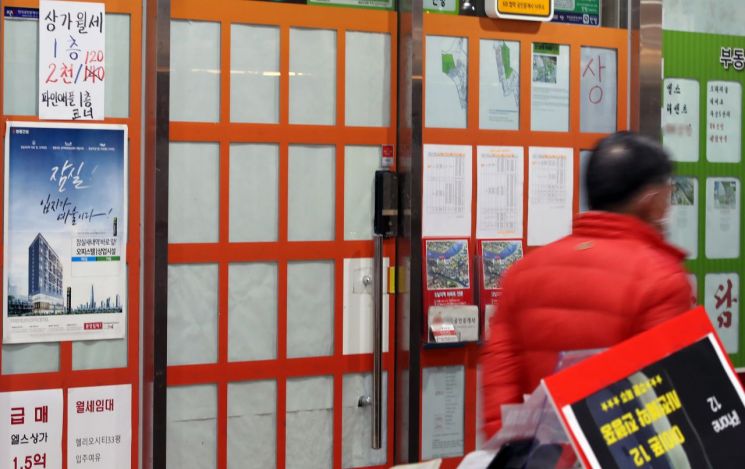
[Asia Economy Reporter Moon Jiwon] A private statistical indicator representing the shortage level of Jeonse supply has recorded its highest level in 19 years. Concerns are rising that the Jeonse crisis, which began to spread significantly after the government's implementation of the Lease 2 Act, is worsening.
According to the monthly KB Housing Market Trends released by KB Kookmin Bank on the 31st, the nationwide Jeonse supply-demand index in October was recorded at 191.1, up 4.1 points from last month (187.0). This is the highest figure in 19 years and 2 months since August 2001 (193.7) on a monthly basis.
The Jeonse supply-demand index, expressed on a scale from 0 to 200, is an indicator showing the degree of Jeonse supply shortage, extracted through surveys of sample brokerage offices nationwide. A higher number indicates a shortage of Jeonse supply, while a lower number indicates a shortage of demand.
The index, which was below 100 last year, finally surpasses 190
The Jeonse supply-demand index was 97.9 until January last year, remaining below 100, but it has steadily risen since then, surpassing 160 in May this year. After the implementation of the Lease 2 Act, including the Jeonse and monthly rent cap system and the right to request contract renewal in July, it broke through the 180 level and exceeded 190 this month.
Since August, as the number of tenants using the right to request contract renewal to live in existing homes for an additional two years has increased, the volume of new Jeonse supply has decreased and prices have soared. This shortage of Jeonse supply has appeared not only in Seoul but also in Gyeonggi Province and other metropolitan cities.
First, Seoul's Jeonse supply-demand index rose 2.4 points from last month (189.3) to 191.8. This is the highest figure in five years since October 2015 (193.8). The shortage of Jeonse supply is more severe in Gangnam (193.0) than in Gangbuk (190.5).
The metropolitan area recorded 194.0, the highest in 7 years and 1 month since September 2013 (195.0). In particular, Gyeonggi Province recorded 195.7, the highest ever since KB Kookmin Bank began separately extracting Gyeonggi statistics in this survey in July 2003.
Among major provincial metropolitan cities, all except Busan (186.4) and Ulsan (189.9) exceeded 190.
Incheon rose 5.8 points from last month to 194.1, marking the lowest Jeonse supply since May 2015, and Daegu recorded 197.1, the highest since July 2003. Gwangju recorded 196.1 and Ulsan 189.9, the highest in 9 years and 7 months and 9 years and 8 months respectively, while Daejeon (191.0) showed the highest figure in 3 years and 11 months.
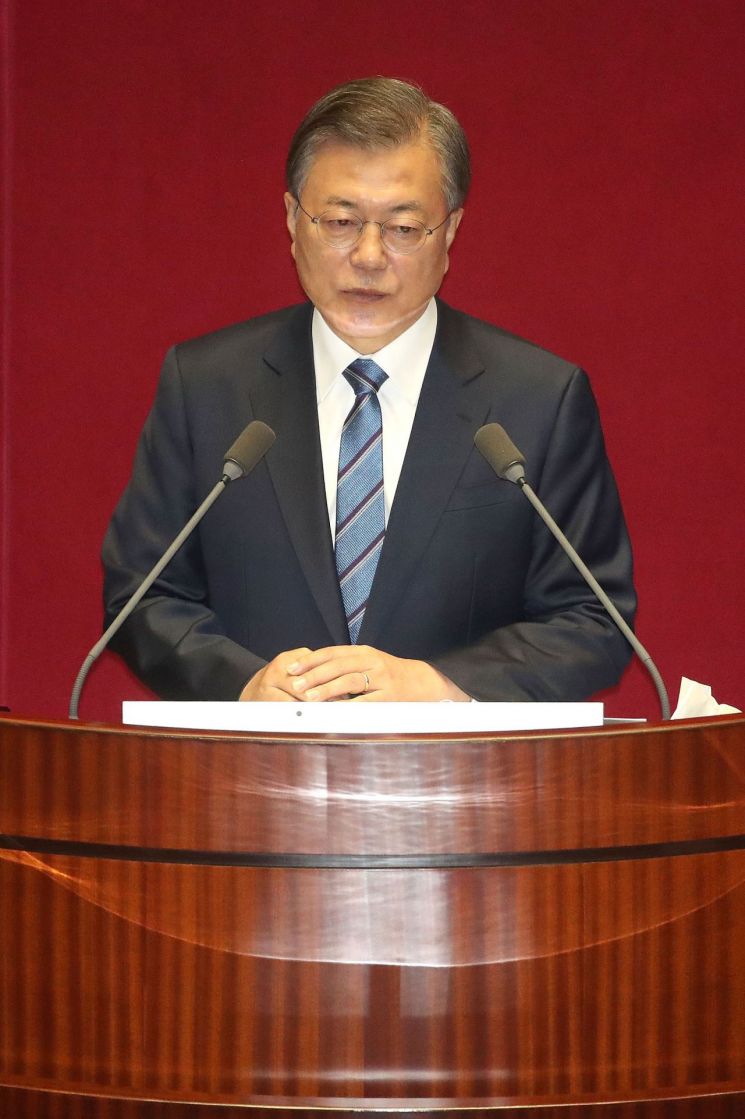 President Moon Jae-in is delivering the 2021 budget proposal policy speech at the National Assembly in Yeouido, Seoul, on the morning of the 28th. (Photo by Yonhap News)
As the ongoing Jeonse crisis increases the suffering and complaints of ordinary citizens, the government is considering announcing additional measures.
President Moon Jae-in also emphasized in his 2020 budget address on the 28th, "The government's will to stabilize the real estate market, protect actual users, and suppress speculation is firm," and pledged, "We will definitely stabilize the Jeonse market."
The major real estate measures mentioned so far are the introduction of 'Equity Accumulation Type Sale Housing' and 'Medium-sized Public Rental Housing.'
Equity Accumulation Type Sale Housing is a method where the buyer initially acquires only 20-25% of the land and building equity at the time of sale and then acquires 10-15% equity every four years equally, eventually owning 100% of the house after 20-30 years. Until all equity is secured, rent must be paid on the public equity portion.
While this can help low-income citizens or newlyweds prepare housing, there are many analyses pointing out significant drawbacks: if the property is sold before all equity is purchased, profits must be shared between the public and the individual according to the equity ratio, and rent must be paid during that period. Since sales are expected to begin in 2023, it is difficult to help resolve the current Jeonse crisis.
The government is also considering adding medium-sized rental housing of 85㎡ (exclusive area), about 30 pyeong, to the existing public rental housing, which is currently supplied only up to 60㎡, to absorb middle-class tenant demand.
To this end, the Ministry of Land, Infrastructure and Transport and the Ministry of Strategy and Finance are in final discussions regarding increased fiscal investment and adjustments to income criteria for public rental housing. The government has also set a policy to expand the exclusive area of houses donated by associations as a reward for floor area ratio incentives in public reconstruction projects up to 85㎡.
However, this too is analyzed to be insufficient to meet the demand of people dreaming of 'owning their own home' rather than rental housing. It also has limitations in perfectly replacing the currently insufficient private Jeonse supply.
© The Asia Business Daily(www.asiae.co.kr). All rights reserved.


















