Finding Molecular Switches as Core Strategies for Tubulin Nanotechnology
[Asia Economy Reporter Junho Hwang] A molecular switch that controls the folding of tubulin proteins, which make up the microtubules in our body, has been discovered. This opens the way to utilizing tubulin as a nanomaterial, and it is expected to be applied as a new therapeutic strategy for brain diseases such as Alzheimer's disease.
A research team including Professor Myungchul Choi from the Department of Bio and Brain Engineering at the Korea Advanced Institute of Science and Technology (KAIST), PhD candidate Junho Lee from the same department, and Chaeyeon Song from Amorepacific R&D Center announced on the 30th that they developed a technology to use tubulin proteins, which constitute microtubules in the body, as basic materials for nanomaterials. Their related paper was published in the international academic journal 'Small.'
Discovery of Molecular Switch Controlling Tubulin Protein Folding
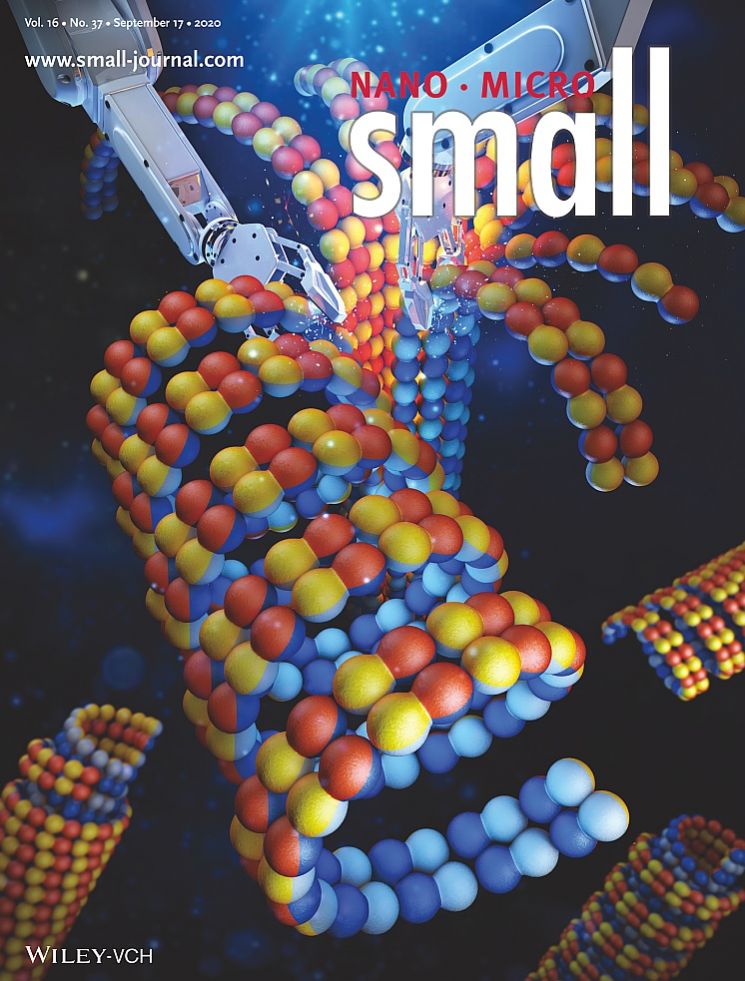
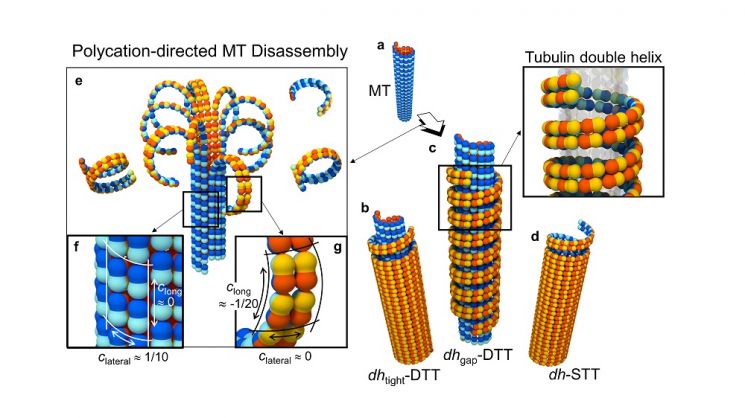
The research team developed a technology to change the structure of tubulin proteins into desired forms by utilizing microtubules, which are long tube-shaped nanostructures made of tubulin proteins. Tubulin has a unique property of folding only in two perpendicular directions, and the team found a molecular switch that controls this folding.
The team confirmed that tubulin, a strongly negatively charged protein, forms a 'tubulin double helix' structure where tubulins line up in two long rows through a process where the positively charged polymer poly-L-lysine alters the microtubule structure. This demonstrated that tubulin can be artificially folded in two directions.
They also confirmed that by controlling this, it is possible to convert single-walled nanotubes into double-walled nanotubes and freely adjust the spacing of the double helix.
A representative of the research team stated, "We used cellular materials from our body as they are but realized innovative nano-architectures that surpass natural design."
Utilizing Tubulin as a Nanomaterial

The results of Professor Choi’s research team are significant in that they present a key strategy to utilize tubulin proteins as basic materials for nanomaterials.
Professor Myungchul Choi said, "This paper will mark the beginning of active research on using tubulin as a nanomaterial," and described it as "a pioneering study that will become a singularity in new bio-nanotechnology."
He added, "It has limitless potential not only as a platform for developing nanometer-sized optical, electrical, and medical materials but also for developing molecular machines by combining with motor proteins like kinesin. We expect that this molecular switch discovered through this research will be utilized as a new therapeutic strategy for brain diseases such as Alzheimer's disease, along with establishing the foundation for the development of 'tubulin nanoengineering' that will create nanomaterials with various forms and properties."
© The Asia Business Daily(www.asiae.co.kr). All rights reserved.



















