Chemotherapeutic Drug Responsiveness of Patient-Derived Artificial Mini-Organs
Learning Transcriptome Information of Genes Associated with Chemotherapeutic Target Proteins
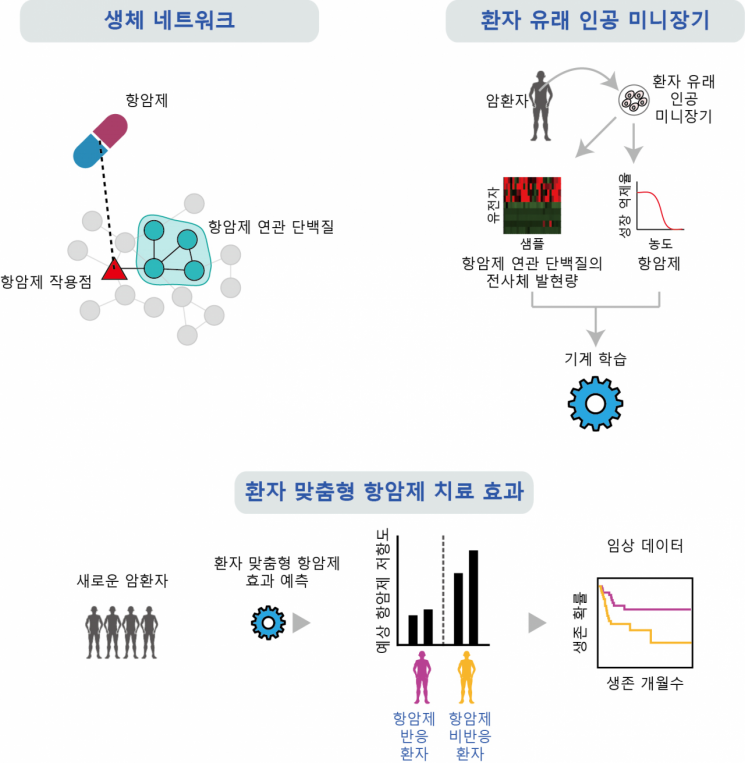
[Asia Economy Reporter Hwang Junho] Even for the same type of cancer, the therapeutic effect of anticancer drugs varies from patient to patient. To overcome this limitation, machine learning research that predicts drug responsiveness by learning drug response data is in full swing. A domestic research team has developed a technology that improves the accuracy of drug responsiveness prediction using data obtained from patients' artificial organs.
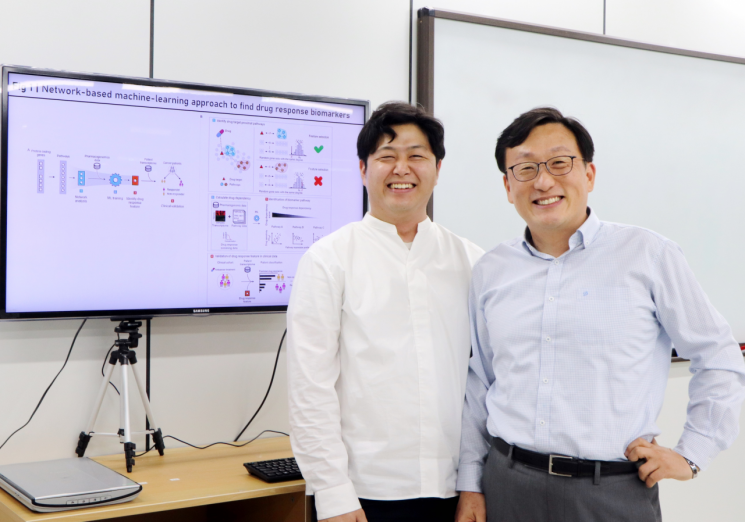
The National Research Foundation of Korea announced on the 30th that Professor Kim Sang-wook's research team at Pohang University of Science and Technology developed an artificial intelligence technology that predicts patients' responsiveness to anticancer drugs based on transcriptome information from cancer patient-derived artificial mini-organs. The related paper was recently published in Nature Communications.
Collection of Transcriptome, Target Protein, and Biomolecular Protein Interaction Network Data
The research team developed a machine learning algorithm that improves prediction accuracy by using transcriptome information of individual proteins that are direct targets of drugs, as well as biomolecular protein interaction network data that can interact with target proteins. This program prioritizes learning the transcript production levels of proteins functionally close to the target proteins. Through this, instead of learning a vast number of biomarkers as conventional machine learning had to, it learns only selected biomarkers, thereby enhancing the accuracy of drug responsiveness.
Existing machine learning prediction methods are based on genomic information of cancer cells, which has limitations in improving accuracy. This is because unnecessary biomarker information can cause the learning of false signals.
Realization of Personalized Precision Medicine
In particular, the research team narrowed the gap between responses in actual patients by using data from patient-derived artificial organs. Using this method, the team predicted patients' drug responses to 5-fluorouracil used for colorectal cancer and cisplatin used for bladder cancer at levels similar to actual clinical results.
The research team expects that this study will contribute to the realization of personalized precision medicine that selects patients who will respond to anticancer drugs, as well as to elucidating the mechanisms of new anticancer drugs.
© The Asia Business Daily(www.asiae.co.kr). All rights reserved.
![User Who Sold Erroneously Deposited Bitcoins to Repay Debt and Fund Entertainment... What Did the Supreme Court Decide in 2021? [Legal Issue Check]](https://cwcontent.asiae.co.kr/asiaresize/183/2026020910431234020_1770601391.png)

















