Achievements Made in Collaboration with Seoul Metropolitan Police Agency's Intelligent Crime Investigation Unit
Many Have High Historical and Artistic Value but Are Severely Damaged
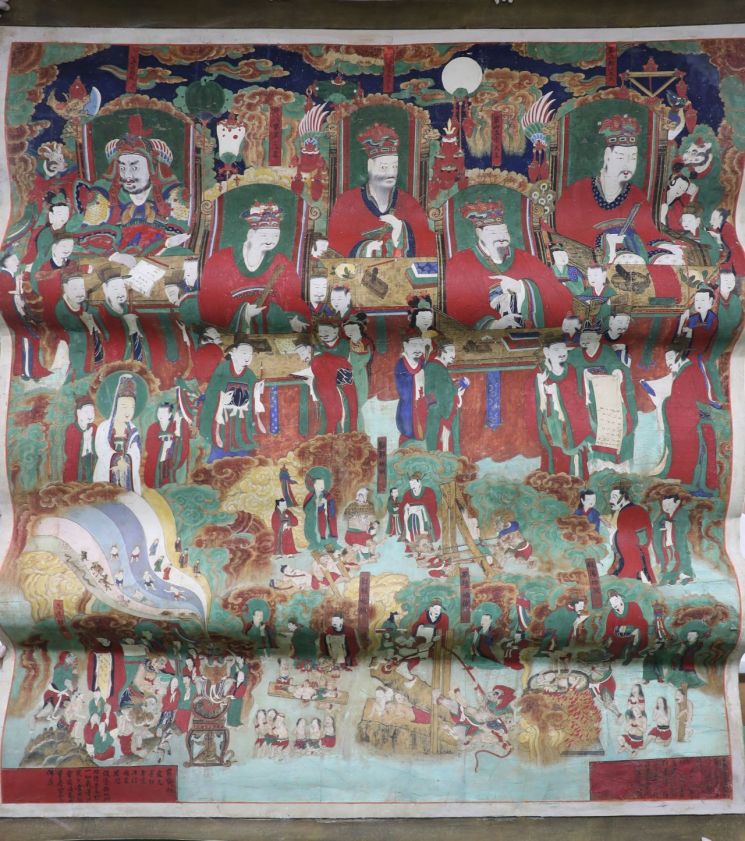
The Jogye Order of Korean Buddhism announced on the 29th that, in cooperation with the Seoul Metropolitan Police Agency's Intelligent Crime Investigation Unit, they have recovered sixteen stolen Buddhist cultural properties comprising thirty-two items that were stolen between 1988 and 2004. These include the Yeongsan Hoesangdo (1778) and Jijang Bosaldo (1778) from Bokyungsa Temple in Pohang, the Arhat statue and Jeoseokcheon statue (1694) from Cheoneunsa Temple in Gurye, the Yeongsan Hoesangdo (1784) from Yugasa Temple in Dalseong, the Samjang Bosaldo (1705) from Baekryeonsa Temple in Gangjin, the Jijang Siwangdo (1862) from Daejeonsa Temple in Cheongsong, and the Arhat statue (1695) from Seogosa Temple in Jeonju.
Earlier this January, the Jogye Order inspected domestic and international auction markets for stolen Buddhist cultural properties and found a lead. They identified two stolen Buddhist paintings from Bokyungsa Temple in Pohang listed at an auction house and reported them to the Seoul Metropolitan Police Agency's Intelligent Crime Investigation Unit. The police seized the paintings and investigated the related parties. In July, together with the Jogye Order's cultural heritage officials, they confirmed the hiding place and recovered a large number of stolen cultural properties.
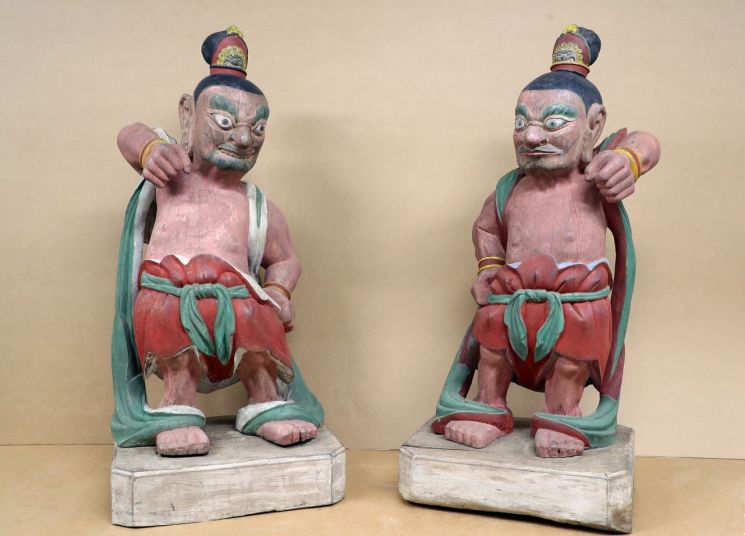
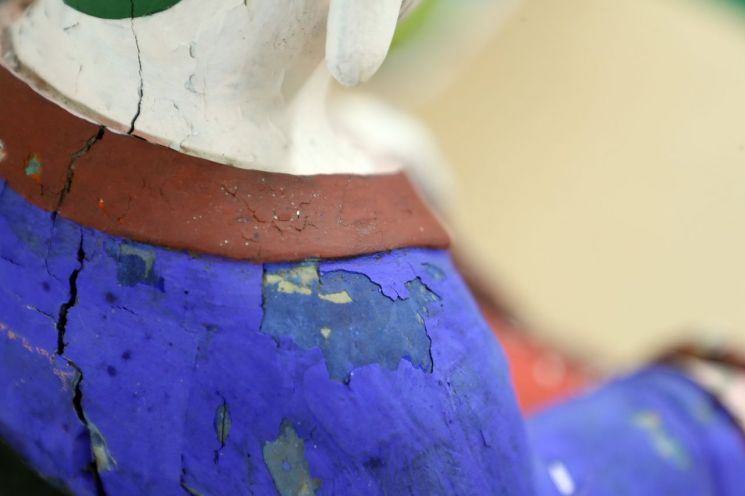
Many of the recovered cultural properties have historical and artistic value worthy of designation as national cultural assets. However, their value has been significantly damaged due to improper preservation after being stolen. In the case of Buddhist paintings, they have hardened (硬化) and cannot be properly unfolded, or the paint has peeled off (剝落). The Siwangdo painting from Hwaeomsa Temple in Gurye, created in 1862, is a representative example. After being stolen in 2001, it was stored rolled up, resulting in deep wrinkles even when fully unrolled. Some paintings have had the inscription (畵記), which records the production date and enshrinement location, cut off at the bottom, or the temple name erased. Buddhist statues also show severe gaps in the wood and paint peeling.
The Jogye Order plans to support the return of stolen cultural properties to their original temples. Additionally, they intend to advocate for institutional improvements such as extending the statute of limitations for theft under the Cultural Heritage Protection Act and abolishing the good-faith acquisition system for cultural properties, aiming to prevent theft and ensure the return of cultural properties to their rightful places.
© The Asia Business Daily(www.asiae.co.kr). All rights reserved.
![From Bar Hostess to Organ Seller to High Society... The Grotesque Con of a "Human Counterfeit" [Slate]](https://cwcontent.asiae.co.kr/asiaresize/183/2026021902243444107_1771435474.jpg)


















