"Building Assets Thanks to Social Infrastructure"
"Effective Tax Rate Low Due to Various Deductions When Inheriting Less Than 3 Billion Won"
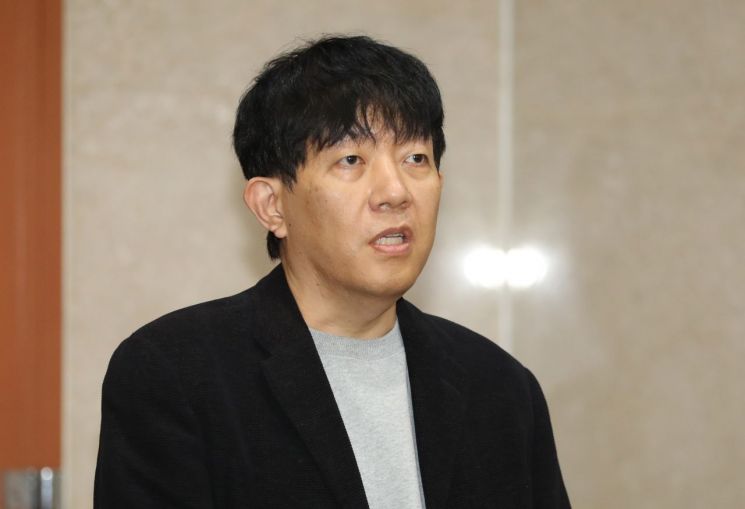
[Asia Economy Reporter Lim Juhyung] Former Socar CEO Lee Jae-woong opposed the proposal to lower the inheritance tax rate, which currently reaches 50%, stating that it is "not worth considering." Following the death of Samsung Chairman Lee Kun-hee, it was reported that the inheritance tax to be paid by heirs exceeds 10 trillion won, sparking criticism that the inheritance tax rate is excessively high.
On the 29th, Lee posted on his Facebook, "In South Korea, where about 300,000 people die annually, only about 10,000 people pay even 1 won of inheritance tax each year."
He continued, "For those inheriting assets under 3 billion won, due to various deductions, the effective inheritance tax rate is about 12%," and questioned, "Is it really a lot to pay about 360 million won in taxes when inheriting 3 billion won?"
He added, "Of course, those who inherit hundreds of billions or thousands of billions in assets pay inheritance tax at a higher rate," but argued, "The accumulation of significant wealth is not solely due to one's own efforts but also due to social infrastructure. Considering this, taxing inherited wealth, which is unearned income, at a rate comparable to earned income is not problematic."
Lee stated, "It is becoming harder to earn money through labor, and we live in an era where assets generate income," and questioned, "Why should unearned asset income be taxed at a lower rate than earned income?"
He also noted, "While there are unreasonable aspects such as management control premiums when passing on stocks, this is a unique case in South Korea where a minority stake is used to exercise management control and reap significant benefits, so it is a case of reaping what one sows."
Earlier, as it was reported that the inheritance tax on the assets to be inherited by Samsung Vice Chairman Lee Jae-yong and others exceeds 10 trillion won, criticism arose that the inheritance tax rate is excessively high.
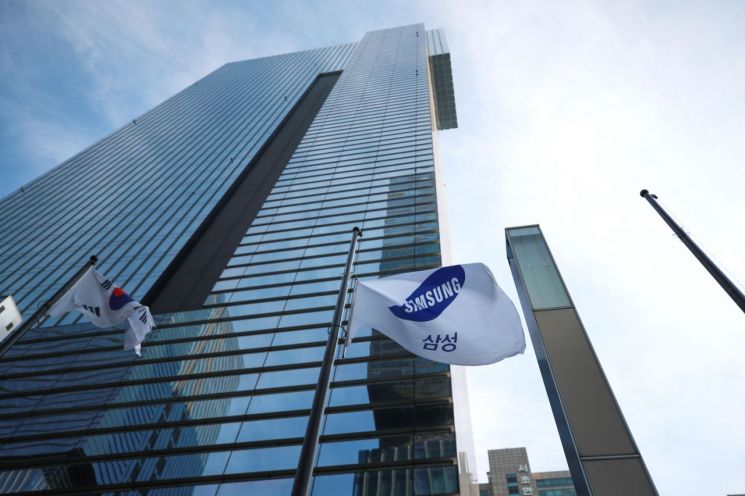
According to the Inheritance Tax Act, if the gift amount exceeds 3 billion won, the highest inheritance tax rate of 50% applies, and if the deceased was the largest shareholder or a special related party, a 20% surcharge is added to the assessed value. Looking at the highest inheritance tax rates among major OECD countries, South Korea exceeds major countries such as the United States (40%), the United Kingdom (40%), and France (45%), except for Japan (55%).
As a result, some have pointed out that the tax on inherited assets is excessive. On the 26th, a petition titled "Please eliminate Samsung inheritance tax" was posted on the Blue House National Petition Board.
In the petition, the petitioner wrote, "Chairman Lee Kun-hee, who led and supported our country under the name of Samsung, has passed away, but is it reasonable for the country to take 10 trillion won out of 18 trillion won in assets?" and "If Samsung collapses, our country will suffer a huge blow." As of the afternoon of the 29th, this post had received over 25,000 endorsements.
There was also a heated debate over the inheritance tax rate in the political sphere.
On the 28th, Park Yong-jin, a member of the Democratic Party of Korea, said in a radio interview, "How many opportunities do children from wealthy families get as they grow up?" and emphasized, "The inheritance tax system was created because society opposes the formation of new classes through wealth accumulation."
He also argued, "The inheritance tax rate should be raised above 60%."
On the other hand, Park Sung-joong of the People Power Party said in an interview that day, "In the United States, there is a movement to reduce the inheritance tax from about 40% by 1% each year to 25%. Japan allows payment over 20 years, and Germany has no interest for 10 years," and argued, "Inheritance tax is a significant issue worldwide and can hinder businesses, so we should also flexibly follow global trends."
© The Asia Business Daily(www.asiae.co.kr). All rights reserved.
![Clutching a Stolen Dior Bag, Saying "I Hate Being Poor but Real"... The Grotesque Con of a "Human Knockoff" [Slate]](https://cwcontent.asiae.co.kr/asiaresize/183/2026021902243444107_1771435474.jpg)

















