[Asia Economy Reporter Junho Hwang] Starting next year, the government will require each ministry to submit strategic plans for national research and development (R&D) projects. This measure is intended for evaluation based on project plans. On the 29th, the Ministry of Science and ICT finalized the implementation plan for next year's national R&D performance evaluation. This plan, established annually according to the basic plan formulated every five years, outlines the implementation of project evaluations, institution evaluations, task evaluation system operations, and evaluation-based management for R&D projects.
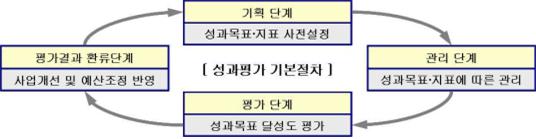
From next year, a "Strategic Plan Establishment and Review System" will be introduced to strengthen project planning and evaluations based on it. Each ministry will prepare a strategic plan for their projects and review it accordingly. The existing higher-level evaluations will be reduced and are planned to be abolished in the future. The government explained that this improvement was made in response to criticisms that evaluations based solely on existing performance goals and indicators had limitations in determining whether projects were properly conducted and whether outcomes met the objectives.
Specific evaluations by policy and technology fields, such as regional research and development, artificial intelligence, and infectious diseases, will also be introduced. This is a measure to strengthen analysis and coordination functions in R&D policy and technology sectors.
For institution evaluations, "strategic consulting" will be gradually introduced during the establishment of research project plans to strengthen the mid- to long-term research plans of government-funded research institutes.
Since 2019, the system has been restructured by separating institution operation evaluations and research project evaluations from the existing comprehensive evaluations, and by extending the evaluation cycle of research projects. This is currently being applied step-by-step, and strategic consulting will also be introduced sequentially in the future. Along with strengthening plan establishment, to reduce evaluation burdens, higher-level evaluation criteria will be adjusted and reduced, and evaluations will be operated mainly through self-assessments by ministries and research councils.
Task evaluations will introduce a new evaluation system for task types that contribute to improving the quality of life of the public, in addition to the existing creative challenge-type and performance achievement-type evaluation systems.
To expand the evaluation foundation, an integrated cross-ministerial research support system will be established for information-based evaluations such as researcher performance information during task evaluations, and the National Science and Technology Knowledge Information Service (NTIS) system will also be expanded to collect, manage, and disclose information on project and institution evaluations.
According to these improvements, project evaluations will conduct mid-term evaluations on 133 projects across 18 ministries out of 1,046 projects. Termination evaluations will be conducted for 50 projects from 13 ministries ending this year, and tracking evaluations will begin for 10 projects from 5 ministries that ended in 2015-2016. Projects related to materials, parts, and equipment will have specific evaluations every first half of the year until 2023, while policy and technology fields will have specific evaluations in the second half of the year.
Among the 47 government-funded research institutes subject to institution evaluations, 25 institutes with new directors appointed next year will prepare institution operation plans, and 16 institutes that received comprehensive evaluations this year will prepare research project plans. Institution operation evaluations will be conducted for 9 institutes whose directors' terms expire next year, and 1 institute will be subject to comprehensive evaluation.
© The Asia Business Daily(www.asiae.co.kr). All rights reserved.
![Clutching a Stolen Dior Bag, Saying "I Hate Being Poor but Real"... The Grotesque Con of a "Human Knockoff" [Slate]](https://cwcontent.asiae.co.kr/asiaresize/183/2026021902243444107_1771435474.jpg)
















