Prime Minister Jeong Sye-kyun's On-site Dialogue on Regulatory Innovation... Announcement of 'Proactive Regulatory Innovation Roadmap for the Robot Industry'
"Robots as Partners Rather Than Human Competitors... Cooperation with Humans, Deployment to Dangerous Areas in National Emergencies"
[Asia Economy Reporter Moon Chaeseok] Delivery robots will be roaming the streets to provide delivery services as early as 2023.
The Office for Government Policy Coordination announced that Prime Minister Chung Sye-kyun presided over an on-site regulatory innovation dialogue under the theme "Walking the Future with Robots, Robot Industry and Regulatory Innovation" on the 28th at KINTEX in Goyang, Gyeonggi Province, during the 2020 RoboWorld event.
The event was attended by senior government officials including Jeong Seung-il, Vice Minister of Trade, Industry and Energy; Jang Seok-young, 2nd Vice Minister of Science and ICT; Son Myung-soo, 2nd Vice Minister of Land, Infrastructure and Transport; and Lim Seo-jeong, Vice Minister of Employment and Labor. Industry representatives such as the Korea Robot Industry Association, LG Electronics, Woowa Brothers, and three experts including Moon Jeon-il, President of the Korea Robot Industry Association, also participated.
President Moon presented on the "Current Status and Prospects of the Robot Industry," and Vice Minister Jeong delivered a presentation on the "Proactive Regulatory Innovation Roadmap for the Robot Industry." Afterwards, industry representatives, experts, and government officials discussed ways to develop the robot industry together.
Delivery Robots to Appear on Streets as Early as 2023
During the on-site dialogue, the contents of the "Proactive Regulatory Innovation Roadmap for the Robot Industry," which includes 33 tasks, were announced. These are divided into 11 cross-sector common regulations and 22 tasks across four major sectors: industrial, commercial, medical, and public.
Prime Minister Chung stated, "With the goal of entering the 'world's top four robot powers' by 2023, next year's robot budget will be increased by 32% from this year to 194.4 billion KRW," adding, "We will focus on nurturing three major manufacturing robots?foundry, textile, and food & beverage?and four major service robots?care, wearable, medical, and logistics."
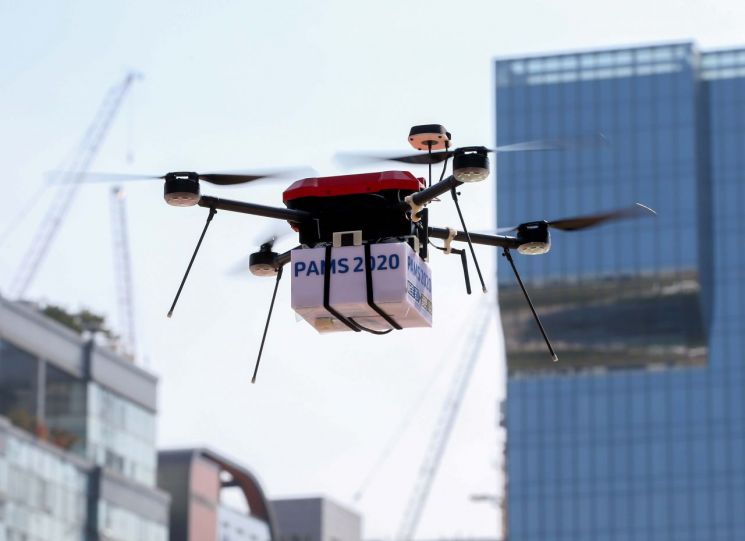
The commercial sector's policy for "2023 robot outdoor delivery service" (with full policy achievement by 2027 involving the Ministry of Trade, Industry and Energy, National Police Agency, Ministry of the Interior and Safety, and Ministry of Land, Infrastructure and Transport) stands out. At the event, a demonstration showed robots handling venue guidance, beverage preparation, delivery, and serving.
Under current laws, robots are not allowed to ride elevators indoors or travel on sidewalks, crosswalks, or roads outdoors. By 2022, standards for robot elevator boarding will be established; by 2025, permission for sidewalk and crosswalk travel will be granted; and by 2027, relaxation of road driving regulations will be considered. This means "indoor and outdoor robot delivery" will become possible.
The government expects that easing regulations will lead to the spread of new business models utilizing delivery and serving robots. Robots will be able to deliver food within apartments and buildings, provide 24-hour parcel delivery, and quickly deliver goods purchased at marts or department stores.
Vice Minister Jeong said, "First, we need to legally incorporate wireless interface production and establish standards so that robots can travel both on sidewalks and roads," adding, "We will create an environment where delivery robots can move indoors and outdoors."
"Robot-Human Collaboration in 2023, Autonomous Task Execution from 2026"
In drafting the "Proactive Regulatory Innovation Roadmap," the government judged the commercialization timeline of technology in three stages: simple assistance (2020?2022), collaboration and coexistence with humans (2023?2025), and autonomous execution (2026).
According to the "Three-Stage Robot Development Scenario" cited by the Korea Institute for Advancement of Technology (KIAT), robots are expected to be actively utilized outdoors from 2023. Instead of just a few high-performance sensors, robots will be systematically operated based on algorithms created with artificial intelligence (AI) and cloud technology.
Since March this year, led by the Ministry of Trade, Industry and Energy, about 100 experts from 17 related ministries and agencies, academia, and research institutes have organized the 33 tasks of the "Regulatory Innovation Roadmap" into cross-sector common regulations and four sector-specific tasks. The government's strategy is to comprehensively prepare for the robot industry spreading throughout daily life.
Among the common tasks are ▲establishing a safety management system and methods for evaluating the safety of service robots (2026, Ministry of Trade, Industry and Energy) and ▲creating guidelines for personal information use and building a robot data platform (2026, Ministry of Trade, Industry and Energy).
Key sector-specific tasks include ▲relaxing regulations on collaborative robots and establishing safety standards for mobile robots in the industrial sector (2024, Ministry of Trade, Industry and Energy and Ministry of Employment and Labor), ▲setting standards for unmanned parking services in the commercial sector (2022, Ministry of Land, Infrastructure and Transport and Ministry of Trade, Industry and Energy), ▲promoting non-face-to-face rehabilitation services and public support for care robots in the medical sector (2025, Ministry of Health and Welfare and Ministry of Trade, Industry and Energy), and ▲developing performance evaluation and safety standards for quarantine robots in the public sector (2023, Ministry of Trade, Industry and Energy and Korea Disease Control and Prevention Agency).
Government: "Humans Won't Lose Jobs to Robots"…Prime Minister: "Employment Safety Nets and Safety Standards to Be Improved"
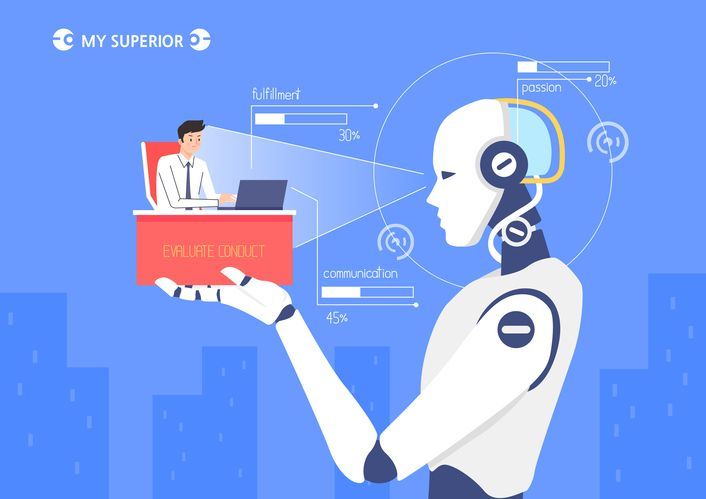
As the robot industry expands, concerns about job losses for humans are significant. Prime Minister Chung emphasized plans to improve employment safety nets and safety standards to dispel such concerns.
For example, the industrial sector task "Relaxing regulations on collaborative robots and establishing safety standards for mobile robots" states, "Humans and robots will work together in ship manufacturing processes, textile bobbin repetitive loading/unloading, machine tending services, and welding automation services."
Additionally, the public sector task "Establishing performance recognition standards and on-site operation regulations for disaster safety robots (2027, Fire Agency, Police Agency, etc.)" notes, "By 2027, detailed on-site operation manuals for disaster safety robots will be created for use in fires, marine reconnaissance, high-risk environments, and outdoor security."
The positive aspect emphasized is that robots will be deployed in difficult terrains where human deployment is challenging, working together to solve tasks rather than taking jobs away from people.
Prime Minister Chung said, "Preparation for coexistence with robots is necessary," adding, "We will pay attention to social system improvements such as employment safety nets, safety standards, and new technology education to prepare for job changes caused by robots."
Domestic Market to Reach 20 Trillion KRW in 5 Years…Robots to Be Deployed in National Emergencies
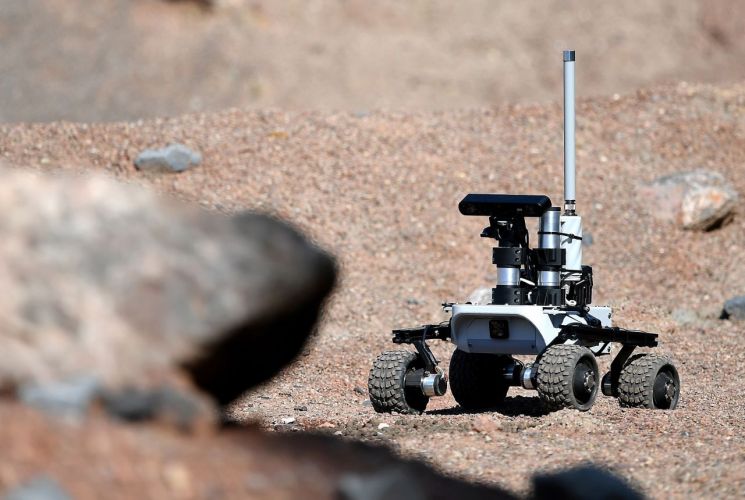
The government expects that the "Proactive Regulatory Innovation Roadmap for the Robot Industry" will support the Digital New Deal, stabilize the crisis caused by the novel coronavirus infection (COVID-19), and help foster a "contactless robot economy."
Economically, the plan is to nurture 20 specialized robot companies by 2025 (up from 6 in 2018) and expand the domestic market size to 20 trillion KRW (from 5.8 trillion KRW in 2018).
Socially, through fostering the robot industry, the government anticipates further advancement of the contactless era, enabling stable maintenance of social infrastructure via robots even during national emergencies such as pandemics.
A government official stated, "The government will form a consultative body involving industry, academia, research, and government to monitor the roadmap's implementation status and periodically revise the roadmap considering technological developments and environmental changes."
He added, "Within this year, we will also establish and announce a regulatory innovation roadmap for the AI sector and continue to promote roadmaps related to the Korean New Deal."
© The Asia Business Daily(www.asiae.co.kr). All rights reserved.



















