Continued Jeonse Shortage Leads to Monthly Rent Crisis... Young Workers "Can't Find Rooms"
Experts "Jeonse and Monthly Rent Crisis Vicious Cycle... Government Measures Can't Overcome Market Supply and Demand"
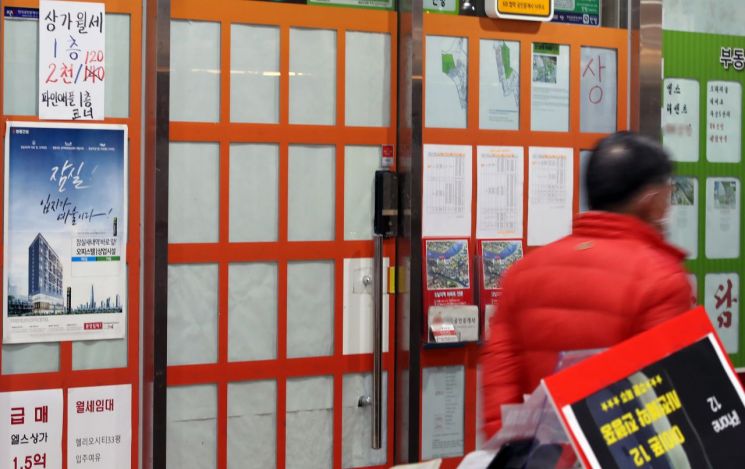 On the 25th, a real estate agency in Songpa-gu, Seoul. The property listings section is empty. Photo by Yonhap News
[Asia Economy Reporter Kim Ga-yeon] "I couldn't even save a lump sum," "There are no listings at all, what can we do?"
Since the new Lease Protection Act was implemented last July, the jeonse (long-term lease) crisis has been spreading, deepening the sighs of young people such as office workers and newlyweds. The number of jeonse listings for multi-family houses, multi-unit buildings, and villas?mainly sought by young adults starting their careers?has sharply decreased, leading to a monthly rent crisis as well. Experts diagnose that young workers who need to commute within the Seoul metropolitan area inevitably face a strong sense of despair.
The jeonse crisis is intensifying mainly in the metropolitan area and appears to be extending into a monthly rent crisis. With a shortage of jeonse listings, citizens are turning to monthly rent, causing listings to be quickly depleted or monthly rents to surge. As a result, young people are expressing anxiety and dissatisfaction due to uncertain housing issues.
The volume of jeonse transactions in Seoul has been steadily decreasing since last July.
According to the Seoul Real Estate Information Plaza on the 27th, the number of jeonse transaction reports in Seoul dropped from 12,610 in July to 8,587 in August. Subsequently, it was 5,854 last month, and as of the 27th, the number of reports in October was 3,562. Compared to 12,229 reports in October last year, this represents a significant decline.
A public opinion survey also revealed that residents of the metropolitan area perceive the jeonse crisis as a serious issue.
According to a survey conducted by Realmeter from the 17th to 18th at the request of Democratic Party lawmaker Jeong Il-young, targeting 1,000 residents aged 18 and over living in Seoul, Gyeonggi, and Incheon, 66% of respondents answered that the jeonse crisis is "serious." They cited "a shortage of new jeonse supply due to system changes" (57.6%) as the main cause.
In this situation, the number of tenants turning to monthly rent is also increasing. According to KB Kookmin Bank's Monthly Housing Trend report on the 22nd, the Seoul apartment monthly rent index last month was 101.2, up 0.8 points from 100.4 in August. This is the highest level in 4 years and 8 months since the related statistics began in January 2016.
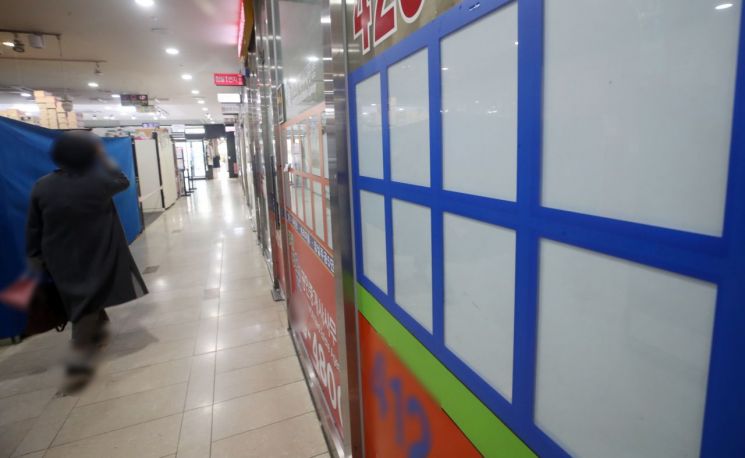 The photo shows the vacant property listings section at a real estate agency in Songpa-gu, Seoul, on the 25th / Photo by Yonhap News
As monthly rent transactions increase, the shortage of listings and rapid price hikes continue, causing young people to express anxiety, saying "there is nowhere suitable to go" due to lack of listings and economic burdens. Some also confessed to commuting from their parents' homes or seeking share houses.
A 28-year-old office worker, A, who recently changed jobs, said, "I transferred to a workplace about a 3-hour round trip from my parents' home. It's not easy to find jeonse or monthly rent rooms, so I keep commuting." He added, "When I was preparing to change jobs a few months ago and looked for listings, it wasn't this bad. I regret not finding a place earlier if I had known it would be like this."
A said, "I have some savings, but I can't afford to buy a house by stretching myself or move into an expensive place, so I'm worried. From talking to friends who are also office workers, many are struggling with housing issues." He added, "I don't think the real estate situation will improve, so I guess I'll have to keep commuting for a while."
Experts point out that stabilizing the real estate market will be difficult unless the fundamental causes are addressed.
Professor Kim Tae-gi of Dankook University's Department of Economics said, "This is a vicious cycle stemming from the rapid rise in housing prices. It eventually spread throughout Seoul, leading to the jeonse and monthly rent crises." He added, "The government is using coercive measures to lower real estate prices, which might have temporary effects, but the fundamental cause lies in supply restrictions, so it cannot overcome the actual market supply and demand situation. Even if additional measures are prepared, their effectiveness will likely be limited."
Professor Kim said, "For people in their 30s, it can be described as a panic state. Loans are unavailable, and housing prices are rising, so they feel despair." He pointed out, "As people are pushed out, their living environments worsen, and with monthly rents reaching record highs, they eventually have to move to the outskirts of Seoul. Most young workers have to commute, so various difficulties arise."
He continued, "Young workers may feel this is a 'system that robs hope.' They see it as an unfair policy that makes difficult situations even harder for those already struggling."
© The Asia Business Daily(www.asiae.co.kr). All rights reserved.
![Clutching a Stolen Dior Bag, Saying "I Hate Being Poor but Real"... The Grotesque Con of a "Human Knockoff" [Slate]](https://cwcontent.asiae.co.kr/asiaresize/183/2026021902243444107_1771435474.jpg)

















