Annual Fuel Cost Around 1.14 Million KRW Based on Gwanggyo Station to Gangnam Station
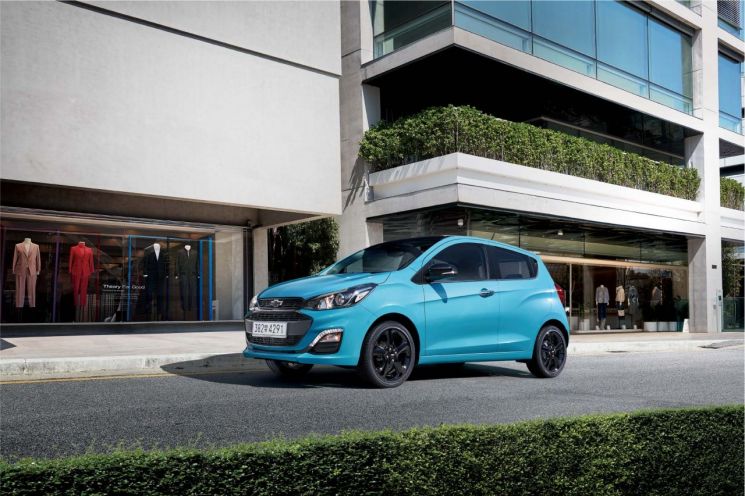
[Asia Economy Reporter Kim Ji-hee] With the rise in interest in commuting by private car due to the COVID-19 pandemic, compact cars are gaining renewed attention. This is because they offer cost savings through affordable prices, lower fuel costs compared to public transportation, and tax benefits.
According to Korea GM, commuting five days a week from Gwanggyo Station to Gangnam Station using a Chevrolet Spark with a fuel efficiency of 15 km/l results in an annual fuel cost of 1,145,664 KRW. In contrast, taking the subway incurs an annual transportation cost of 1,416,000 KRW. Although toll fees apply when traveling by private car, resulting in higher overall costs, the difference is only about 340,000 KRW per year.
There are also various financial benefits. When purchasing a Chevrolet Spark, buyers can receive individual consumption tax refunds, exemptions from acquisition and registration taxes, and discounts on regional development bonds. The annual automobile tax for compact cars is approximately 80 KRW per 1cc. For the 1,000cc Spark, the annual automobile tax is 103,880 KRW. Additionally, public parking lots and toll road fees are about half the cost of those for regular passenger cars, and subway transfer parking lots offer an 80% discount.
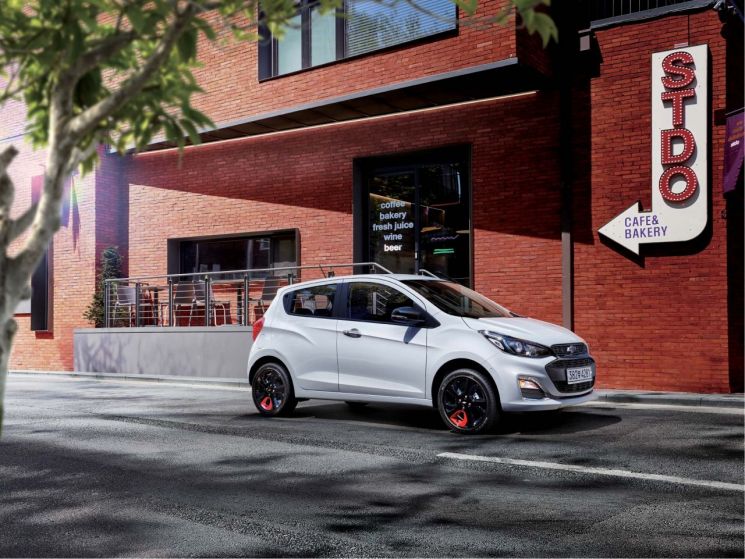
Despite its small size, the Spark’s safety is a strong point. In the 2016 New Car Assessment Program Korea (KNCAP), the Spark was the only domestic compact car to receive a comprehensive safety rating of Grade 1 with a total score of 87.7 points. It also earned the highest rating of five stars in the collision safety evaluation, which assesses passenger safety in the event of an accident.
Safety technologies have also been applied. Side airbags are installed equally in both the rear and front seats, and with eight airbags in total, it has the largest airbag system in its class. The body, designed with impact absorption, uses ultra-high-strength steel and high-strength steel for 73% of its structure, the highest ratio in its class, providing excellent rigidity. Furthermore, advanced safety features such as Forward Collision Alert (FCA), Lane Departure Warning System (LDWS), and Blind Spot Alert System (SBSA) have been added.
© The Asia Business Daily(www.asiae.co.kr). All rights reserved.
![User Who Sold Erroneously Deposited Bitcoins to Repay Debt and Fund Entertainment... What Did the Supreme Court Decide in 2021? [Legal Issue Check]](https://cwcontent.asiae.co.kr/asiaresize/183/2026020910431234020_1770601391.png)

















