"72 Billion Dollars in Back Rent This Year"... Moody's "Could Grow to 70 Billion Dollars Without Stimulus"
Most Temporary Measures Preventing Tenant Evictions End in January Next Year... Negative Impact on Economy and Finance
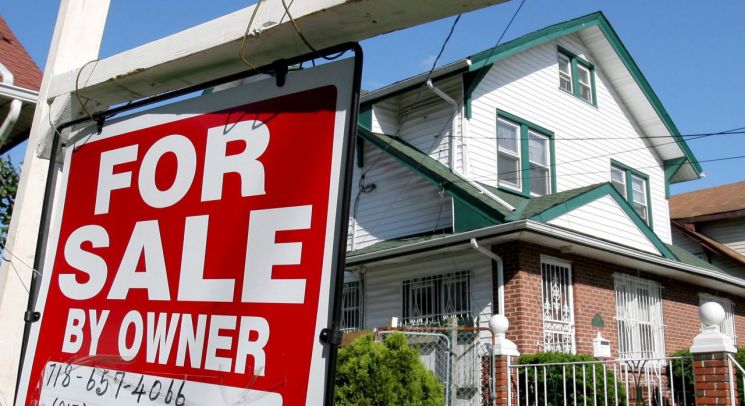
[Asia Economy Reporter Jeong Hyunjin] In the United States, concerns are rising that the sharp increase in rent arrears among tenants due to job losses could trigger a vicious economic cycle. In particular, with the government's temporary measures to prevent tenant evictions set to expire in January next year, there are forecasts that the real estate market could plunge into chaos.
According to the Wall Street Journal (WSJ) on the 27th (local time), the Federal Reserve Bank of Philadelphia recently conducted a study on the impact of employment losses caused by the novel coronavirus disease (COVID-19) on rental debt. It estimated that by the end of this year, 1.34 million tenant households will have unpaid rent amounting to $7.2 billion (approximately 8.13 trillion KRW). This estimate assumes that most tenants receive COVID-19 cash assistance and about half receive unemployment benefits due to job losses, reflecting federal and state government support amid the COVID-19 crisis.
International credit rating agency Moody's also projected earlier in August that without additional economic stimulus measures, rental debt could reach $70 billion by the end of this year. This means that 12.8 million Americans would be unable to pay an average of $5,400 in rent per person.
The surge in rental debt is expected to lead to a housing crisis. Currently, the federal and state governments have implemented COVID-19 measures that prevent landlords from evicting tenants even if they fail to pay rent. However, these temporary measures are set to end in most areas by January next year. After that, a mass eviction of tenants could occur across the United States.
The real estate crisis could also expand into an economic downturn. WSJ reported, "While the scale of rent payment delinquencies is smaller compared to the $1.3 trillion bubble burst during the 2008 subprime mortgage crisis, tens of millions of tenants will bear debt burdens, and the number of Americans facing home foreclosures could exceed the 3.8 million record set between 2007 and 2010." Mark Zandi, Chief Economist at Moody's, pointed out, "These assumptions require significant financial choices, forcing people to cut other expenses to pay rent, inevitably impacting the economy."
In particular, the damage from this crisis is likely to be concentrated among the middle class and below. The Philadelphia Fed analyzed that "Hispanic and Black households, as well as single women, are expected to suffer greater impacts." They have been hit harder by COVID-19 in the labor market compared to White individuals and are recovering more slowly. Some studies have even suggested that Black and Hispanic populations could experience housing instability at twice the rate of Whites.
Rent arrears could also destabilize financial markets. As tenants who lost jobs due to COVID-19 face reduced liquidity, more are increasingly paying rent with credit cards, which inevitably harms their creditworthiness. Credit card payments made to small and medium-sized businesses in the rental industry have increased by nearly 70% year-over-year as of early this month. While tenant debt initially affects landlords, it eventually transfers to financial institutions.
Kate Bulger, a household debt financial counselor at Money Management International (MMI), a U.S. nonprofit organization, pointed out that the expansion of credit card debt negatively affects tenants' credit. Even if tenants can pay rent immediately, future debt could pose a significant threat to household budgets. WSJ forecasts that if tenants' inability to pay rent persists for years, landlords in the real estate market may demand larger security deposits at contract signing or require several months' rent to be paid in advance.
© The Asia Business Daily(www.asiae.co.kr). All rights reserved.
![User Who Sold Erroneously Deposited Bitcoins to Repay Debt and Fund Entertainment... What Did the Supreme Court Decide in 2021? [Legal Issue Check]](https://cwcontent.asiae.co.kr/asiaresize/183/2026020910431234020_1770601391.png)















