Co-proposal of 13 Amendment Bills Including Baek Hyeryun
Democrats Prepare for Regular Session with Super Budget
K-New Deal and Three Economic Laws Also Key Tasks
Blue House Strategically Positions for Budget Legislation
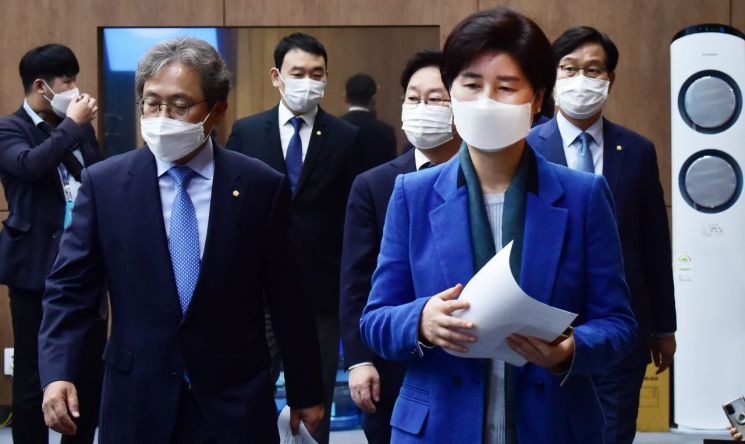
[Asia Economy reporters Ryu Jeong-min and Kang Na-hum] The Democratic Party of Korea, having concluded the national audit, has collectively proposed a series of follow-up bills to launch the High-ranking Officials' Crime Investigation Unit (HCIC). This is interpreted as a determination to complete the legal framework revision during this regular session of the National Assembly with the goal of establishing the HCIC within the year. Additionally, the party is expected to focus its efforts on legislation and budget processing related to the super budget, the Korean New Deal, and public welfare.
According to the Democratic Party on the 27th, ten Democratic Party members of the National Assembly's Legislation and Judiciary Committee, including Baek Hye-ryun, the Democratic Party's secretary of the committee, jointly proposed 13 amendments related to the HCIC the previous day. These include adding the HCIC and its chief to the list of target institutions in laws such as the Special Act on the Confiscation of Illegal Political Funds, the Special Act on the Confiscation and Recovery of Corrupt Assets, the Protection of Communications Secrets Act, and the Attorney-at-Law Act.
Along with this, the HCIC was added as an institution that can request information related to criminal investigations of illegal assets from the Financial Intelligence Unit and as an institution to which the National Human Rights Commission can request the initiation of investigations or file complaints.
When requesting international cooperation for the confiscation or recovery of assets, the HCIC chief or prosecutors affiliated with the HCIC can request cooperation from the Minister of Justice without going through the Prosecutor General. Additionally, the HCIC was added as an institution to which the chairman of the Bar Ethics Committee can refer investigations concerning attorneys.
In this way, the Democratic Party plans to accelerate preparatory work for the launch of the HCIC following the national audit while focusing on legislation and budget processing for the super budget, the Korean New Deal, and public welfare in preparation for the regular session of the National Assembly.
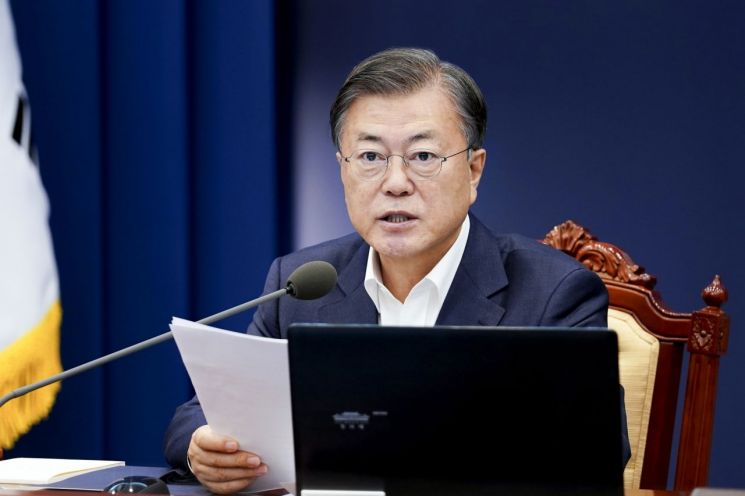
In this context, President Moon Jae-in's emphasis on "cooperation" at the time the National Assembly's audit concluded is a strategic move aimed at the budget and legislative political situation. The government has prepared the largest-ever "super budget" of 556 trillion won under the pretext of overcoming COVID-19 and is awaiting the National Assembly's disposition. This reflects the government and ruling party's intention to maintain expansionary fiscal policy to respond to the economic crisis caused by COVID-19. Among this, a budget of 21.3 trillion won has been allocated for 642 projects to fully promote the Korean New Deal.
Legislative tasks to realize President Moon's national philosophy are also key issues that the ruling party is focusing on. President Moon's instruction at the Blue House senior secretaries and aides meeting on the 26th to "actively refer to and reflect reasonable criticisms and alternatives raised during the national audit in policies" is a signal to the opposition party. It is a promise to incorporate reasonable criticisms, such as issues regarding the accuracy of real transaction statistics in the real estate market, into policy.
The opposition party is preparing "microscopic scrutiny" not only of the super budget but also of the Moon administration's legislative agenda. Whether the ruling party can demonstrate high-level political skills to gain the opposition's cooperation is a matter of interest. The ruling party is expected to concentrate its efforts on four areas: ▲reform legislation ▲future transition K-New Deal ▲public welfare legislation ▲budget support.
The reform legislative agenda centers on the three fair economy laws (Commercial Act, Fair Trade Act, and Financial Group Supervision Act) and the launch of the HCIC. The three fair economy laws are being considered to maintain the government's original draft while making some supplements during the standing committee review process. Regarding the HCIC, although the Democratic Party has set the launch deadline for next month, concerns may grow if the opposition party resorts to "delay tactics." However, the 5.18 Special Act is expected to pass smoothly as the People Power Party has agreed to cooperate. The Democratic Party decided at a party meeting to propose the 5.18 Special Act as a party bill.
Additionally, the Democratic Party has set ten legislative tasks related to the future transition K-New Deal, including the Digital Economy Transition Act, Green Transition and Climate Crisis Act, Energy Transition and Decentralization Act, Digital and Non-face-to-face Promotion Act, and Regional Balanced New Deal Support Act. Jung Tae-ho, the Democratic Party's Strategic Planning Committee chairman, said, "Immediate dialogue with the opposition is necessary, and conflicts among stakeholders must be carefully examined and well prepared."
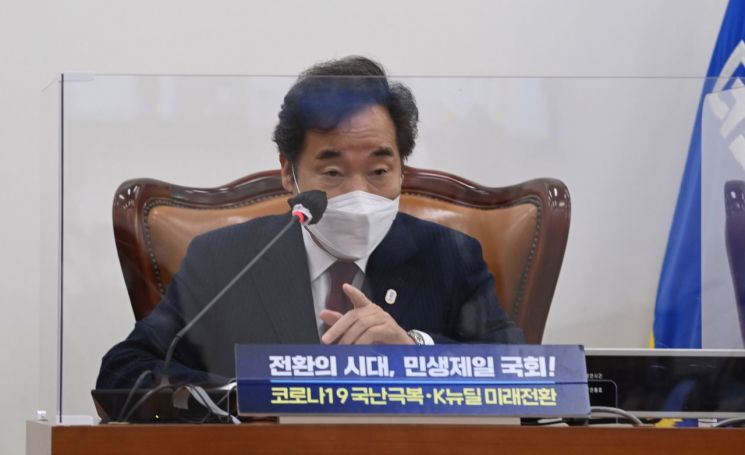
Among public welfare legislation, the party plans to focus on essential labor-related laws such as the Employment Insurance Act, Living Logistics Act, Industrial Accident Compensation Protection Act, and Occupational Safety and Health Act. Democratic Party leader Lee Nak-yeon said at a meeting on "Checking the Working Conditions and Protection Measures for Delivery Workers," "The Living Logistics Act is almost fully adjusted and will be processed within this session," adding, "We will review it in conjunction with other related laws while maintaining the main principle of the Serious Accident Corporate Punishment Act."
© The Asia Business Daily(www.asiae.co.kr). All rights reserved.



















