Animal Abuse Increased 13 Times in 10 Years... Punishments Remain Minimal
Experts Say "There Must Be Awareness That Animal Abuse Is a Serious Crime"
 Abandoned dogs at an animal shelter. The photo is unrelated to specific expressions in the article. [Image source=Yonhap News]
[Asia Economy Reporter Heo Midam] "I was angry because the cat rummaged through the trash can.", "I had no intention to kill...".
Recently, incidents of cruelly killing animals that cannot speak have been continuing. In particular, some perpetrators treat animals merely as targets for venting their anger, abusing them by beating and throwing them around, causing social concern.
Previously, a man in his 60s killed over 100 birds because he was "angry after being hit by bird droppings," and a man in his 20s, enraged by his girlfriend's breakup notice, abused his partner's dog by hitting it with a brick, sparking public outrage. Experts emphasize that punishments for animal abuse are too lenient and call for strengthening related penalties.
Animal abuse cases have been steadily increasing. According to data provided by Rep. Lee Eunju of the Justice Party on the 7th, violations of the Animal Protection Act increased by 1147% from 2010 to last year. Animal Protection Act violations were ▲69 cases in 2010 ▲98 cases in 2011, but surged to 914 cases last year. In other words, animal-related crimes increased more than 13 times over 10 years.
In particular, there are quite a few people who abuse their own pets by beating and throwing them just because they are angry.
In July, in Yangsan, Gyeongnam, a man in his 40s was caught by the police for throwing two Maltese puppies he was raising from the 9th floor of an apartment. He stated during the police investigation, "I was angry because the puppies did not relieve themselves in the designated place, so I threw them." The puppies hit a tree and fell into a flower bed; they did not die but were severely injured.
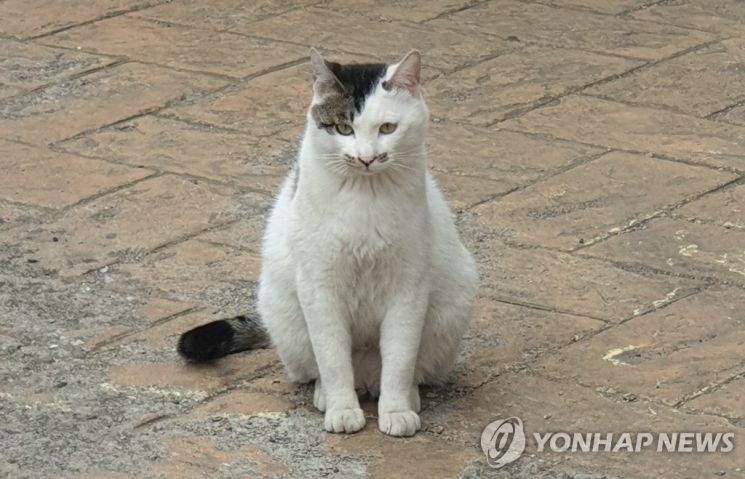
This is not the first case of crimes venting anger on animals. In May, in Cheongju, Chungbuk, a man in his 70s put three live kittens into designated waste bags and abandoned them by the roadside. He told the police, "I was angry because the cats came into the house and rummaged through the trash can," and "I had no intention to kill the cats."
Animal abuse continues, but related punishments remain minimal. Under current law, animal abuse is punishable by up to 2 years imprisonment or a fine of up to 20 million won. However, among 3,360 people referred to the prosecution for violating the Animal Protection Act over the past 10 years, only 4 were detained. Last year, 973 people were referred, but none were detained.
In 2018, a man in his 70s who killed about 1,000 stray cats was caught by the police but was not punished because no cat carcasses were found at the scene. The man deliberately coated chicken and fish with rat poison to kill the stray cats.
At that time, the police confirmed that the man admitted his wrongdoing and took out the food coated with rat poison, but since no cat carcasses were found at the scene, they stated that he could not be punished under the Animal Protection Act for abuse.
Given this situation, there are calls for the need for 'animal-dedicated police officers' who specialize in investigating animal-related cases. In July, a petition titled "Please form a dedicated team for investigating animal abuse and abolish dog farms and pet shops" was posted on the Blue House National Petition site.
The petitioner said, "I have seen many articles about animal abuse," and opened by saying, "There are various types of abuse, such as 'snack terrorism' where needles are put into dog snacks and scattered on the streets, an incident in Busan where a pregnant stray cat was burned with a gas torch and other fire devices leading to death, and dismemberment of stray cats in Mapo-gu, Seoul. The scope of abuse is also expanding."
He continued, "In the US, UK, and Germany, there are animal-dedicated investigators who undergo training courses to become investigators and are deployed to abuse-related crime scenes to investigate cases," and emphasized, "I hope Korea also forms an animal abuse dedicated team." The petition closed with 2,084 supporters.
Animal-dedicated police teams are actively implemented in countries such as the US and Germany. In particular, the Royal Society for the Prevention of Cruelty to Animals (RSPCA) in the UK trains investigators through a one-year education course and deploys them to crime scenes. In Korea, Gyeonggi Province is the only region that formed an animal abuse dedicated team within the Civil Judicial Police Unit in November 2018 and is cracking down on animal-related crimes.
Experts emphasize that awareness of animal abuse as a serious social crime must spread. Lee Wonbok, head of the Korea Animal Protection Union, said, "Understanding and consideration for socially vulnerable groups such as the elderly and children are increasing, but awareness of animals is particularly underdeveloped," and pointed out, "There must first be recognition that animal abuse is a serious social crime."
He added, "The UK's RSPCA has hundreds of animal-dedicated investigators who thoroughly investigate animal abuse and abandonment. Korea also needs such animal-dedicated investigators," and said, "Also, punishments for animal abuse in Korea are very lenient. It is necessary to subdivide and systematize the law, as well as strengthen punishments for animal abuse."
© The Asia Business Daily(www.asiae.co.kr). All rights reserved.

![Clutching a Stolen Dior Bag, Saying "I Hate Being Poor but Real"... The Grotesque Con of a "Human Knockoff" [Slate]](https://cwcontent.asiae.co.kr/asiaresize/183/2026021902243444107_1771435474.jpg)















