[Asia Economy Honam Reporting Headquarters Reporter Yoon Jamin] To mark the 40th anniversary of the May 18 Gwangju Democratization Movement this year, the National Police Agency revoked the disciplinary actions against police officers who refused the unjust orders of the Chun Doo-hwan new military regime in 1980 and paid the salaries that had not been paid due to the disciplinary actions.
However, since the salaries were calculated based on the 1980 payment standards, the unpaid salary settlements received by the disciplined police officers after 40 years amounted to only around 100,000 won.
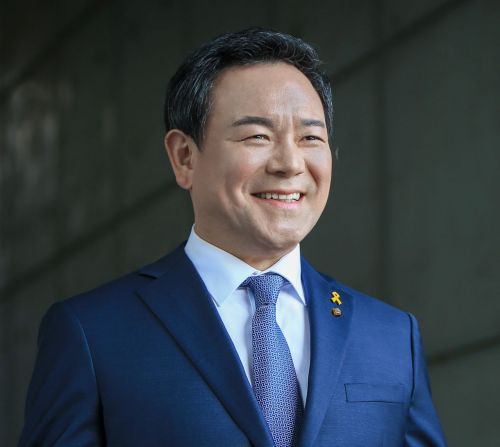
According to the National Assembly inspection data submitted by Representative Lee Hyung-seok (Democratic Party of Korea, Gwangju Buk-gu Eul) from the National Police Agency on the 25th, 68 police officers in the Gwangju and Jeonnam regions who refused the Chun Doo-hwan new military regime’s order to forcibly suppress citizens during the 1980 Gwangju Democratization Movement were dismissed, disciplined, transferred, or warned under the orders of the National Security Emergency Planning Committee.
Among the disciplined officers at the time, former Mokpo Police Chief Lee Jun-gyu was dismissed for refusing the new military regime’s order for forced suppression and attempting to prevent armed conflict, and he died in 1985 due to aftereffects of torture.
The bereaved family of former Chief Lee filed a lawsuit claiming the unfairness of his dismissal and received a not guilty verdict in October last year.
Also, former Jeonnam Provincial Police Operations Officer Ahn Su-taek was beaten by martial law troops for releasing innocent citizens and was demoted for ‘operational failure.’
Police officers in Gwangju and Jeonnam who were disciplined during the May 18 incident faithfully carried out their original duties of ‘protecting citizens’ and ‘maintaining public order,’ but suffered various humiliations and unfair disciplinary actions for disobeying the unjust orders of the new military regime.
Accordingly, on May 15 this year, the 40th anniversary of the May 18 Gwangju Democratization Movement, the National Police Agency revoked the disciplinary actions against 21 police officers who were unfairly disciplined under the National Security Emergency Planning Committee’s orders during May 18 and settled and paid the unpaid wages due to the disciplinary actions.
However, it was confirmed that the settlement amount paid by the National Police Agency this year was calculated based on the salaries the disciplined police officers received in 1980.
The settlement amounts paid in May 2020 to police officers who were demoted, reprimanded, or dismissed in June 1980 were generally around 100,000 won.
This amount is far too low to be considered a restoration of honor after 40 years. The police explained that since there are no internal regulations regarding the application of interest on delayed payments for canceled disciplinary actions, the salaries were paid at the 1980 wage level.
However, a 2006 Supreme Court precedent regarding salary settlements for public officials whose dismissal was canceled states that “when paying settlement wages due to cancellation of the dismissal, delayed damages from the time the original salary should have been paid until the settlement date must be paid, and no special regulations are required for the payment of delayed damages.”
Representative Lee Hyung-seok said, “Even the Supreme Court precedent confirms that no special regulations are needed for the payment of delayed damages, so the police’s decision to pay the settlement amount based on the 1980 salary due to lack of regulations is unreasonable,” and added, “Delayed interest should be calculated and paid to fully restore the honor of the reinstated police officers.”
© The Asia Business Daily(www.asiae.co.kr). All rights reserved.

















