Voice AI Technology, Visual Assistance Technology, and Language Rehabilitation Programs Supporting Communication in the Spotlight
[Asia Economy Reporter Kim Heeyoon] Various voice artificial intelligence (AI) technologies that assist communication for socially vulnerable groups are being developed, attracting attention.
According to the industry on the 24th, AI technologies such as AI phone calls that help communication for the hearing impaired by recording real-time phone conversations, voice guidance for the visually impaired, and language rehabilitation training have been developed to assist various communication channels.
Technology that shares warm communication through recorded call content even without hearing
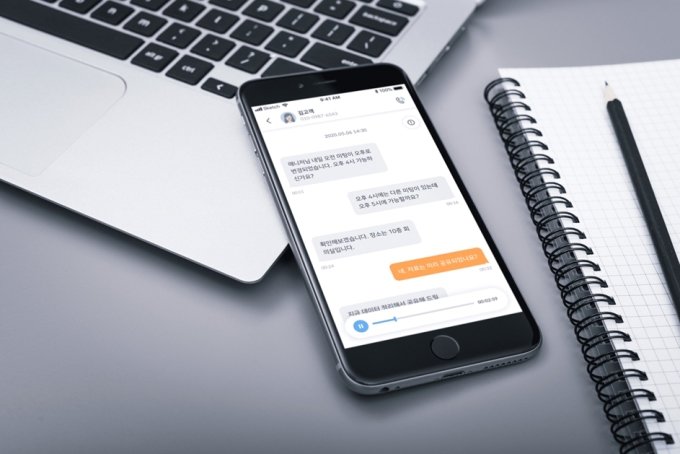
Atlas Labs, which developed the AI phone app ‘Switch,’ supports a service that records and displays voice data as text along with real-time call recordings. Through the app, the content of calls made by acquaintances is saved as text records, enabling smooth communication even if the user cannot hear the conversation.
People with hearing loss or hearing disabilities often experience great difficulty with regular phone calls, and Switch serves as their ears and a communication medium.
Atlas Labs explained that a hearing-impaired user of Switch shared feedback saying, “Recently, it was difficult to exchange many messages with my child who lives far away, but through the Switch app, an acquaintance made calls on my behalf and I could check the call content as text. Although I couldn’t hear, it felt like having everyday conversations as before, which was nice.”
Not just a practical AI phone, but because it stores call content with precious people such as family, lovers, and friends and allows users to check it anytime, expectations for the official launch of the AI phone mobile app Switch are rising.
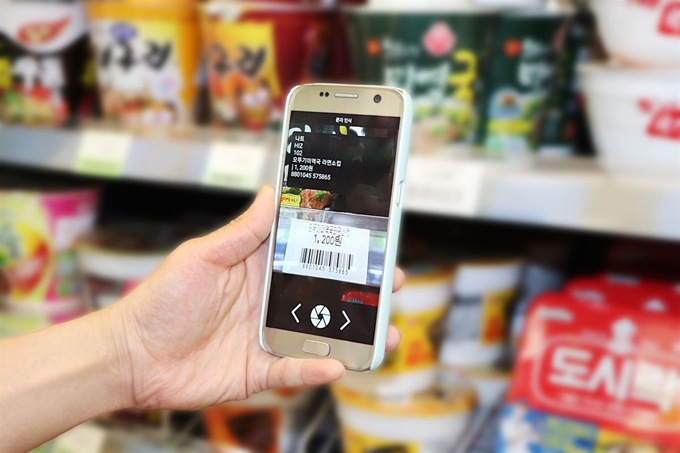 The operating screen of 'Sullivan+,' a visual assistance app launched by LG Uplus and the startup TwoArt for the visually impaired. It reads aloud the text reflected on the screen or describes objects. Photo by TwoArt
Voice guidance technology that becomes eyes even without sight
The AI visual assistance app ‘Sullivan+’ helps visually impaired people in their daily lives through AI-powered voice guidance.
Sullivan+ provides voice guidance to users based on information recognized by the smartphone camera. It analyzes the correlation between recognized images and key words to provide visual information and applies image captioning technology to deliver optimally composed sentences. Therefore, even visually impaired users can easily obtain necessary information for daily life, such as ordering food in a restaurant or checking school notices for their children, without help from others nearby.
Additionally, it offers various services for people with visual difficulties, including 'Text Recognition' that reads recognized text aloud, 'Face Recognition' that estimates and informs the age and gender of photographed individuals, 'Image Description' that describes surrounding objects and scenes, and 'AI Mode' that selects the most appropriate shooting result among the three functions.
 Language rehabilitation training program Tokitoki equipped with voice recognition artificial intelligence. Photo by Neophons
Language rehabilitation training technology using voice AI
The app ‘Tokitoki,’ developed by medical startup Neophons, is a language rehabilitation training program equipped with voice recognition AI that provides non-face-to-face speech therapy services.
Tokitoki offers autonomous language rehabilitation training using AI, an O2O (Online to Offline) service connecting patients and speech therapists online, and contactless therapy services. It helps patients with speech disorders easily receive feedback and speech disorder treatment support through the app.
Rather than simple speaking practice following word or sentence cards, Tokitoki provides methods for improvement and counseling for patients with speech disorders, allowing them to practice therapy anytime and anywhere without visiting a speech therapy clinic. Tokitoki plans to provide the service free of charge to low-income groups and multicultural family patients, leading efforts to realize public interest value.
An industry official said, “As artificial intelligence advances, services that directly assist people’s daily lives are increasing. Among them, voice AI technology is a warm technology that can become people’s eyes, ears, and mouth, and it is hoped that it will greatly alleviate the daily inconveniences and communication difficulties of socially vulnerable groups.”
© The Asia Business Daily(www.asiae.co.kr). All rights reserved.



















