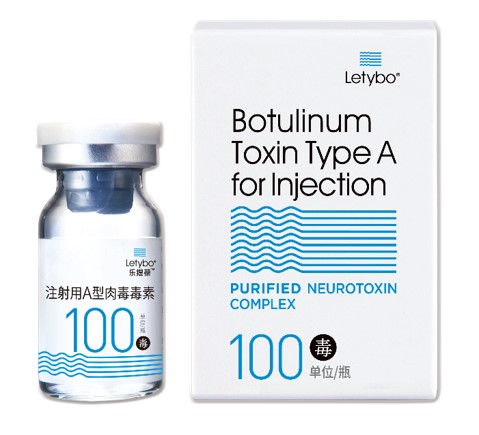
[Asia Economy Reporter Choi Dae-yeol] Hugel, the leading domestic company in botulinum toxin products, announced on the 23rd that it has become the first Korean company to receive sales approval from the China National Medical Products Administration.
Named after the product developed by the American pharmaceutical company Allergan and commonly called Botox, the company's export name is Letiboa. Hugel is the first Korean company to obtain sales approval for botulinum toxin products in China. It is also the fourth fastest company worldwide to achieve this.
Botulinum toxin products are widely used in both therapeutic and cosmetic fields. According to industry sources, the botulinum toxin market in China is expected to grow to approximately 1.75 trillion KRW by 2025, making it the third largest market after the US and Europe. A Hugel representative said, "Despite continuous economic growth, high interest in beauty, and a large population, the current usage rate of botulinum toxin products in China is only 1%. Only Allergan's 'Botox' and Lanzhou Institute's 'BTX-A' products are officially sold, making China a key market for domestic companies to increase overseas sales."
Hugel first introduced its product called 'Botulax' to the domestic market in 2010. After becoming the number one product in the domestic market in 2016, it is currently estimated to hold over 40% market share. In 2017, the company began Phase 3 clinical trials in China with 500 participants, proving that its product is not inferior in efficacy or safety compared to Botox. After completing Phase 3 trials the following year, Hugel applied for sales approval in April last year and received approval after about a year and a half.
To establish itself in the local market, the company signed a contract with Sahuan Pharmaceutical, the third largest pharmaceutical company in the local hospital drug market, and has been conducting marketing activities. The local partner has a distribution network covering about 10,000 hospitals and medical institutions. Additionally, marketing activities will be tailored to regional conditions in Beijing, Shanghai, Shenzhen, and other areas. The company aims to increase its market share to over 30% within three years and become the local market leader.
Currently, the company sells this product in 27 countries, mainly in Asia. It submitted a sales approval application in June to enter the European market and has established a local subsidiary in the US, planning to begin formal application procedures within this year.
© The Asia Business Daily(www.asiae.co.kr). All rights reserved.

















