Assemblyman Lee Gyumin Proposes Bill to Abolish Praise and Encouragement Crimes
Eradicating Corruption and Enhancing Transparency, Successive Amendments to the Private School Act
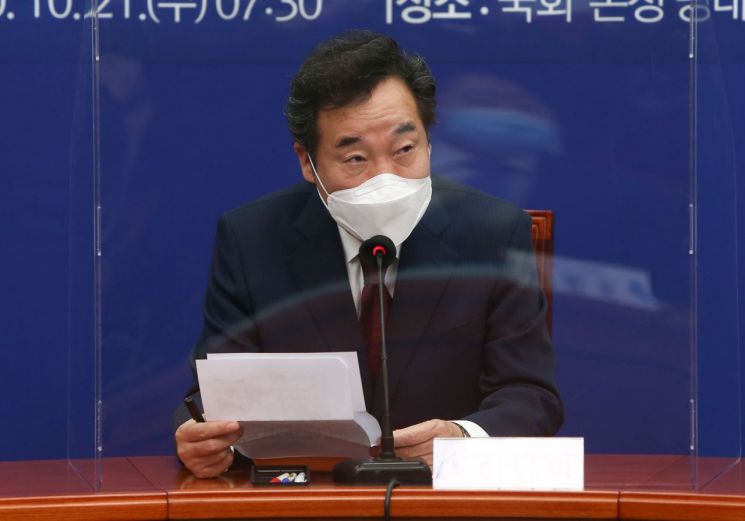
[Asia Economy Reporter Park Cheol-eung] Democratic Party lawmakers are consecutively proposing amendments to laws that have sparked significant social controversy, such as the National Security Act and the Private School Act. Although these bills are individual lawmakers' initiatives rather than party-level proposals, the fact that they were key reform agendas previously promoted by the Democratic Party could accelerate discussions. In the economic sector, legislative proposals including the cumulative voting system, which is not part of the government's proposed '3 Laws (Commercial Act, Fair Trade Act, and Financial Group Supervision Act),' have been introduced by lawmakers and are expected to be addressed together. The comprehensive legislative activities of the ruling party are now in full swing.
According to the National Assembly on the 23rd, Democratic Party lawmaker Lee Gyu-min submitted a bill the day before to abolish the crime of praising and inciting under the National Security Act (Gukbo Act). This is the first bill from the Democratic Party or progressive political circles since October 2004, when the then Uri Party and the late Roh Hoe-chan, former Justice Party lawmaker, proposed abolishing the National Security Act. Along with Lee, fellow Democratic Party lawmakers Kim Yong-min, Kim Cheol-min, Shin Jeong-hoon, Yang Jeong-sook, Yoon Young-duk, Kim Nam-guk, Lee Dong-joo, Lee Seong-man, Lee Soo-jin (proportional representation), Jo Oh-seop, Choi Hye-young, as well as Kim Jin-ae from the Open Democratic Party and independent lawmaker Kim Hong-gul, co-sponsored the bill.
Article 7 of the National Security Act states that "Anyone who, knowing that it endangers the existence or safety of the state or the free democratic basic order, praises, incites, propagandizes, or sympathizes with the activities of an anti-state organization or its members or those who have received orders from them, or who propagandizes or agitates for rebellion against the state, shall be punished by imprisonment for up to seven years."
Lawmaker Lee explained the background of the proposal, saying, "The era of the unconstitutional crime of praising and inciting has passed, and judicial resolution is difficult; therefore, by abolishing the crime of praising and inciting through legislation, we aim to restore the people's freedom of expression and physical freedom guaranteed by the Constitution." He also argued, "The era when the existence, safety, or free democratic basic order of the Republic of Korea could be threatened through praising and inciting is over, and the political and contemporary awareness of Korean citizens is not so backward as to require a law banning praising and inciting. Accordingly, Article 7 of the current law has become obsolete." Born in 1968, Lee entered Dongguk University’s Department of Korean Literature and was active in student movements; it is known that he himself was sentenced for violating the National Security Act.
Regarding the Private School Act, since the 21st National Assembly, 21 amendment bills have been proposed besides the government’s initiatives, all by Democratic Party lawmakers. In just about 20 days since the end of last month, six bills were introduced, aiming to increase transparency and eradicate corruption.
Lawmaker Park Chan-dae proposed a bill that includes audits conducted by external auditors designated by the Minister of Education and entrusting supervisory duties to the Korean Institute of Certified Public Accountants. He pointed out, "School corporations directly select the certified public accountants or accounting firms to audit themselves, making it difficult to secure the independence or fairness of auditors." Lawmaker Yoon Young-duk’s bill targets hiring corruption. The core of the bill is to entrust the public selection process for new hires of private school teachers below high school level to the provincial education superintendents.
The Democratic Party plans to swiftly pass major bills, including the '3 Economic Laws,' after the national audit ends on the 26th. Although the business community strongly opposes the separate election of audit committee members, it is generally expected that the Democratic Party will not make significant changes to the original bill. Democratic Party lawmaker Park Yong-jin has submitted a bill including the cumulative voting system, which was not included in the government's Commercial Act amendment. This system grants as many voting rights as the number of directors to be elected, rather than 'one vote per share,' and is a core demand of those advocating economic democratization. A Democratic Party official said, "While the government's proposal is the main framework, the cumulative voting system will also be included and discussed together."
© The Asia Business Daily(www.asiae.co.kr). All rights reserved.
![User Who Sold Erroneously Deposited Bitcoins to Repay Debt and Fund Entertainment... What Did the Supreme Court Decide in 2021? [Legal Issue Check]](https://cwcontent.asiae.co.kr/asiaresize/183/2026020910431234020_1770601391.png)















