North Korea's Threatening Pukguksong-4 Submarine-Launched Ballistic Missile
P-3C Maritime Patrol Aircraft and Super Lynx Deployed to Counter Submarines
[Monthly Aviation Editor-in-Chief Kim Jae-han] On the 10th, North Korea held a military parade commemorating the 75th anniversary of the founding of the Workers' Party, and one of the weapons that drew attention was the Pukguksong-4 submarine-launched ballistic missile (SLBM). It is a strategic weapon launched from submarines, known for its highest level of stealth, making it notoriously difficult to detect launch signs.
In particular, the Pukguksong-4 is an improved model unveiled about a year after North Korea test-fired the Pukguksong-3 in October last year. This demonstrates North Korea's rapid enhancement of its SLBM capabilities. Moreover, with reports that North Korea is constructing new submarines, the South Korean military's ability to detect North Korea’s SLBM-equipped submarines early is being emphasized.
Currently, the Republic of Korea Navy operates maritime patrol aircraft such as the P-3C and its upgraded version, the P-3CK, as well as maritime operational helicopters like the Super Lynx and the upgraded AW159, to detect and neutralize the threat posed by North Korean submarines at an early stage.
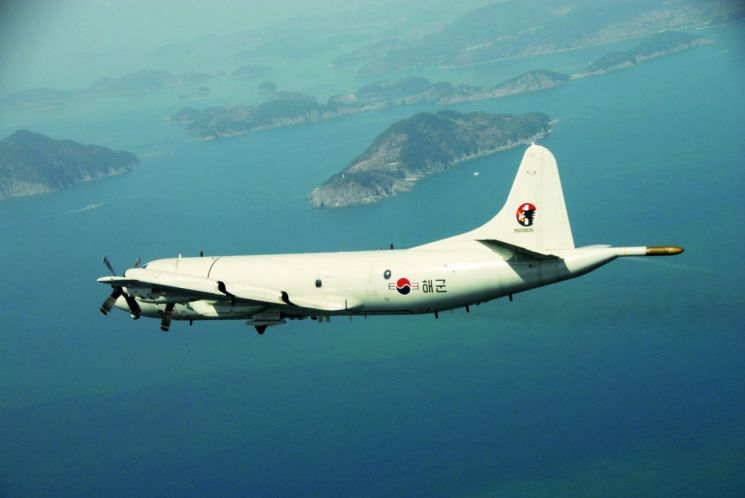
▲ Maritime Patrol Aircraft Equipped with Extensive Search Capabilities = First, the P-3C, often regarded as the epitome of maritime patrol aircraft, is well known as a submarine nemesis. It flies over vast ocean areas and launches torpedoes immediately upon detecting prey. For submarines, maritime patrol aircraft represent a lethal threat. In fact, the P-3C can remain airborne for about 16 hours and carry armaments equivalent to the weight of an 8.5-ton truck. Its operational range also reaches approximately 8,900 km.
The P-3C is equipped with a Magnetic Anomaly Detector (MAD) and sonobuoys, which are acoustic sensors. The P-3C uses these two sensory devices to detect submarines. Among them, the MAD uses magnetic fields. The Earth acts like a giant magnet, with a consistent magnetic field flowing between the South and North Poles. When a large metal object like a submarine passes through this magnetic field, it disturbs the field. The MAD detects these disturbances. This is why the P-3C can detect submarines without even a drop of water touching it.
Sonobuoys are a combination of SONAR (sound navigation and ranging) and buoys used as maritime markers, essentially SONAR devices that can be deployed on the sea surface like buoys. In other words, besides magnetic detection, the P-3C can directly drop SONAR devices into the sea to detect noises generated by submarines. The deployed sonobuoys transmit detected underwater sounds back to the P-3C, which analyzes the received acoustic signals to more accurately identify submarines.
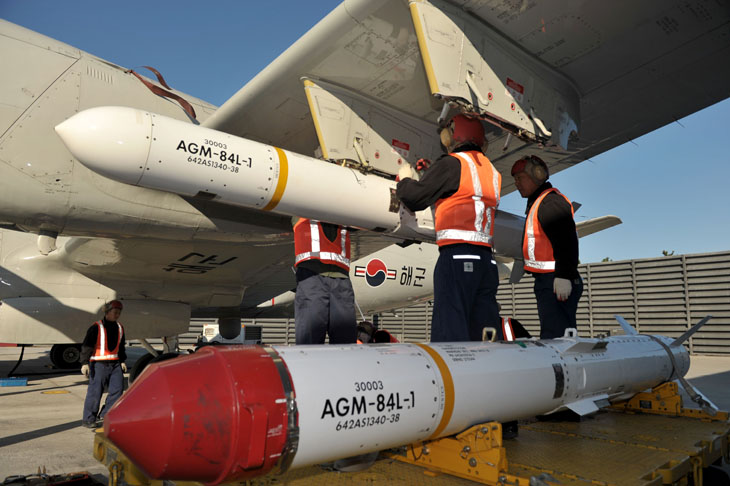
Along with these devices, the P-3C carries a powerful weapon capable of sinking submarines: torpedoes. Torpedoes are underwater missiles designed to attack submarines, capable of maneuvering underwater at about 85 km/h to strike submarines up to 10 km away. Additionally, the P-3C is armed with anti-ship missiles capable of attacking enemy vessels.
Maritime Patrol Aircraft P-3C - Armed with weapons weighing as much as an 8.5-ton truck and capable of 16-hour flights
Maritime Operational Helicopter AW159 - Dipping sonar capable of detecting up to approximately 300 meters depth
P-8A - The world's most powerful force equipped with signal intelligence processing equipment
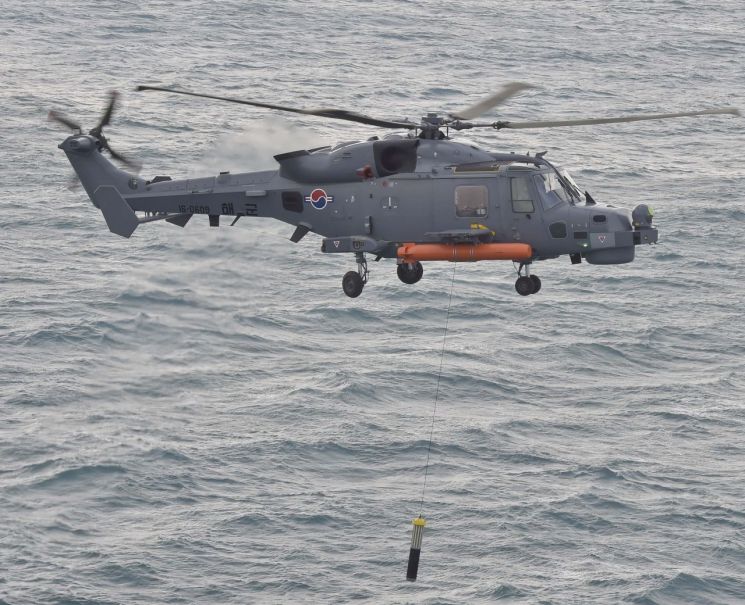
▲ Frontline of Anti-Submarine Warfare, Maritime Operational Helicopters = Alongside the P-3C, maritime operational helicopters such as the Super Lynx and AW159 are at the forefront of anti-submarine warfare. Unlike the P-3C, these helicopters can perform precise submarine detection using dipping sonar. Dipping sonar is a SONAR device developed to be lowered into the sea by a cable, serving as the sensory organ of maritime operational helicopters.
Dipping sonar is especially praised for its excellence in submarine detection. It is deployed at locations where enemy submarines are expected, and by freely adjusting its depth, it captures all underwater sounds. Its effectiveness shines particularly in underwater environments with poor acoustic detection conditions, such as areas with sharp temperature changes or where turbulent and cold currents mix.
The depth at which maritime operational helicopters can deploy dipping sonar is about 300 meters, sufficient to detect most submarines, including North Korean ones. For example, North Korea’s main submarine forces, the Romeo-class submarines, have an operational depth of about 170 meters, and the Sang-o class about 100 meters. Naturally, submarine crews fear the dipping sonar for these reasons.
Once a detected submarine is identified as hostile, it is targeted for attack. Currently, maritime operational helicopters carry two torpedoes capable of attacking submarines. Torpedoes launched from these helicopters use built-in SONAR to autonomously detect and attack enemy submarines. The time from detection to attack is within six minutes. Traveling at speeds close to 60 km/h while tracking submarines, torpedoes leave enemy submarines virtually no time to evade. In fact, the submerged speed of Romeo-class submarines is about 31 km/h, and Sang-o class about 17 km/h, so once detected by torpedoes, evasion is practically impossible.
▲ Navy Continues to Improve Anti-Submarine Aviation Capabilities = Currently, the Navy is steadily enhancing its anti-submarine aviation capabilities in response to North Korea’s recent strengthening of SLBM capabilities. Representative projects include the Maritime Patrol Aircraft-II program and the second phase of the Maritime Operational Helicopter program. Among these, the Maritime Patrol Aircraft-II program involves the acquisition of the P-8A, which has already been decided and is scheduled for phased introduction starting in 2023.
The P-8A to be introduced by the Navy is currently regarded as the most advanced maritime patrol aircraft worldwide. Notably, the P-8A is equipped with an electro-optical/infrared (EO/IR) sensor capable of simultaneously capturing visible and infrared images, an enhanced maritime search radar, and signal intelligence processing equipment that analyzes and processes various signals. This enables the P-8A not only to detect and attack submarines and vessels but also to perform diverse missions such as intelligence gathering and surveillance reconnaissance simultaneously.
Unlike the propeller-driven P-3C, the P-8A is powered by jet engines, resulting in much higher speeds. The P-8A’s maximum speed is about 910 km/h, faster than the P-3C’s approximately 750 km/h, reducing transit time to operational areas. This allows for quicker mission execution in anti-submarine warfare, anti-ship warfare, search and rescue, and other scenarios.
The second phase of the Maritime Operational Helicopter program, which involves acquiring 12 new helicopters, is currently underway. The final model is expected to be selected within this year, with Italy’s Leonardo AW159 and the United States’ Lockheed Martin MH-60R competing. Interest is growing as North Korea recently unveiled an even more advanced SLBM, raising attention on which model will be chosen in this program.
© The Asia Business Daily(www.asiae.co.kr). All rights reserved.



















