On the 23rd, the 'Seoul Special City Seocho-gu District Tax Ordinance Partial Amendment Ordinance' was promulgated and enforced... Special Advisory Committee Review Results Claim Seoul City's Reconsideration Request Unjust
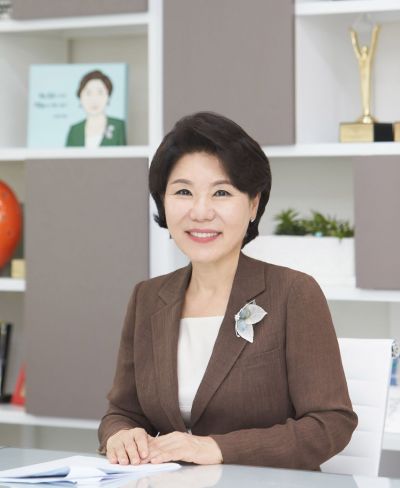
[Asia Economy Reporter Jong-il Park] Seocho-gu District Office (Mayor Eunhee Jo) will promulgate the “Partial Amendment to the Seoul Special City Seocho-gu Local Tax Ordinance” on the 23rd to reduce the property tax burden for “owners of one household, one house.”
The district reported the resolution of the “Partial Amendment to the Seoul Special City Seocho-gu Local Tax Ordinance” to Seoul City on the 6th, but Seoul City requested reconsideration the very next day, on the 7th.
In response, the district, after consulting a special advisory committee composed of legal, tax, and academic experts and obtaining additional legal advice, judged that Seoul City’s request for reconsideration was legally unfounded and decided to promulgate the amended ordinance.
During this process, the district continuously requested multiple meetings with the Acting Mayor of Seoul City from the 13th to find a consensus, waiting for a date; however, on the afternoon of the 21st, Seoul City finally notified that it would refuse the meeting. Consequently, the district decided it could no longer wait and proceeded accordingly.
Seocho-gu stated that property tax is a local tax and an inherent revenue source for local governments, and that reducing property tax is a legitimate exercise of authority granted to local government heads under Article 111, Paragraph 3 of the Local Tax Act, which should be duly respected.
Furthermore, based on the advisory committee’s consultation and legal review, the district emphasized that Seoul City’s reasons for requesting reconsideration are themselves unjustified and that Seoul City should immediately withdraw its request for reconsideration of the Seocho-gu local tax ordinance amendment.
The reasons Seocho-gu judged all the issues raised by Seoul City for reconsideration to be inappropriate after comprehensive review are as follows.
First, Seoul City claimed that Seocho-gu’s ordinance amendment exceeded the scope of delegated legislation by establishing new tax base brackets and thus violated higher laws. However, Seocho-gu’s amendment did not create new tax base brackets but rather set reasonable criteria to select subjects for property tax reduction, so there is no violation of higher laws, making Seoul City’s request for reconsideration unjustified.
The amendment targets owners of a single house with a standard market value of 900 million KRW or less, excluding houses valued above 900 million KRW because even if property tax is reduced, the government collects comprehensive real estate tax, resulting in no actual benefit.
Second, Seoul City expressed concern that Seocho-gu’s amendment might cause confusion with central government property tax reduction policies. However, as of late October, the central government has not announced any concrete plans for property tax reduction, which is expected to apply only after next year, so there is no risk of confusion.
Moreover, the President, Prime Minister, Deputy Prime Minister for Economy, and Minister of Land, Infrastructure and Transport have all acknowledged the need to ease tax burdens on single-house owners, meaning the policies of Seocho-gu and the central government are essentially aligned.
Third, although Seoul City raised equity issues with respect to the homeless, it is illogical to discuss equity between reducing property tax for taxpayers suffering from sharp increases and the homeless. It is akin to year-end tax adjustments being applied only to those who paid taxes. Separate tailored welfare programs should be promoted for vulnerable groups such as the homeless alongside protection measures for genuine single-house owners.
Fourth, Seoul City argued that the amendment would affect other districts facing financial difficulties due to COVID-19 response. However, Seocho-gu’s property tax reduction applies only to the district’s own tax portion, leaving the shared tax portion unchanged, so it does not affect other districts’ finances, making Seoul City’s claim inaccurate.
Since each district has different financial conditions, property tax reductions should be implemented according to each district’s fiscal situation rather than uniformly. In fact, in 2004, 20 districts, and in 2005, 15 districts implemented property tax reductions ranging from 10% to 40% according to their financial conditions.
Also, just as welfare policies differ by local government, the claim that this ordinance causes discrimination with other districts is unfounded.
For example, birth encouragement grants (ranging from none to 500,000 KRW) and senior citizen merit allowances (paid only in Jung-gu).
Seocho-gu stated that after thorough legal and rational deliberation and attempts to meet with the Acting Mayor of Seoul City, Seoul City’s refusal left no choice but to promulgate the ordinance amendment. The district also announced it will actively respond to any further actions such as Seoul City’s Supreme Court lawsuits or injunction applications.
Mayor Eunhee Jo of Seocho-gu said, “We could not ignore the situation of single-household residents suffering from excessive taxation during the COVID-19 period. This is also part of efforts to restore abnormal situations to normal. Seoul City’s request for reconsideration of a district ordinance is extremely unusual and appears to trample on local governments despite Seoul City’s emphasis on decentralization. We tried to meet with the Acting Mayor before promulgating the amendment to exchange opinions but regretfully had no opportunity. We hope Seoul City will demonstrate flexibility that respects the diversity of local autonomy.” She added, “If Seoul City takes further actions such as Supreme Court lawsuits, we will actively respond to protect the constitutionally guaranteed local autonomy rights. We also urge Seoul City to prepare alternatives for the 10 million Seoul citizens suffering from sharp property tax increases.”
© The Asia Business Daily(www.asiae.co.kr). All rights reserved.

















