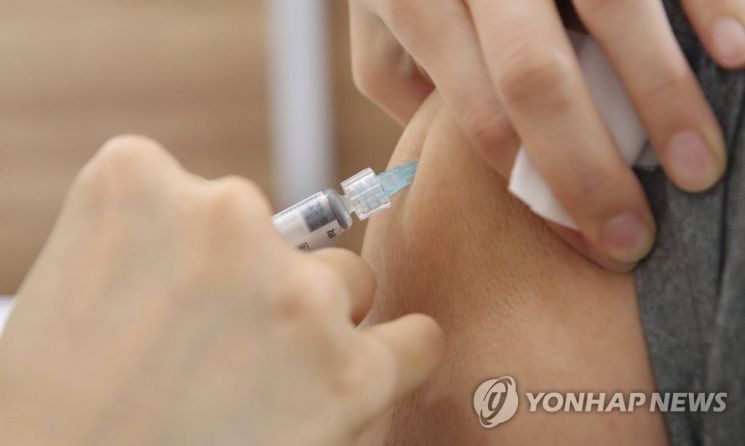
[Asia Economy Reporter Kim Yeon-ju] As cases of death following influenza vaccination continue to occur, voices calling for a halt to flu vaccinations are rising. However, experts have diagnosed that the likelihood of death caused by the vaccine is low.
On the morning of the 22nd, Professor Lee Jae-gap of Hallym University’s Department of Infectious Diseases said in an interview with CBS Radio's "Kim Hyun-jung's News Show," "I think the overall number of reported cases is increasing because suspicion about the vaccine has risen."
Professor Lee explained, "Recently, due to concerns among the public about vaccines, such as exposure to room temperature, worries and interest in vaccines have increased, so it is quite good that people are reporting well. During the 2009 H1N1 pandemic, people received both the H1N1 vaccine and the seasonal flu vaccine. At that time, there were also many death reports."
He added, "There have been cases proven by epidemiological investigations by the Korea Disease Control and Prevention Agency (KDCA) that there is no direct link between the vaccine and the cause of death, so I think the situation now is similar to that time," and said, "The final conclusion needs to be observed."
He continued, "More detailed investigations are needed to determine the cause, but the KDCA has conducted basic epidemiological investigations, and various types of vaccines have been identified," adding, "Since various factors have appeared and no major problems with the vaccine have been found through the same route in each factor, I think there is no direct connection with the vaccine for now."
However, he said, "The Vaccine Adverse Event Committee must first make a judgment based on epidemiological investigation results and various autopsy findings to determine whether there is a direct link," and added, "In the case of anaphylaxis, it usually occurs within 2 to 3 hours after vaccination, but it can worsen within a day or two."
Anaphylactic shock is a type of protein hypersensitivity reaction and is a severe allergic reaction that occurs within minutes to hours after exposure to causative substances such as specific foods or drugs.
Professor Lee said, "Anaphylaxis is a kind of allergic or immune response, so it should be seen as a different issue rather than a problem with the vaccine itself, because it is an allergy that occurs in the body receiving the vaccine," and added, "We need to discuss various situations, including that possibility."
Meanwhile, cases of death after influenza vaccination have occurred starting from Incheon on the 16th, followed by Gochang, Daejeon, and Mokpo on the 20th, and Jeju, Daegu, Gwangmyeong, and Goyang on the 21st. As of 1:30 p.m. on the 22nd, 17 deaths have been reported nationwide.
© The Asia Business Daily(www.asiae.co.kr). All rights reserved.
![Clutching a Stolen Dior Bag, Saying "I Hate Being Poor but Real"... The Grotesque Con of a "Human Knockoff" [Slate]](https://cwcontent.asiae.co.kr/asiaresize/183/2026021902243444107_1771435474.jpg)
















