Professor Seol Hoon-gu of the Department of Business Administration at Pukyong National University Develops Tools for Measuring Business Environment and Competitive Advantage
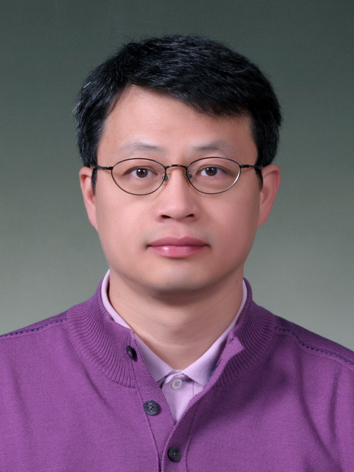
[Asia Economy Yeongnam Reporting Headquarters Reporter Kim Yong-woo] What makes this place better than other tourist destinations? Have you identified the strengths and weaknesses of the business environment of this tourist site?
A research result predicting the success of tourist destinations has attracted attention.
The study shows that the competitive advantages of a tourist destination can be evaluated using two factors: business environment and competitive advantage.
Professor Seol Hun-gu of Pukyong National University’s Department of Business Administration recently published a paper titled “Measurement Development for Tourism Destination Business Environment and Competitive Advantages.”
Published on the 16th in the SSCI (Social Sciences Citation Index) international journal Sustainability, this paper attracted interest by developing a measurement tool to assess the competitive advantages of tourist destinations.
Sustainability is a top-tier social science journal with an academic impact factor of 2.79 out of 3.0.
In this paper, Professor Seol focused on the difficulty of identifying the competitive advantage factors necessary for the success of tourist destinations and derived various indicators to measure business environment and competitive advantages.
According to the study, the business environment indicators for tourist destinations were identified as six factors: dynamism, hostility, turbulence, investment, information technology, and governance. The competitive advantage indicators were seven factors: defensibility, regional receptivity, accessibility, price rationality, uniqueness, supportiveness, and image sustainability.
Professor Seol explained, “Managers of tourist destinations can use these business environment factors and competitive advantage indicators to identify which competitive advantage elements they have compared to other competing tourist destinations, making it possible to predict the success of the destination.”
He added, “In the current situation where many tourist sites compete to attract visitors, this research result is expected to help establish management strategies for tourist destinations.”
Professor Seol conducted this research over more than four years as part of a mid-career research project funded by the National Research Foundation of Korea, achieving this outcome.
© The Asia Business Daily(www.asiae.co.kr). All rights reserved.

















