12.97 Million Vaccinations Administered... 431 Adverse Reactions Reported
"Vaccines Difficult to Confirm as Direct Cause of Death"
Two Deaths Within a Day Possibly Due to Acute Hypersensitivity Reaction
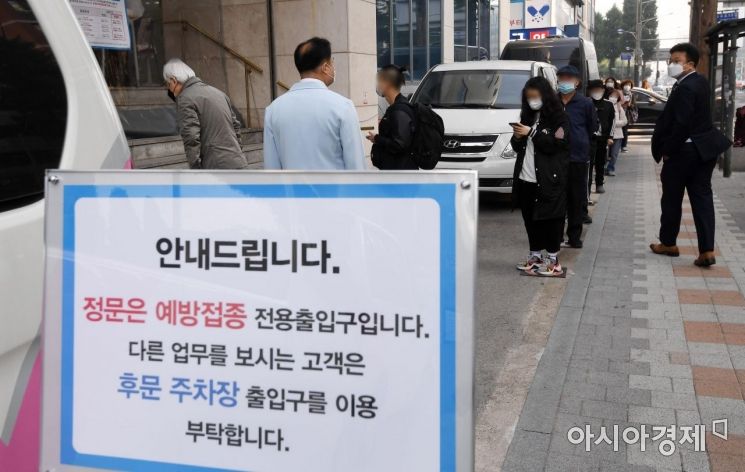 On the 20th, citizens lined up to receive influenza (flu) vaccinations at the Korea Health Management Association Seoul Western Branch in Gangseo-gu, Seoul, where the free influenza vaccination program is being conducted. Photo by Hyunmin Kim kimhyun81@
[Asia Economy Reporter Choi Dae-yeol] As of the 21st, the number of deaths following influenza (flu) vaccinations this winter has been recorded at nine. Health authorities and related experts, after a preliminary review, believe it is unlikely that the vaccine itself directly caused these deaths. However, for two individuals who died shortly after vaccination, there is currently a possibility of anaphylaxis (acute hypersensitivity reaction). Since the vaccine itself is not considered the cause, the ongoing National Immunization Program will continue without interruption.
On the 21st, Jeong Eun-kyung, Director of the Korea Disease Control and Prevention Agency (KDCA), held an unscheduled briefing to disclose recent reports of adverse reactions following vaccination. In response to the recent cluster of deaths, the authorities convened a meeting of the Vaccine Injury Investigation Committee, composed of experts in infectious diseases, neurological disorders, and allergic diseases, to review the reported cases. According to the KDCA, as of this date, a total of 12.97 million flu vaccinations have been administered, including 8.36 million under the National Immunization Program (which includes 610,000 paid vaccinations).
There have been 431 reports of adverse reactions following vaccination (as of the previous day), mostly mild reactions such as local reactions and allergies. There have been nine reported deaths, with four reported before the day and five on the day itself, and epidemiological investigations are ongoing. The first reported death was a 17-year-old high school student in Incheon on the 16th, followed by cases in Jeonbuk (77-year-old female), Daejeon (82-year-old male), Daegu (78-year-old male), Jeju (68-year-old male), Seoul (53-year-old female), and Gyeonggi (89-year-old male). The details of the remaining two cases have not been disclosed at the request of the bereaved families. Among the deceased, seven are undergoing or will undergo autopsies.
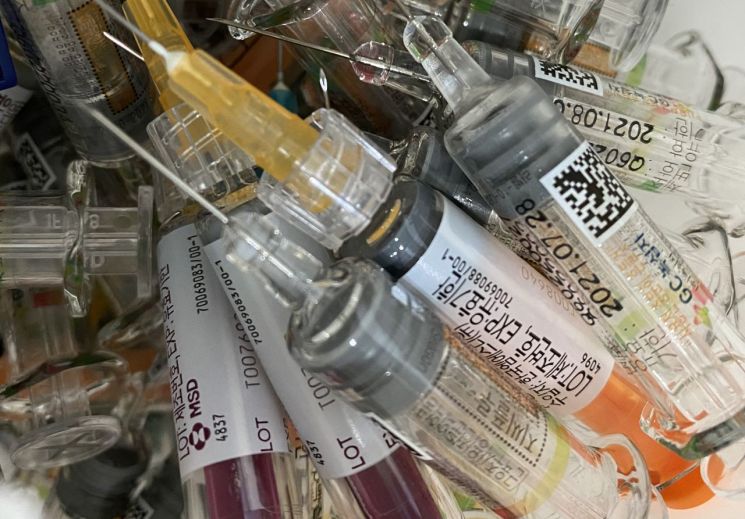 The appearance of influenza vaccine syringes discarded after vaccination at a private medical institution in Jeju City on the morning of the 21st.
Five Death Reports Received in One Day
Authorities Convene Emergency Investigation Committee to Review Adverse Reactions
After reviewing six death cases reported by the morning of the day, the authorities and the investigation committee tentatively concluded that there is no confirmed direct causal relationship between the vaccine and the deaths or adverse reactions following vaccination. Kim Joong-gon, Honorary Professor at Seoul National University and head of the investigation committee, explained, "We examined whether any toxic substances in the vaccine caused the deaths, whether the deaths were due to acute hypersensitivity reactions, or whether they were related to underlying health conditions of the deceased." He added, "Considering that many others who received the same vaccine did not experience any problems, we concluded that the vaccine itself is unlikely to be the cause."
He continued, "Regarding the possibility of hypersensitivity reactions, two of the six died within a short time frame?2.5 hours and 17 hours after vaccination?so we cannot completely rule out a connection. Five of the six deceased had underlying health conditions, which will be definitively determined through autopsies and further investigation."
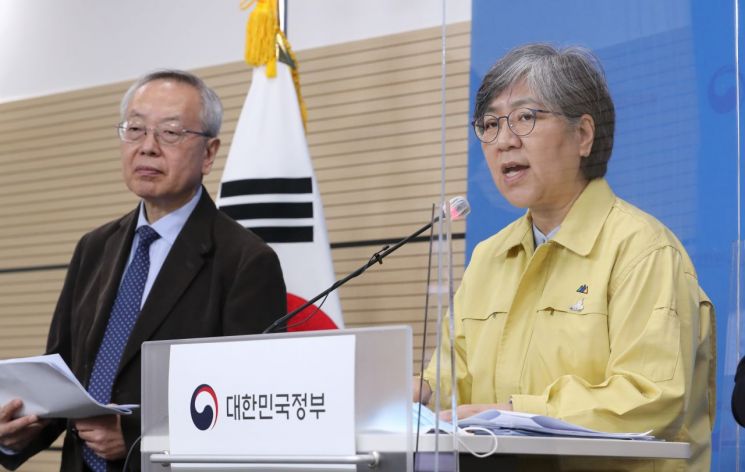 Director Jeong Eun-kyung of the Korea Disease Control and Prevention Agency is responding to reporters' questions during a briefing on the influenza vaccination program on the 21st. On the left is Professor Kim Jung-gon, who attended the briefing. (Head of the Vaccination Damage Investigation Team, Director of Pediatrics at Seoul Medical Center)
 Authorities: "No Need to Suspend Free Vaccinations"
Careful Monitoring of Health Before and After Vaccination Advised
The authorities stated that the free National Immunization Program will continue steadily. Considering issues such as delays in the program due to improper temperature management during transportation, the lack of significant correlation between recent severe adverse reactions including deaths and the vaccines, and the absence of clustering of adverse reactions in specific vaccines, there is no reason to halt vaccinations. However, to reduce severe adverse reactions in the future, they urged careful health assessments during vaccination and requested that individuals inform medical staff about any symptoms or chronic illnesses during pre-vaccination screening.
Director Jeong said, "We will promptly conduct epidemiological investigations to determine the causal relationship and cause of adverse reactions following vaccination. After vaccination, it is essential to observe for 15 to 30 minutes at the medical facility for any adverse reactions. If symptoms such as difficulty breathing, swelling around the mouth or eyes, vomiting, diarrhea, abdominal pain, decreased heart rate, or dizziness occur within a few hours, severe allergic reactions should be suspected, and 119 should be called to seek medical attention immediately."
© The Asia Business Daily(www.asiae.co.kr). All rights reserved.
!["The Woman Who Threw Herself into the Water Clutching a Stolen Dior Bag"...A Grotesque Success Story That Shakes the Korean Psyche [Slate]](https://cwcontent.asiae.co.kr/asiaresize/183/2026021902243444107_1771435474.jpg)


















