[Asia Economy Reporter Baek Kyunghwan] The Supreme Court has ruled that compensation for industrial accident relief for workers who died while working in mines is a right that belongs to all heirs, including the spouse and children.
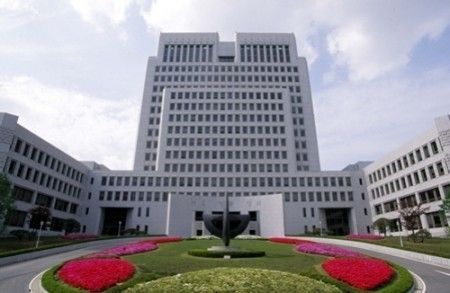
On the 21st, the Supreme Court's 2nd Division (Presiding Justice Park Sang-ok) overturned the lower court's ruling that had favored the plaintiff in the appeal case filed by the spouse of mine worker Mr. A against the Korea Mine Reclamation Corporation for payment of industrial accident relief compensation, and remanded the case to the Seoul High Court.
Mr. A was diagnosed with pneumoconiosis while working at a mining site in 1991 and passed away in May 2006 during medical treatment. The Korea Workers' Compensation and Welfare Service recognized Mr. A's death as an industrial accident and paid survivor compensation to his spouse.
Mr. A's spouse later learned that Mr. A was eligible to receive industrial accident relief compensation, one of the mine closure compensation measures, and applied to the Mine Reclamation Corporation in April 2016, just before the 10-year statute of limitations expired, requesting full payment of the relief compensation.
However, the Mine Reclamation Corporation refused, stating that the relief compensation was inherited not only by Mr. A's spouse but also by his four children, and therefore could not be paid in full. Mr. A's spouse filed a lawsuit.
The first trial court ruled in favor of the Mine Reclamation Corporation, stating that the relief compensation initially belonged to the deceased employee and, upon death, should be inherited by the spouse and children.
On the other hand, the second trial court reversed the decision, ruling that Mr. A's spouse could claim the full amount of the relief compensation. The court cited the Enforcement Decree of the Coal Industry Act, which states that "the relief compensation shall be the same amount as the lump-sum survivor compensation," and judged that the relief compensation should be paid by applying the survivor compensation regulations that grant the spouse priority acquisition rights.
The Supreme Court's judgment differed again. The Supreme Court pointed out that the provision in the Enforcement Decree of the Coal Industry Act is only a standard for calculating the relief compensation and cannot be considered a payment condition. It held that Mr. A's spouse could only claim the portion of the relief compensation excluding the children's inheritance shares. Although Mr. A's spouse later received the rights to the relief compensation from the children, the children's inheritance shares had expired due to the statute of limitations, making them unclaimable.
© The Asia Business Daily(www.asiae.co.kr). All rights reserved.

![A Woman with 50 Million Won Debt Clutches a Stolen Dior Bag and Jumps... A Monster Is Born [Slate]](https://cwcontent.asiae.co.kr/asiaresize/183/2026021902243444107_1771435474.jpg)















