ConocoPhillips Acquires Concho for $9.5 Billion in Just One Day
"US Oil Companies to Continue Mergers Amid Weak Oil Prices"
[Asia Economy Reporter Naju-seok] The U.S. shale industry, struggling due to decreased crude oil demand caused by the novel coronavirus infection (COVID-19), is announcing a series of mergers and acquisitions (M&A). Analysts say that the shale industry, which had focused on quantitative growth until now, is reorganizing its business direction toward profitability in preparation for prolonged low oil prices.
According to the Wall Street Journal (WSJ) on the 20th (local time), shale company Pioneer has agreed to acquire its peer Parsley for $4.5 billion (about 5.13 trillion KRW). The acquisition price was calculated by adding a 7.9% premium to Parsley’s stock price on the 19th. Through this M&A, Pioneer will secure numerous wells in the Permian Basin, the world's most profitable shale field. This deal was finalized just one day after U.S. oil major ConocoPhillips announced it would acquire shale company Concho for $9.7 billion.
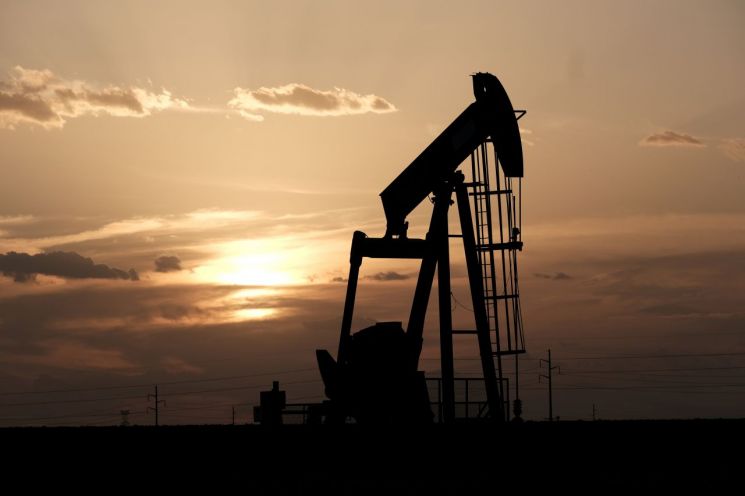
The shale industry interprets these moves as a result of companies being pushed to their limits, unable to endure the weak oil prices triggered by COVID-19.
Last year, the U.S. daily crude oil production centered on shale companies reached 13 million barrels. However, with reduced oil demand this year, daily production has dropped to 11 million barrels. International oil prices fell from the $60 range per barrel last year to the $40 range this year, worsening profitability.
Poor performance has led to a vicious cycle of production cuts and workforce reductions. According to the New York Times (NYT), there were 569 active wells in the U.S. last year, but now only 292 remain. As crude oil extraction scales down, the U.S. oil industry is focusing on survival by restructuring its workforce and selling off assets. With the worsening financial difficulties in the oil sector, over 100,000 workers have lost their jobs in recent months.
Just a few years ago, the shale revolution was a widely used term in the U.S., reflecting high expectations for the shale industry. Consequently, numerous small and medium-sized shale companies emerged around the Permian Basin, expanding their scale. Thanks to this enthusiasm, investments in the shale industry reached $100 billion as recently as last year. However, this atmosphere has drastically reversed amid the COVID-19 crisis this year. According to the International Energy Agency (IEA), investment has sharply decreased to $45 billion this year.
The political situation in the U.S. is also a source of uncertainty for the oil industry. Democratic presidential candidate Joe Biden, who is leading in the polls, is prominently advocating for the development of the clean energy industry. If he is elected, the shale industry is likely to face strengthened environmental regulations.
As industry restructuring continues, there is speculation that companies will shift their management strategies from growth to profitability. The mergers and alliances among shale companies can also be seen as attempts to secure economies of scale to improve profitability.
The industry expects a flood of M&A opportunities, especially among small and medium-sized shale companies. Energy specialist media OilPrice.com predicted, "If prolonged low oil prices continue, which small shale companies cannot withstand, M&A will accelerate."
© The Asia Business Daily(www.asiae.co.kr). All rights reserved.
![User Who Sold Erroneously Deposited Bitcoins to Repay Debt and Fund Entertainment... What Did the Supreme Court Decide in 2021? [Legal Issue Check]](https://cwcontent.asiae.co.kr/asiaresize/183/2026020910431234020_1770601391.png)















