Analysis Completed Incorporating Public and Private Big Data for Four Selected Projects from Last Month's Survey... Applied to Resident-Centered Initiatives Such as Support for COVID-19 Revenue Decline Sectors, Establishment of National and Public Childcare Centers, and Optimal Public Wi-Fi Installation Sites... Public Data Platform Sharing Big Data Analysis Results and Various Data with Residents by End of December
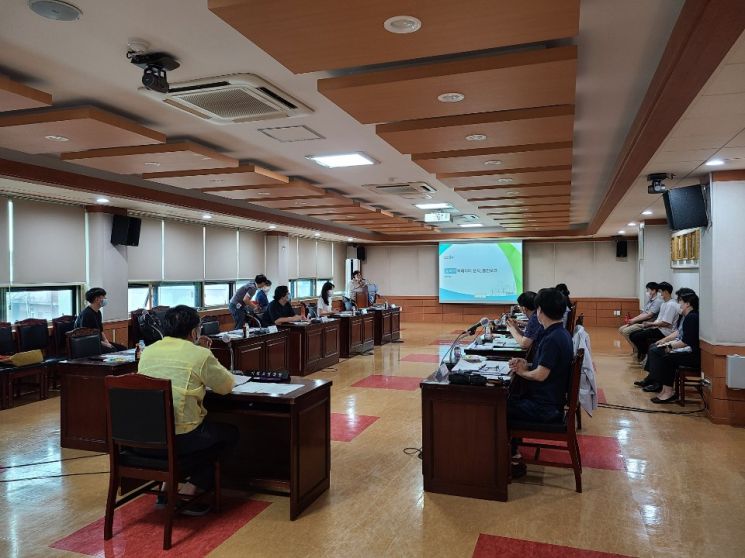
[Asia Economy Reporter Park Jong-il] Dongjak-gu (Mayor Lee Chang-woo) has completed the 2020 Big Data Analysis Project reflecting public and private big data, and will utilize it for resident-tailored policy formulation.
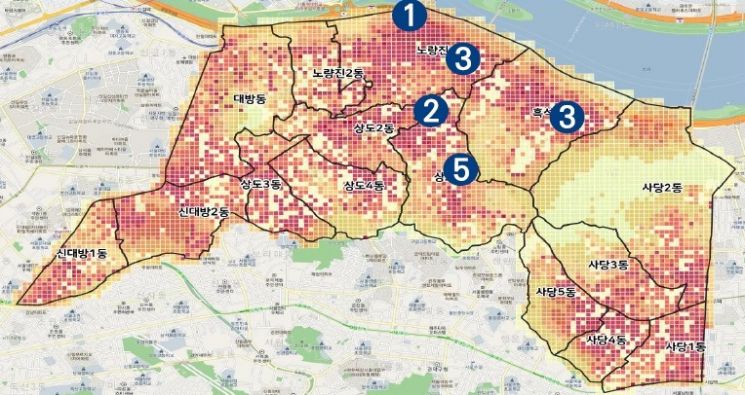
This analysis was conducted on resident-centered projects selected through a preliminary demand survey, including ▲Analysis of sales changes of small business owners due to the COVID-19 infectious disease ▲Selection of priority areas for vulnerable childcare and social data analysis for childcare policies ▲Optimal sites for public Wi-Fi installation ▲Fire truck access vulnerable areas to secure fire golden time.
First, based on card sales and credit information data during the COVID-19 spread period (January to June 2020), the analysis of sales changes in major industries (12 types) showed that the most notable decrease was in private academies due to delayed school classes. Sales in Noryangjin-dong for PC rooms and karaoke rooms, and in Heukseok-dong for coffee shops, sharply declined, showing regional and industry-specific variations.
From May, due to government emergency disaster relief funds and Dongjak-gu small business emergency livelihood stabilization funds, sales promotion effects were observed in small business-related industries.
Based on this analysis, the district plans to conduct periodic analyses of small business sales and resident consumption trends.
Additionally, based on childcare demand and public daycare center usage data, blind spots in daycare centers were analyzed, and expansion is being considered in areas such as Sangdo 4-dong, where public daycare centers are insufficient.
The optimal sites for public Wi-Fi installation will be selected considering installation index rankings that comprehensively include ▲floating population ▲cultural assets ▲public buildings ▲vulnerable groups and other eight factors, as well as areas where telecommunications installation is possible.
Also, based on ▲fire report to dispatch time ▲building aging ▲road width, fire blind spots were analyzed, and the ‘Visible Fire Extinguishers in Alleyways’ installed by the end of this year were verified to see if they were appropriately installed in areas where fire dispatch is expected to take more than 5 minutes.
Based on the big data analysis results, the district plans to build a public data platform for residents by the end of December, enabling anyone to easily access public data, statistical data, and map services.
For detailed information related to big data, inquiries can be made to the Dongjak-gu Future City Division.
Park Yeon-su, head of the Future City Division, said, “We will continue to accumulate data and strive to improve the quality of resident-tailored administrative services through effective use of big data in various policy-making processes.”
© The Asia Business Daily(www.asiae.co.kr). All rights reserved.
![User Who Sold Erroneously Deposited Bitcoins to Repay Debt and Fund Entertainment... What Did the Supreme Court Decide in 2021? [Legal Issue Check]](https://cwcontent.asiae.co.kr/asiaresize/183/2026020910431234020_1770601391.png)

















