6 out of 10 Office Workers Say "No Paid Sick Leave System at Work"
Some Employees Still Commute Normally... 'Rest When Sick' Policy Remains Inadequate
Civic Groups Say "Using Annual Leave Is a Right, Not a Gift"
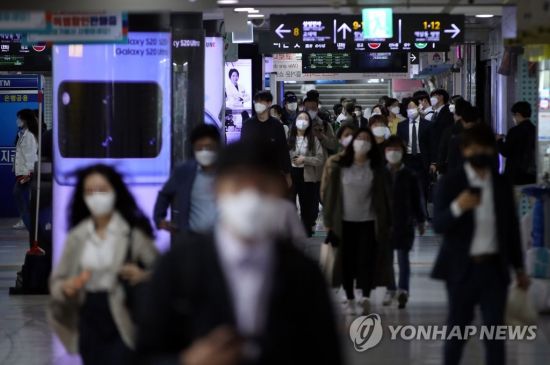
[Asia Economy Reporter Kim Ga-yeon] # Office worker Kim Mo (27) recently took unpaid sick leave due to symptoms such as chills and fever, but has been struggling with the pressure from her boss. Every morning or during meetings, she hears comments like "You seem to be sick all the time," "Why do you take sick leave?" and "Everyone thinks you're weak." Kim said, "I wasn't absent every day; I really took time off because I was very sick, but I was treated like that," adding, "I wasn't asking for a new system to take time off, just using the existing unpaid sick leave, but it was very stressful." She also added, "Making such remarks publicly felt like forcing all department members to 'come to work even if they are sick.'"
With the adjustment of social distancing to level 1, more office workers are ending remote work and flexible work systems and returning to normal attendance. Amid this, voices are rising that it is realistically difficult to follow quarantine rules such as 'rest when sick' in the workplace. Although systems are in place, the so-called 'workplace pressure' still exists, where employees hesitate to use sick leave due to the company atmosphere and the watchful eyes of supervisors and colleagues.
Civil society organizations emphasized the need to create an environment where workers can rest when sick through active system improvements.
Son Young-rae, head of the Strategic Planning Division at the Central Disaster and Safety Countermeasures Headquarters (CDSCH) of the Ministry of Health and Welfare, said at a regular briefing at the Government Seoul Office on the 11th, "There are many workplaces with various environments, so compliance with quarantine rules may vary subtly depending on the situation," adding, "Overall, understanding of quarantine rules has increased socially, and there are flows of compliance in various sectors, so some workplaces are doing well while others are not."
He continued, "From the time influenza and summer seasonal flu epidemics occur, we plan to work with related ministries and companies to ensure that people with symptoms do not come to work by paying more attention in each workplace," emphasizing the practice of 'rest when sick.'
Despite such recommendations from health authorities, some office workers agreed that practicing 'rest when sick' is difficult. Since approval from superiors is required procedurally and colleagues' workload may increase, it is practically difficult to use annual leave or sick leave.
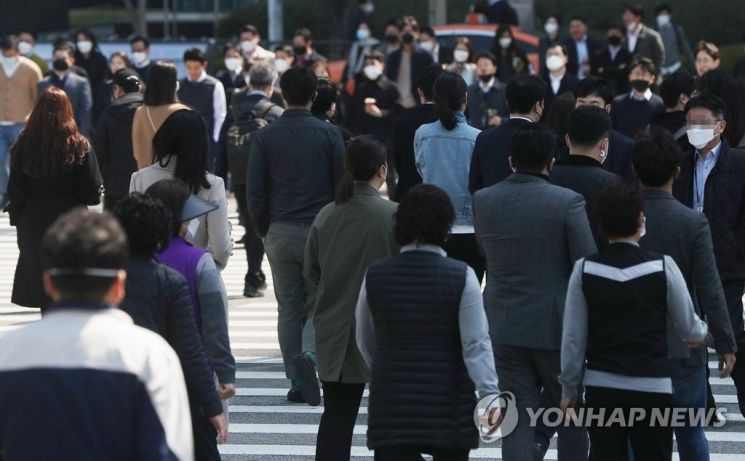
According to a survey, 6 out of 10 people are not guaranteed an environment where they can rest when sick.
Last month, the civic group Workplace Bullying 119 commissioned the public opinion research firm Embrain Public to survey 1,000 office workers aged 19 to 55 nationwide. The results showed that 62% of respondents answered, "There is no paid sick leave system at the company." Additionally, 39.9% of respondents said, "I cannot freely use annual leave."
Among them, 83.9% responded that "sickness benefits are necessary." The sickness benefit system supports income loss during periods when a person cannot work due to illness through health insurance or other social insurance. Among OECD member countries, only the United States and South Korea do not have a sickness benefit system, but the U.S. operates a paid sick leave system based on state laws.
In particular, the proportion of 'workers who took sick leave' is much lower than the average in European countries.
According to a report titled "Current Status of Sick Leave Systems and Presenteeism in Korea and Implications for the Introduction of Sickness Benefits," published last month by the Korea Institute for Health and Social Affairs (KIHASA), the proportion of workers who said they "went to work despite being sick in the past year" (23.5%) was 2.37 times higher than those who said they "took sick leave" (9.9%). This is much higher than the average of 0.81 in other European countries.
Civil society organizations urged related ministries to improve systems to protect workers' health rights and labor rights.
Workplace Bullying 119 emphasized on the 27th of last month, "Annual leave is not a gift from the boss but a right of the worker," adding, "Employers must allow workers to freely use annual leave at their desired time."
They added, "If employers violate this, they may face imprisonment of up to 2 years or a fine of up to 20 million won under the Labor Standards Act."
© The Asia Business Daily(www.asiae.co.kr). All rights reserved.


















