Opposition's Political Offensive Expected to Intensify
Accountability of Involved Parties Also a Concern
Moon Administration's 'Nuclear Phase-Out Policy' Deals a Critical Blow
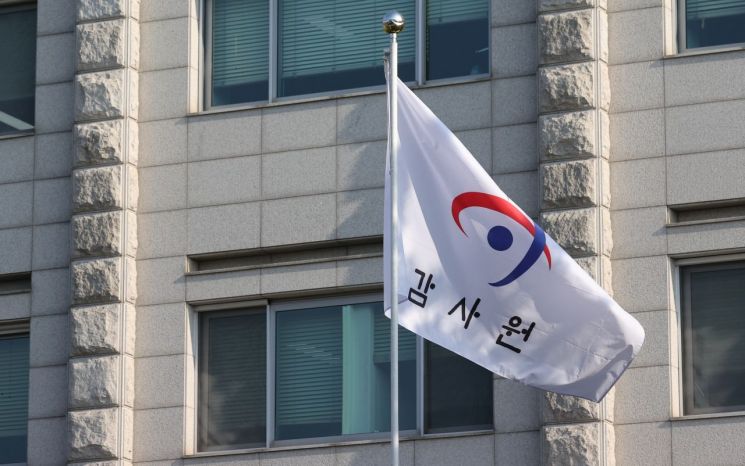
[Asia Economy Reporters Kim Dong-pyo and Moon Chae-seok] On the 20th at 2 p.m., the Board of Audit and Inspection (BAI) will announce the results of the audit on the validity of the early shutdown of Korea Hydro & Nuclear Power’s Wolseong Nuclear Power Plant Unit 1. This comes 386 days after the National Assembly requested the audit on September 30 last year, and 234 days after the legal audit deadline passed at the end of February. The BAI held an audit committee meeting for six hours starting the morning before, with Chairman Choi Jae-hyung and five audit commissioners attending, to review and approve the audit report.
According to political circles, the BAI concluded that there were some issues with the economic feasibility evaluation, which was the basis for the early shutdown of Wolseong Unit 1. However, it is reported that the BAI withheld judgment on the overall validity of the early shutdown decision. The early closure of Wolseong Nuclear Power Plant has been regarded as a symbol of the Moon Jae-in administration’s nuclear phase-out policy. As such, controversy is expected to continue even after the announcement of these results.
First, political attacks over whether the Blue House intervened are expected to intensify. The BAI conducted an ex officio hearing, which is the final argument stage for the audit subjects, from September 21 to 24, the week before the Chuseok holiday. At the hearing, four individuals appeared, including Mr. A, the Blue House Industrial Policy Secretary at the time of the Wolseong Unit 1 shutdown, and former Minister of Trade, Industry and Energy Baek Woon-kyu, delivering their final arguments.
Accordingly, after the audit results are announced, the opposition is expected to launch an offensive claiming that evidence of Blue House involvement in the decision-making process for the early shutdown of Wolseong Unit 1 has emerged. Related questions are also expected to flood the comprehensive audit of the Ministry of Trade, Industry and Energy scheduled for the 22nd.
The opposition is likely to scrutinize the early shutdown process, including the fact that Korea Hydro & Nuclear Power suddenly held a board meeting in 2018 to decide on early closure after investing about 700 billion won to extend the plant’s lifespan, and the sharp decline in the economic feasibility analysis results for Wolseong Unit 1 from 370.7 billion won to 177.8 billion won, then to 22.4 billion won before and after the board decision.
There is also interest in whether criminal charges such as abuse of authority and breach of trust will be applied to the Ministry of Trade, Industry and Energy’s Nuclear Industry Policy Officer, Korea Hydro & Nuclear Power President Jung Jae-hoon, and other executives. The BAI is expected to demand that the relevant institutions discipline those involved in the decision to shut down early.
Under criminal law, to prosecute abuse of authority, it must be proven that “a public official abused their authority to compel another to perform an act not obligated or to obstruct the exercise of rights.” Penalties include imprisonment for up to five years, disqualification for up to ten years, or a fine of up to 10 million won. Additional charges such as perjury by Ministry officials during the audit and violations of the BAI Act (imprisonment up to one year or a fine up to 10 million won) may also be added.
If the government’s judgment that “economic feasibility is low,” which was one of the reasons for the early shutdown of Wolseong Unit 1, is found to be incorrect, the Moon administration’s nuclear phase-out policy could suffer a fatal blow. Even if the early shutdown is deemed appropriate, the opposition is expected to criticize it as a result of “external pressure.”
However, current political analysis suggests that the BAI is unlikely to outright deny the validity of the early shutdown itself. If so, the severity of punishment for Ministry officials and Korea Hydro & Nuclear Power executives suspected of involvement in the decision to shut down Wolseong Unit 1 early will be reduced, and the government’s likelihood of revising its nuclear phase-out policy will diminish.
The energy industry is responding that the Ministry of Trade, Industry and Energy’s upcoming “9th Basic Plan for Electricity Supply and Demand,” scheduled for release this year, is unlikely to significantly increase the share of nuclear power generation.
The prospects for restarting Wolseong Unit 1 and extending the lifespan of Kori Units 2?4 and Hanbit Unit 1 also remain uncertain.
© The Asia Business Daily(www.asiae.co.kr). All rights reserved.
![User Who Sold Erroneously Deposited Bitcoins to Repay Debt and Fund Entertainment... What Did the Supreme Court Decide in 2021? [Legal Issue Check]](https://cwcontent.asiae.co.kr/asiaresize/183/2026020910431234020_1770601391.png)