3.18 Million Vaccinated Out of 4.78 Million Eligible
Adult Vaccine Same as Medical Institutions' Self-Purchased
Authorities: "Supply to Pediatric Clinics Lower Than Usual"
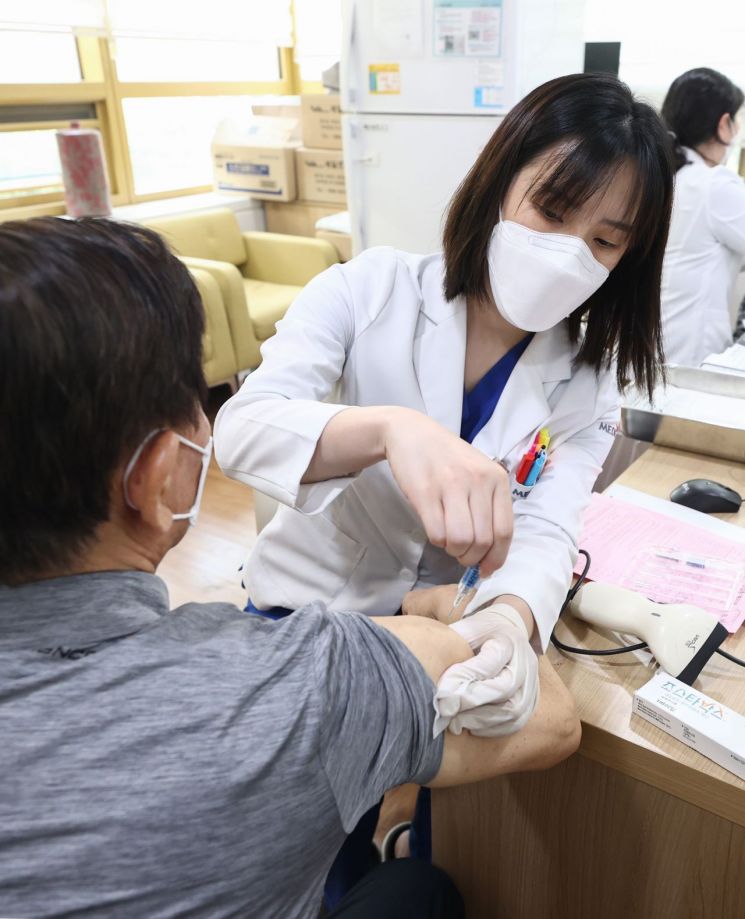 On the afternoon of the 19th, when the free influenza (flu) vaccination program for seniors aged 70 and over began, a citizen visiting the Seoul Gangnam branch of the Korea Health Management Association Health Promotion Clinic in Songpa-gu, Seoul, received a flu vaccination.
 [Asia Economy Reporter Choi Dae-yeol] It has been confirmed that most of the vaccines intended for influenza (flu) vaccination this winter have been produced and imported, and supplied to frontline medical institutions.
However, in some regions, there is a shortage of vaccines for children under 12 years old. Health authorities believe that the vaccine shortage issue has arisen because the quantity supplied to pediatric and adolescent clinics, where children mainly get vaccinated this year, is insufficient. Since one-third of children under 12 years old who are eligible for the national vaccination program have not yet been vaccinated, the government has also requested frontline medical institutions to prioritize vaccination for these children under 12 and pregnant women, who are eligible for free vaccination.
According to the Korea Disease Control and Prevention Agency (KDCA) on the 19th, a total of 30.04 million doses (one dose equals one vaccination) of vaccines will be supplied domestically this year, and as of the previous day, shipment approval has been completed for 29.59 million doses. Among these, 1.06 million doses were collected due to improper temperature management or white particles, so the actual amount to be distributed in the market is 28.98 million doses. Of these, 26.78 million doses have already been supplied to public health centers or entrusted medical institutions contracted with the government.
The vaccine supply structure involves manufacturers or importers applying for shipment approval from the Ministry of Food and Drug Safety, then supplying to wholesalers or individual medical institutions. The fact that 26.78 million doses have been supplied was confirmed through the Health Insurance Review and Assessment Service’s electronic network (drug serial number system), meaning that over 92% of the flu vaccines for this winter have already been fully supplied to medical institutions nationwide. Of these, 12.18 million doses were purchased in bulk by the government for the national vaccination support program targeting seniors aged 62 and over and children aged 13 to 18, while 14.6 million doses were individually purchased by frontline medical institutions.
As of the previous day, 9.55 million vaccinations have been administered. Among these, 5.11 million were given to national vaccination program recipients, and 4.44 million were paid vaccinations. These figures include data entered into the Integrated Vaccination Management System, but there may be some discrepancies with the actual vaccination rate due to delayed data entry in some cases.
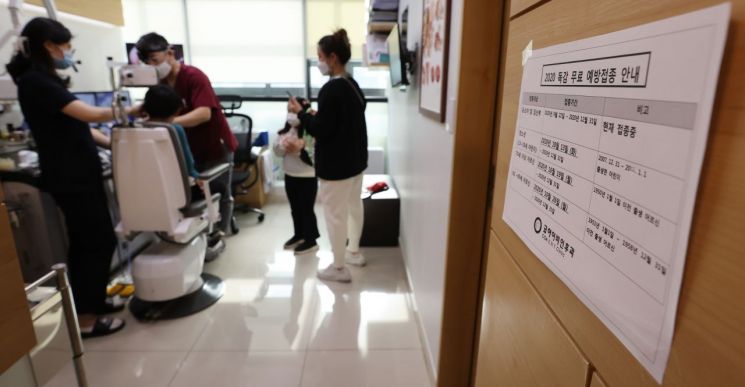
One in Three Free Vaccination Eligible Children Under 12 Has Not Yet Been Vaccinated
Vaccine Redistribution Possible Among Elderly, But Not for Paid Vaccine Stock
"Actively Inform Vaccination-Capable Institutions and Request Priority for Free Vaccination"
This year, approximately 4.78 million children under 12 years old are eligible for a single vaccination, and as of midnight the previous day, 3.18 million (66.5%) have been vaccinated. This means that about two out of three children in the target group have been vaccinated, while one remains unvaccinated. Considering that the vaccination rate in previous years exceeded 80%, more than 800,000 children remain as pending demand.
The problem is that unlike vaccines purchased in bulk by the government, the supply of vaccines for children under 12 is unstable by region, and there is no effective way to address this. While vaccines for those aged 13 to 18 and seniors aged 62 and over are managed by public health centers that monitor leftover vaccines by region or medical institution and redistribute them, vaccines for children under 12 are paid vaccines directly purchased by each medical institution, so the relevant authorities or central government cannot directly control the supply situation.
Only status monitoring is possible through the Health Insurance Review and Assessment Service’s electronic network or the KDCA system, and the response is limited to informing where leftover vaccines are available. At a briefing on the day, KDCA Commissioner Jung Eun-kyung said, "There is a disparity in the amount of vaccine secured by designated medical institutions, and some institutions have reported difficulties in vaccination due to early depletion of their own stock." She added, "Local public health centers are monitoring vaccine supply and vaccination status by medical institution and actively guiding vaccination-capable institutions." She also said, "We have requested cooperation from designated medical institutions to prioritize vaccination for children under 12 and pregnant women."
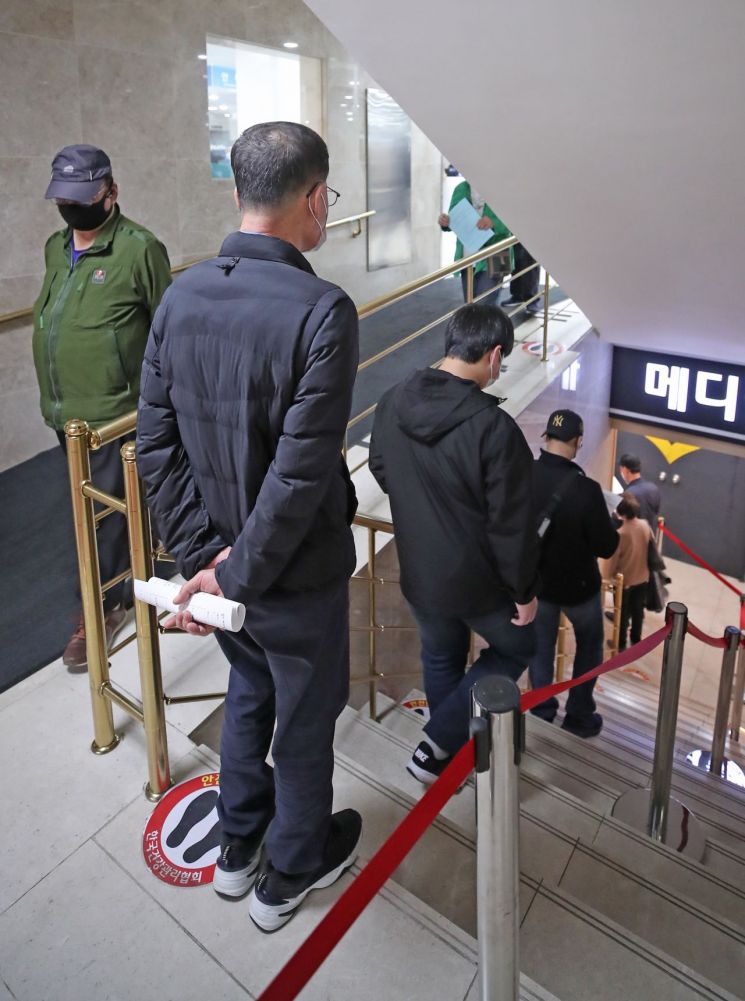 On the afternoon of the 19th, when free flu vaccinations for seniors aged 70 and over began, citizens were waiting on the stairs for flu prevention shots at the Korea Health Management Association Seoul Western Branch in Gangseo-gu, Seoul.
 From the perspective of frontline medical institutions, it was also clearly communicated that there is no loss whether they provide paid vaccinations for general adults or free vaccinations for children under 12 using the same vaccine. Paid flu vaccines are typically supplied at 16,500 KRW, which differs from the free vaccination unit price (10,410 KRW), but even if vaccinated for free, the difference is reimbursed by the manufacturer or importer. The remaining costs, including vaccination fees, are reimbursed by the public health center.
Commissioner Jung said, "We are explaining to medical institutions that there is no loss due to the price difference," but added, "We have found that some institutions are not well aware of this and may avoid vaccination due to the price difference, so we will inform manufacturers and medical institutions to encourage private medical institutions to allow free vaccination recipients to be vaccinated with their stock."
She also added, "However, since the amount secured varies by individual medical institution and the quantity supplied to pediatric and adolescent clinics is lower than in previous years, vaccine shortage issues are mainly being raised in pediatric and adolescent clinics."
© The Asia Business Daily(www.asiae.co.kr). All rights reserved.



















