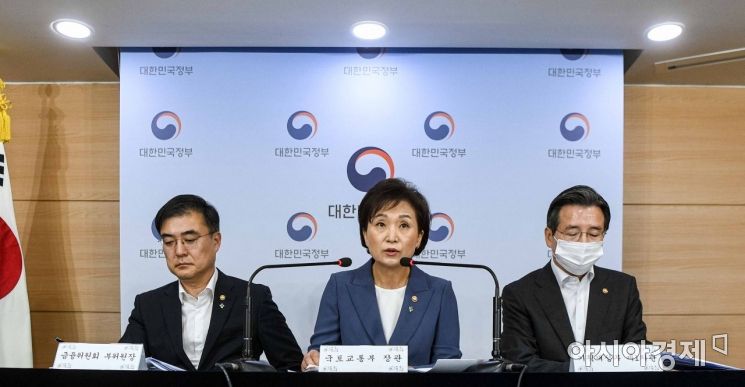
 Minister of Land, Infrastructure and Transport Kim Hyun-mi is making an announcement regarding real estate regulation measures at the Government Seoul Office in Jongno-gu, Seoul, on June 17. Photo by Kang Jin-hyung aymsdream@
[Asia Economy Reporter Lee Chun-hee] Starting from the 27th, submitting a financial sourcing plan will be mandatory when purchasing a house in regulated areas such as speculative overheating zones and adjustment target areas, regardless of the price. Especially in speculative overheating zones like Seoul, not only must the financial sourcing plan be submitted, but various supporting documents proving the source of the funds must also be provided. To prevent evasion of regulations through purchasing houses via individuals or family corporations, corporations must submit a financial sourcing plan for all housing purchases regardless of the transaction area or amount.
On the 20th, the Ministry of Land, Infrastructure and Transport announced that the amendment to the Enforcement Decree of the "Real Estate Transaction Report Act," which includes these provisions, passed the Cabinet meeting on the same day. The Ministry plans to implement the amendment starting from the 27th after going through procedures such as approval and promulgation by President Moon Jae-in.
This amendment to the enforcement decree is a follow-up measure to the government's June 17 real estate policy. Through the June 17 policy, the government announced its intention to improve the current system where the financial sourcing plan was mandatory only for housing transactions over 300 million KRW in regulated areas such as speculative overheating zones and adjustment target areas, and submission of supporting documents was required only for housing transactions exceeding 900 million KRW in speculative overheating zones. To block evasion of real estate regulations through corporations, corporations now have increased reporting obligations such as disclosing special relationships during transactions, and submission of financial sourcing plans will be mandatory for all transactions when purchasing.
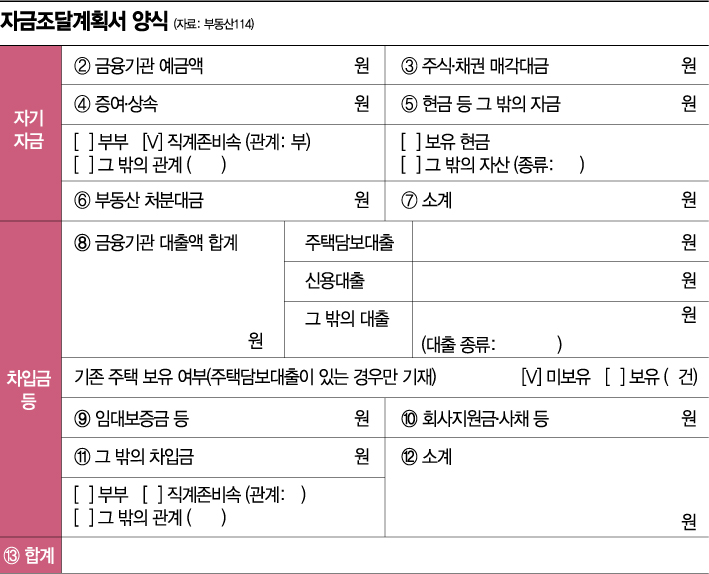
Once the amendment is implemented, the obligation to submit a financial sourcing plan will expand from housing transactions over 300 million KRW in regulated areas to all housing transactions within those areas. The obligation to submit supporting documents, which was limited to housing transactions over 900 million KRW in speculative overheating zones, will also expand to all houses within those areas.
If a financial sourcing plan includes items but the sales contract has not yet been signed or a loan application has not been made at the time of submission, a written explanation for non-submission can replace the supporting documents. However, after the transaction is completed, related agencies may request submission of supporting documents.
Currently, speculative overheating zones include 48 locations such as all of Seoul, Gwacheon, Gwangmyeong, Hanam, Seongnam, Suwon, Anyang, Guri, Gunpo, Uiwang, Bundang and Sujeong districts of Seongnam, Danwon district of Ansan, Suji and Giheung districts of Yongin, Dongtan 2 in Hwaseong, Yeonsu, Namdong, and Seo districts of Incheon, Dong, Jung, Seo, and Yuseong districts of Daejeon, Suseong district of Daegu, and Sejong. Adjustment target areas include 69 locations, excluding Suseong district of Daegu from the speculative overheating zones, plus Goyang and Namyangju cities in Gyeonggi, Jung, Dong, and Michuhol districts of Incheon, Daedeok district of Daejeon, and Cheongju city in Chungbuk.
Accordingly, when trading houses in speculative overheating zones, if using gift funds from parents as part of the purchase funds, a gift report and tax payment certificate must be submitted, and if company support funds were received, related documents must be provided.
With the implementation of the amendment, investigations into illegal gifts or violations of loan regulations, which were difficult to verify solely through the financial sourcing plan, are expected to be strengthened. The government plans to select suspected illegal fund sourcing cases as focused management targets and initiate investigations.
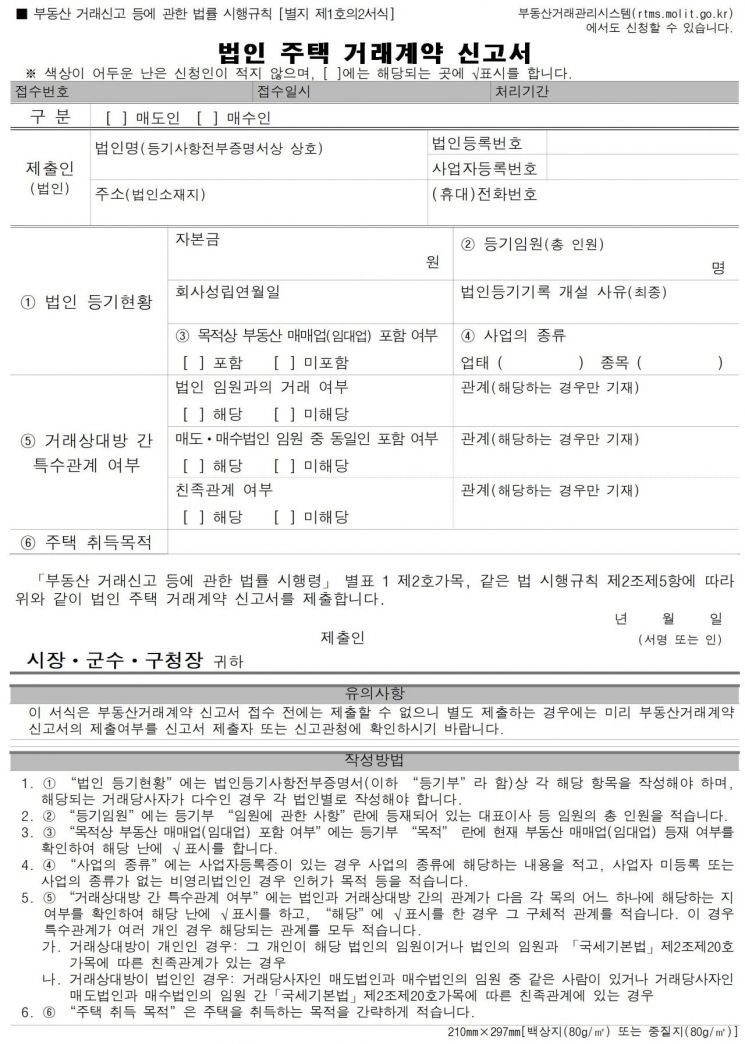 Corporate Housing Transaction Contract Report Form (Provided by the Ministry of Land, Infrastructure and Transport)
Regulations on corporations will also be significantly strengthened. For typical housing transactions, only a "Real Estate Transaction Contract Report" containing ▲personal information of the transaction parties ▲contract signing date ▲interim payment and final payment dates ▲location, lot number, land category, area, and type of the real estate subject to the transaction ▲actual transaction price needs to be submitted. However, corporations must additionally submit a separate "Corporate Housing Transaction Contract Report" including ▲corporate registration status ▲whether there is a special relationship between transaction parties ▲purpose of housing acquisition.
The Ministry of Land, Infrastructure and Transport stated, "In corporate transactions, there was a lack of basic information to detect illegal or evasive acts such as special relationships (family relations, etc.) between transaction parties, which limited responses to speculative activities using corporations," and expects that transparency in corporate real estate transactions will be enhanced and effective real transaction investigations will be conducted.
Also, corporations must submit a financial sourcing plan for all housing transactions.
Kim Soo-sang, Director of Land Policy at the Ministry of Land, Infrastructure and Transport, said, "Through this institutional improvement, including mandatory submission of financial sourcing plans for all housing transactions in regulated areas, the government's illegal activity investigation system has become more thorough," and added, "We plan to intensify crackdowns on illegal activities in overheating concern areas, centered on the 'Real Estate Market Illegal Activity Response Team.'"
© The Asia Business Daily(www.asiae.co.kr). All rights reserved.
![User Who Sold Erroneously Deposited Bitcoins to Repay Debt and Fund Entertainment... What Did the Supreme Court Decide in 2021? [Legal Issue Check]](https://cwcontent.asiae.co.kr/asiaresize/183/2026020910431234020_1770601391.png)

















