[Asia Economy Yang Nak-gyu, Military Specialist Reporter] The Coast Guard revealed on the 17th that a South Korean fishing vessel crossed the Northern Limit Line (NLL) in the West Sea due to a navigation error but was met with no response.
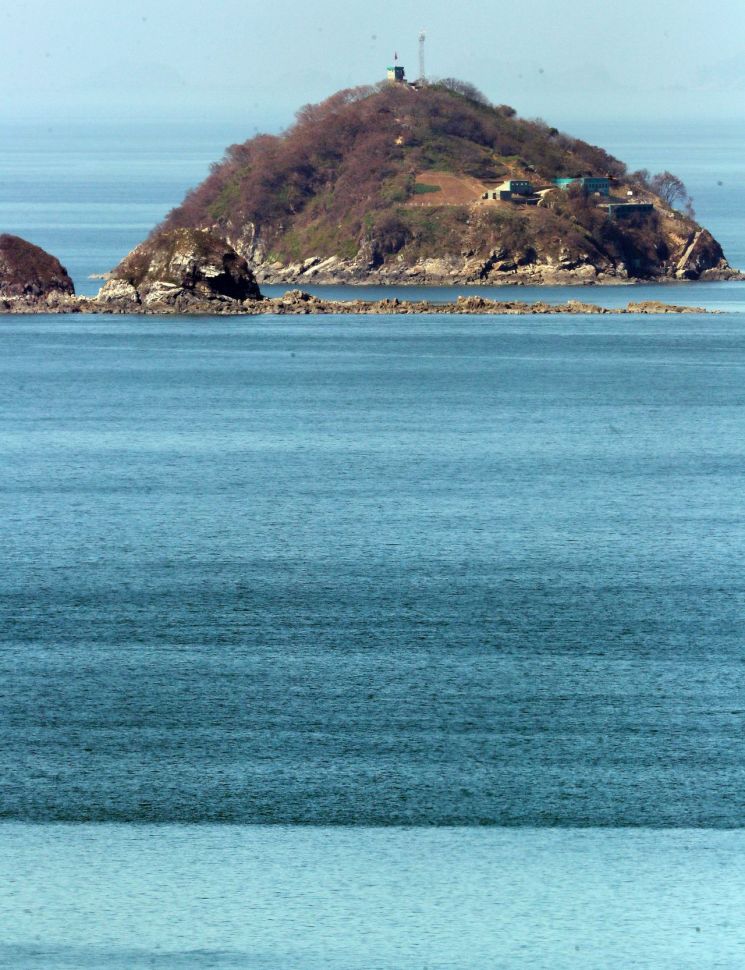
According to military officials on the 19th, the 'Gwangseong 3-ho,' a 10-meter-long, 4.5-ton fish transport vessel, was first detected by the military's radar surveillance equipment around 12:45 PM on the 17th, approximately 6.5 km southwest of Udo. At that time, it had already crossed about 7.4 km (approximately 4 nautical miles) beyond the West Sea fishing limit line (10 nautical miles south of the NLL, 18.52 km offshore).
Typically, when a fishing vessel crosses the fishing limit line, the Coast Guard must either stop or block it or immediately request cooperation from the military. However, the military stated that they received no such cooperation request from the Coast Guard at that time.
With the Coast Guard failing to take proper initial action, the military also showed a lapse in its initial response. When first detected, the military did not take immediate action, but 9 minutes later, at around 12:54 PM, the vessel was detected again by radar, and the military confirmed through the Vessel Positioning and Alerting System (V-PASS) that it was the South Korean fishing vessel 'Gwangseong 3-ho.' Subsequently, around 12:56 PM, the military made over 50 calls via radio and common fishing vessel communication networks, instructing the Gwangseong 3-ho to head south.
This was the first action taken 11 minutes after the military first detected the Gwangseong 3-ho. The military also deployed one high-speed patrol boat and two anti-submarine Rigid Inflatable Boats (RIBs) moored nearby to the scene. Nevertheless, the Gwangseong 3-ho did not respond to the military’s calls and instructions to head south and crossed the NLL around 1 PM.
A military official explained, "We made over 50 calls, but it seems they did not understand," adding, "Later, during an onboard inspection, it was confirmed that the communication device was turned off."
The vessel advanced about 3.7 km (2 nautical miles) north of the NLL and stayed in North Korean waters for about 10 minutes before returning south of the NLL. This return was not in response to the military’s calls but was made after the Korean captain checked the GPS externally and communicated with the crew. In the Coast Guard investigation, the foreign crew members stated that none of them could read the GPS and that the navigation error had occurred.
Depending on the results of further investigations, controversies are expected regarding why the Coast Guard did not take initial action and whether the Korean captain’s decision to allow navigation with only foreign crew onboard was appropriate.
Meanwhile, after the fishing vessel returned south of the NLL, the military notified the North through the international maritime communication network on the same day that "our vessel crossed the NLL due to a navigation error but returned." The military also reported that there were no special movements from the North at that time.
© The Asia Business Daily(www.asiae.co.kr). All rights reserved.
![Clutching a Stolen Dior Bag, Saying "I Hate Being Poor but Real"... The Grotesque Con of a "Human Knockoff" [Slate]](https://cwcontent.asiae.co.kr/asiaresize/183/2026021902243444107_1771435474.jpg)
















